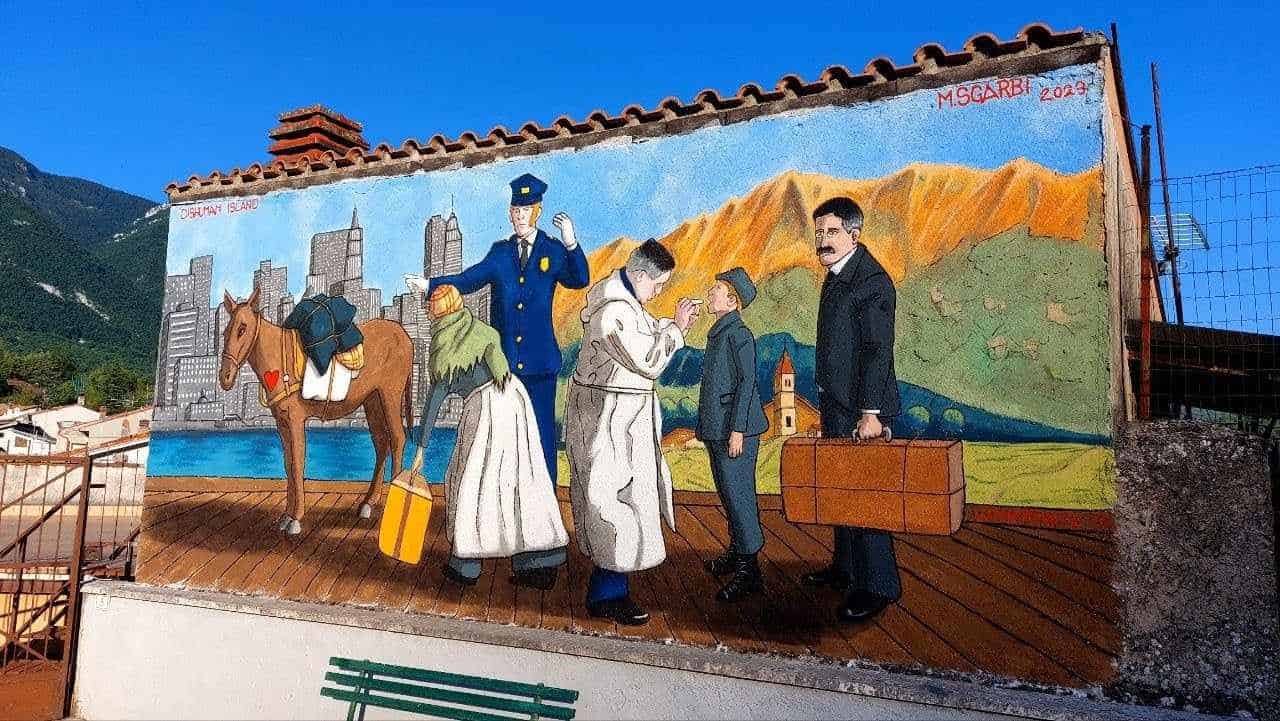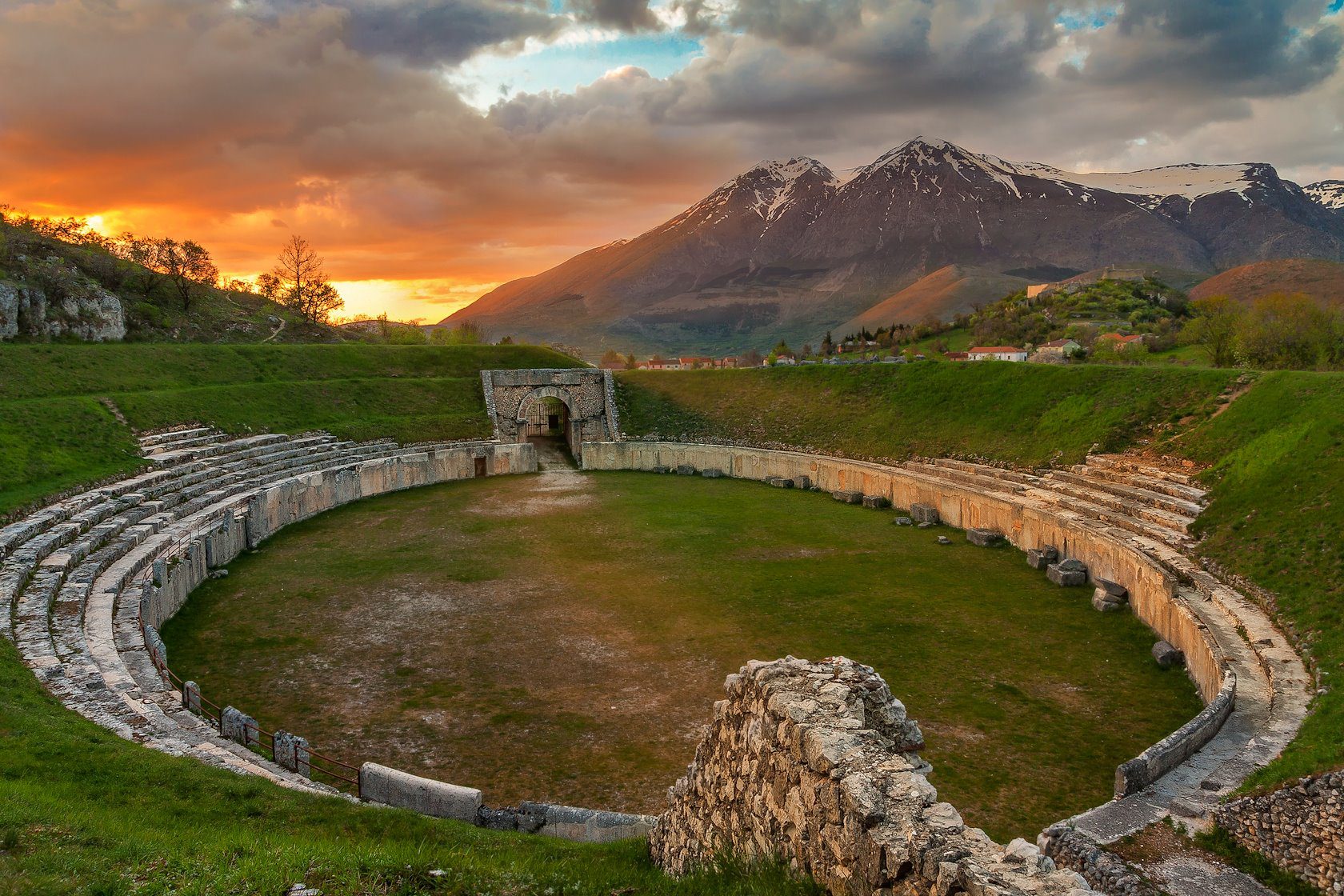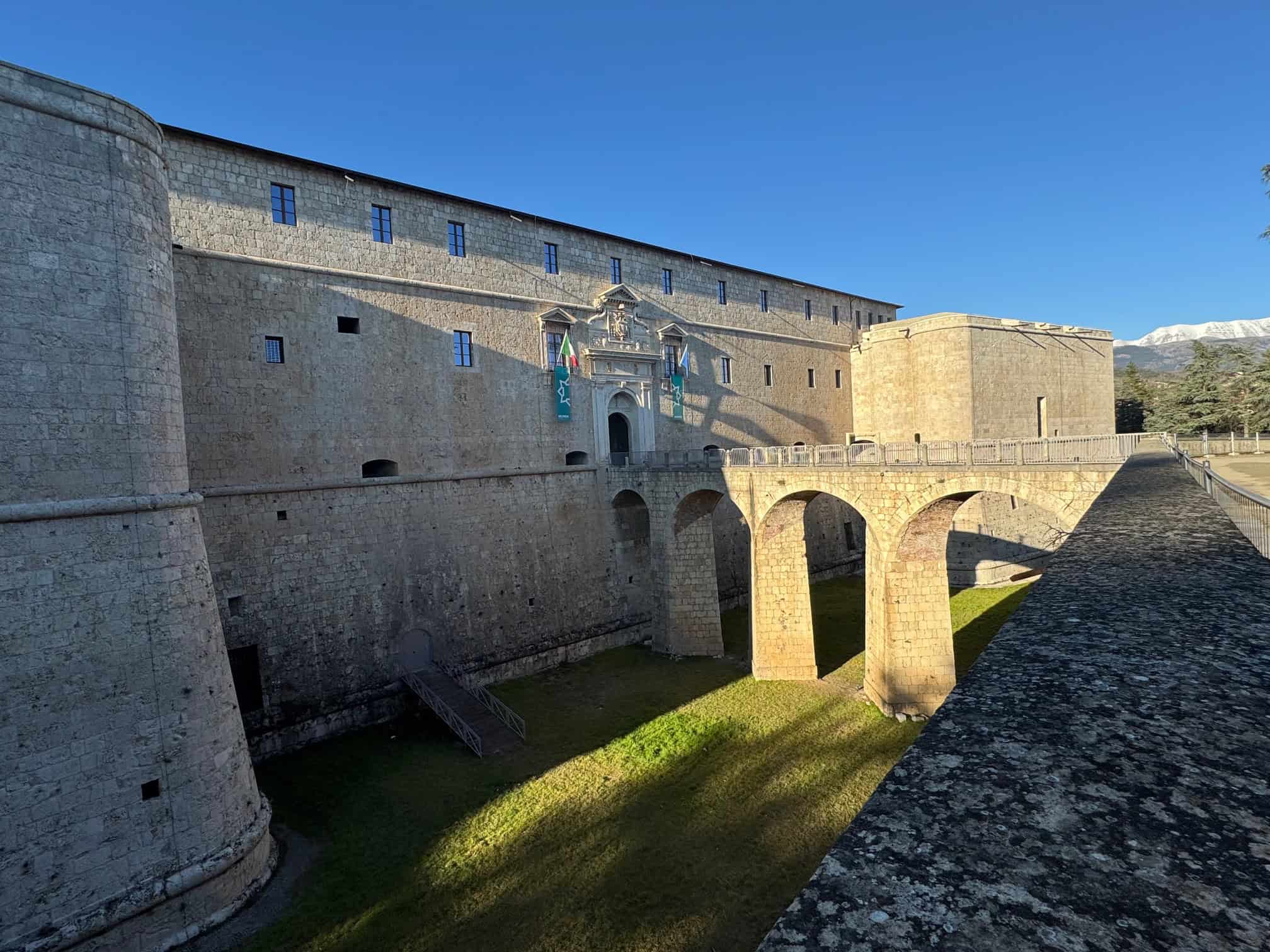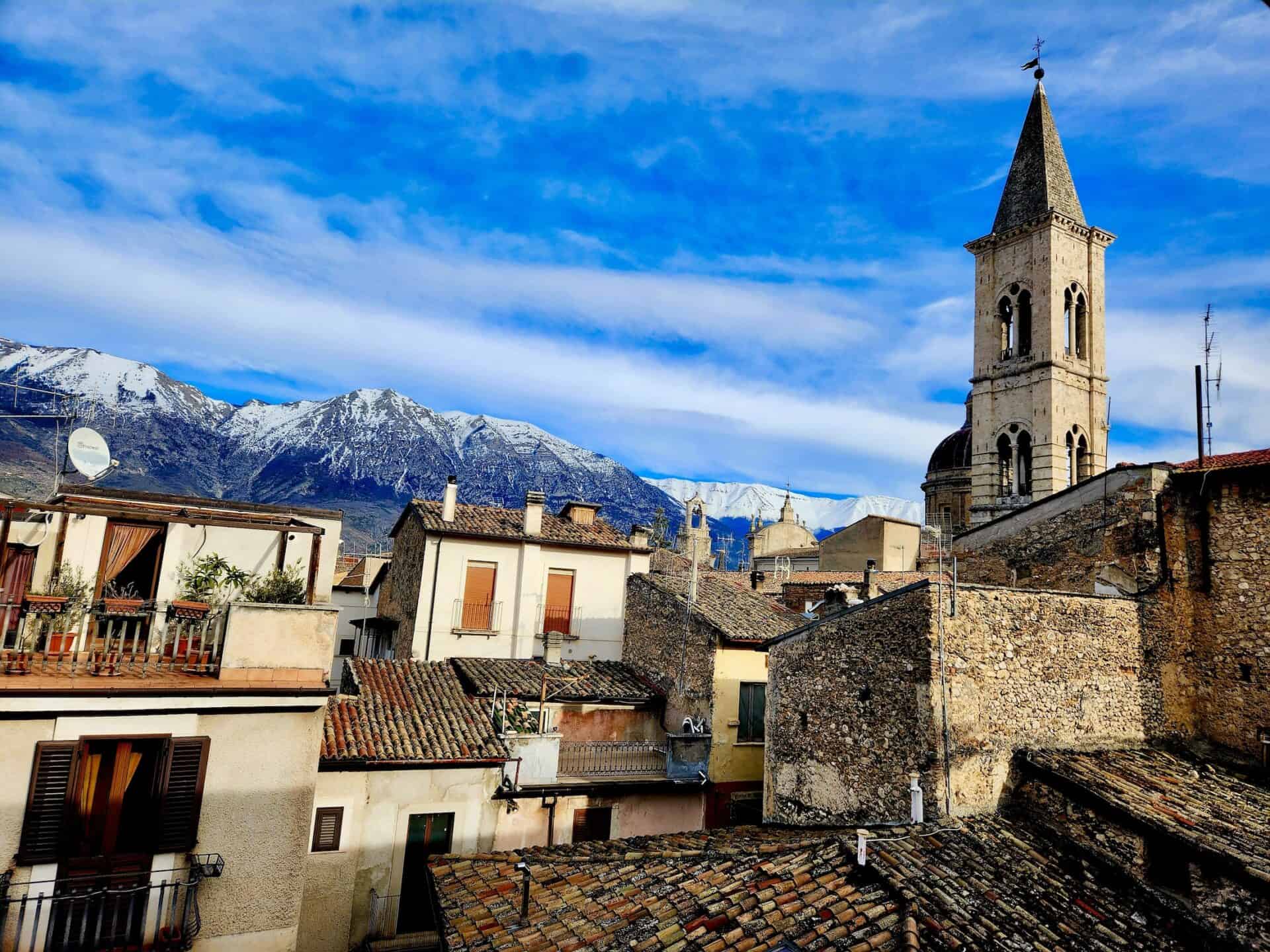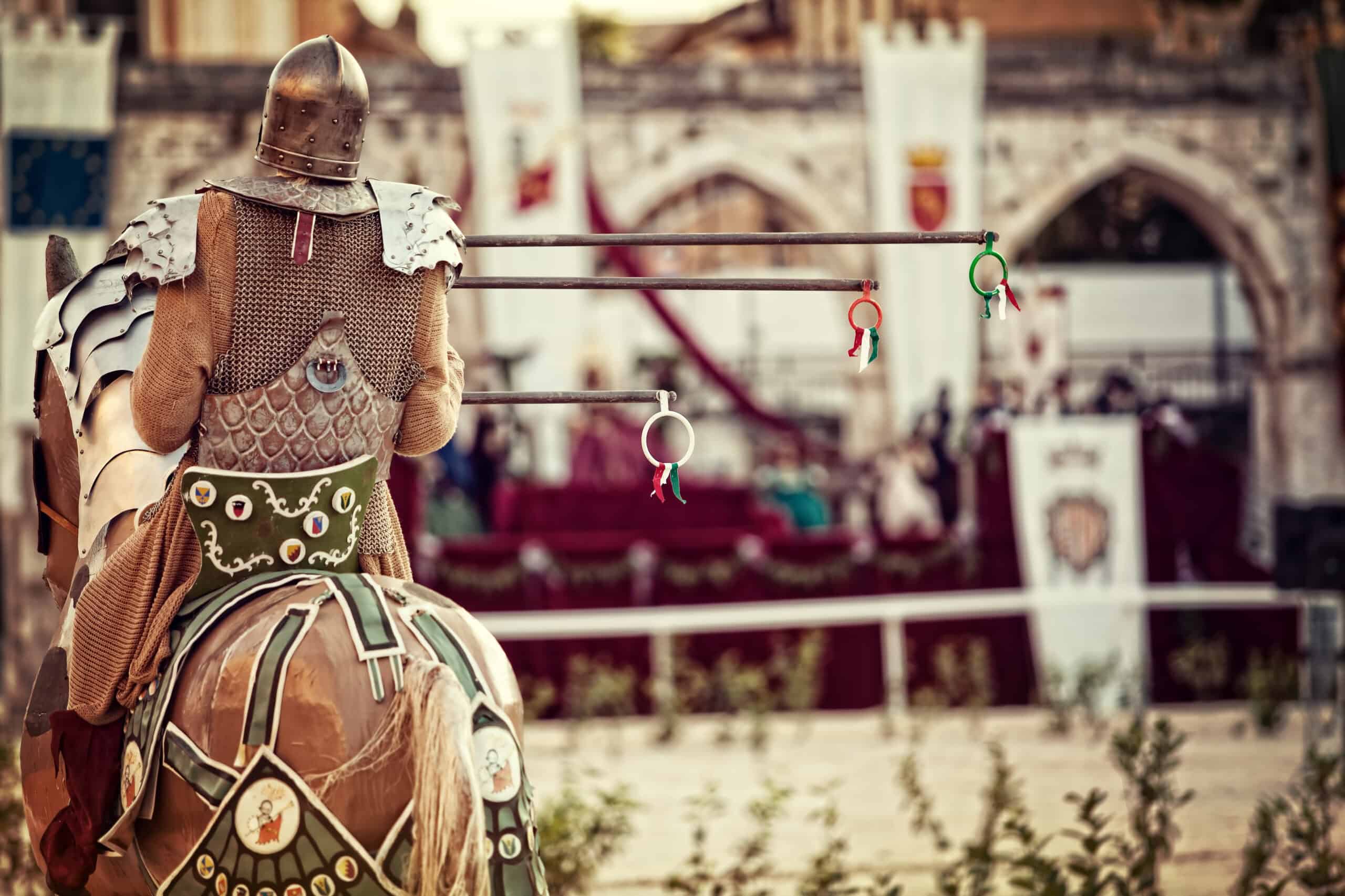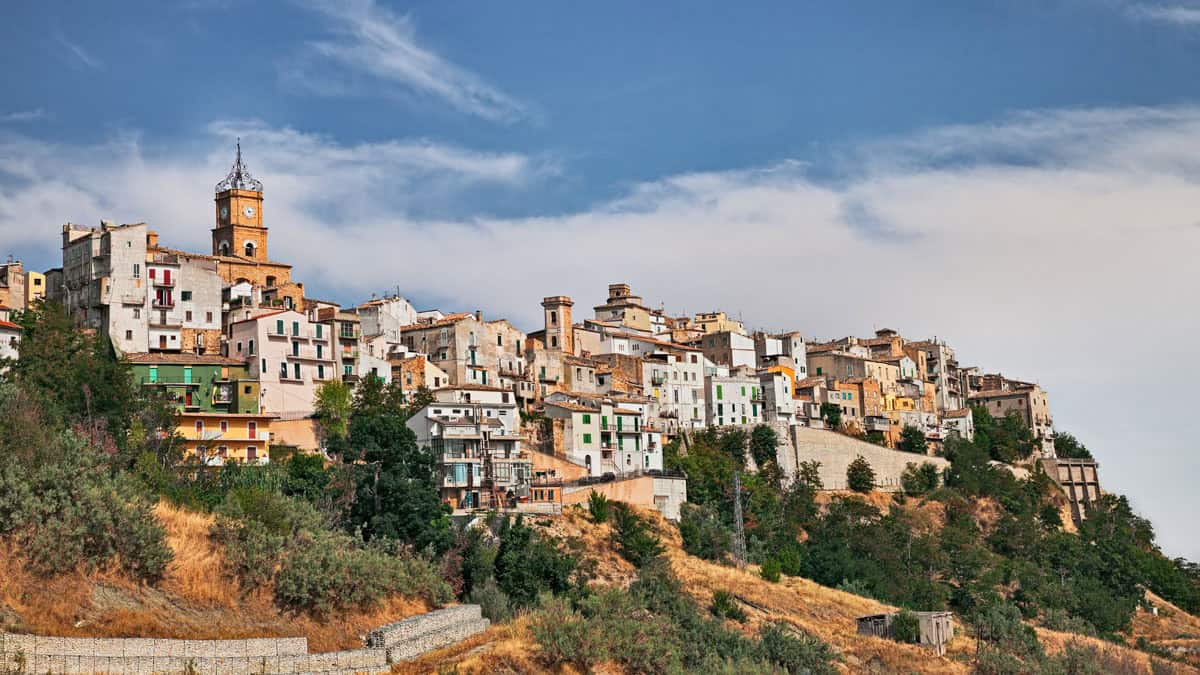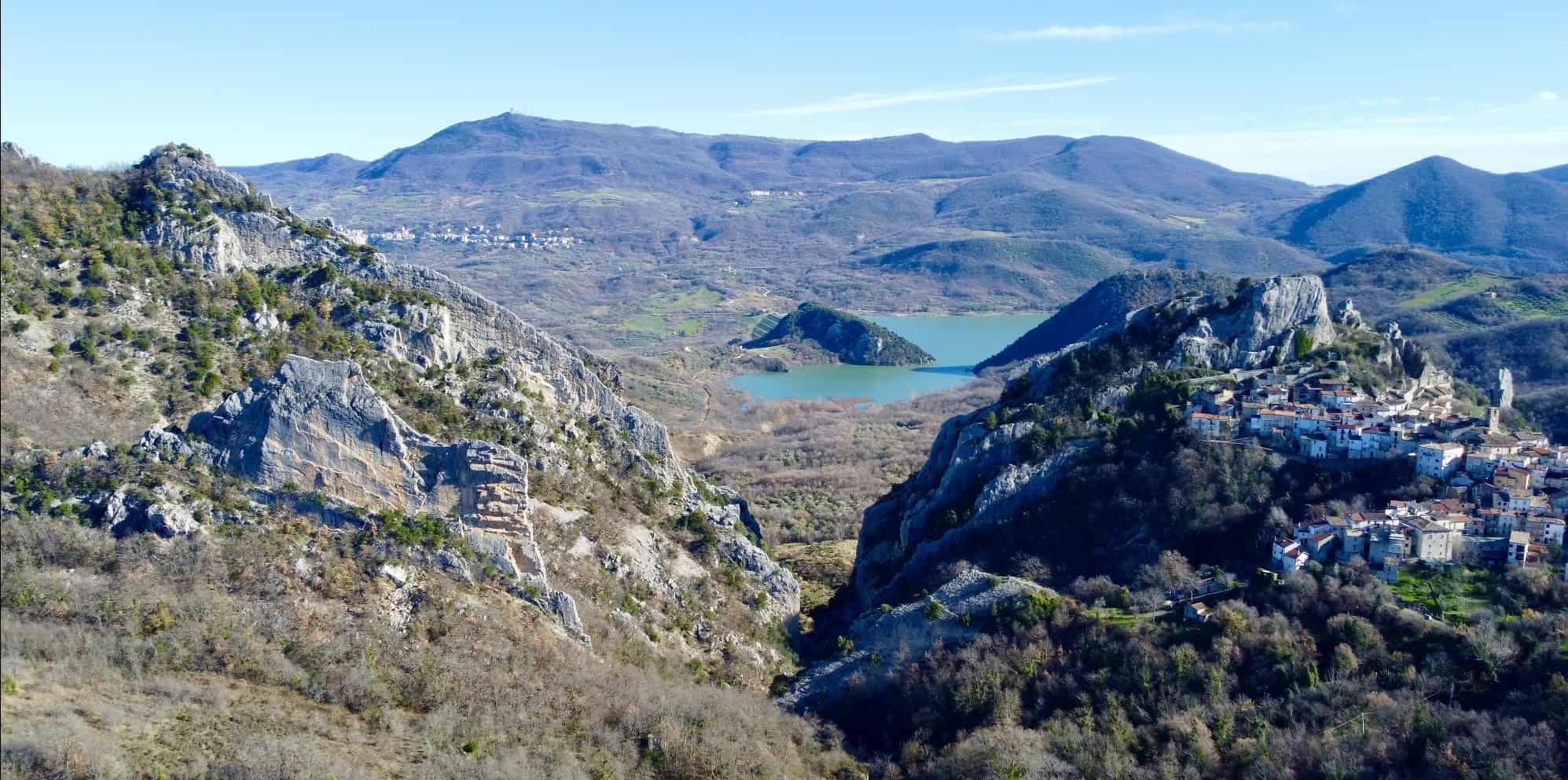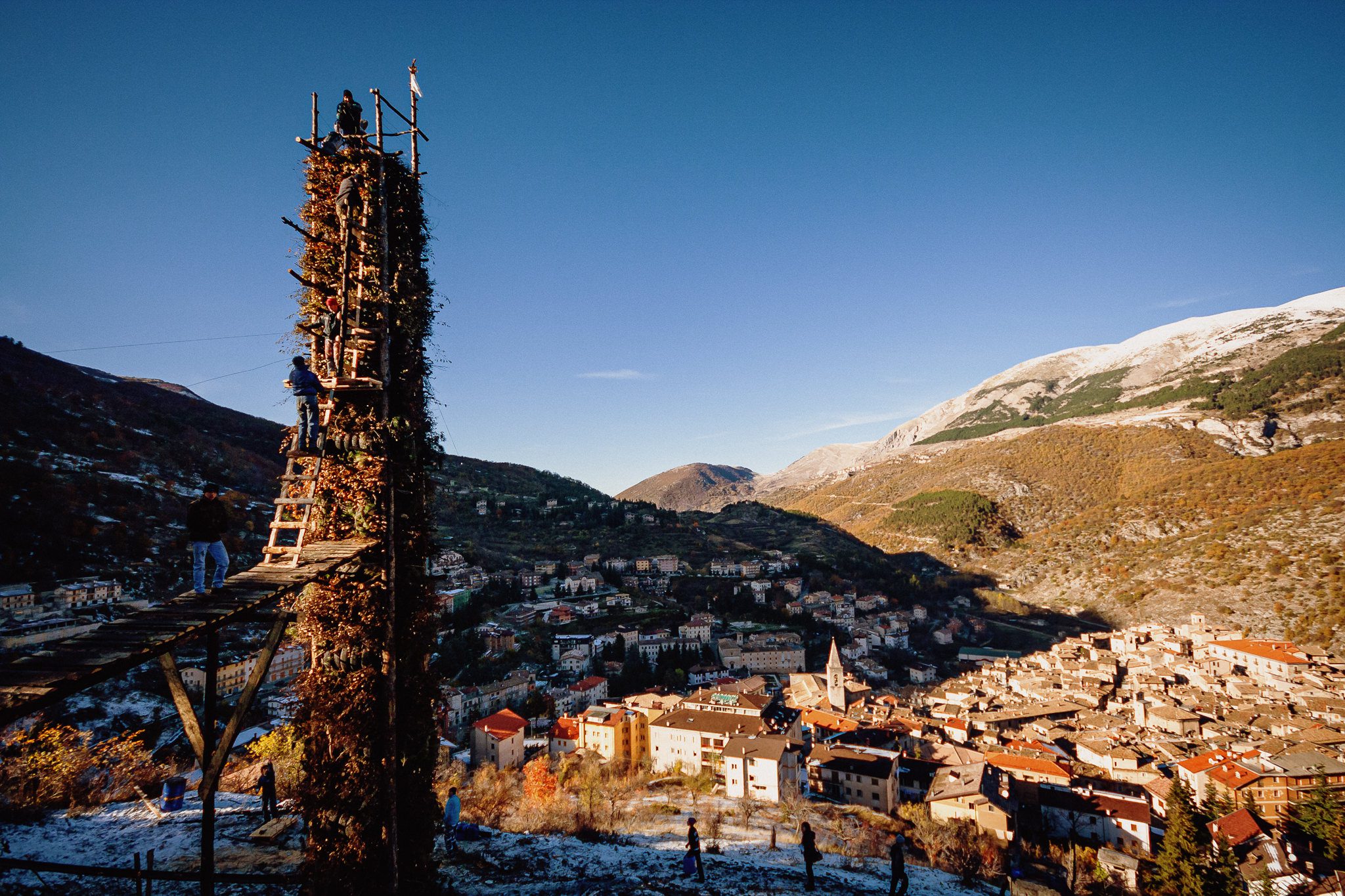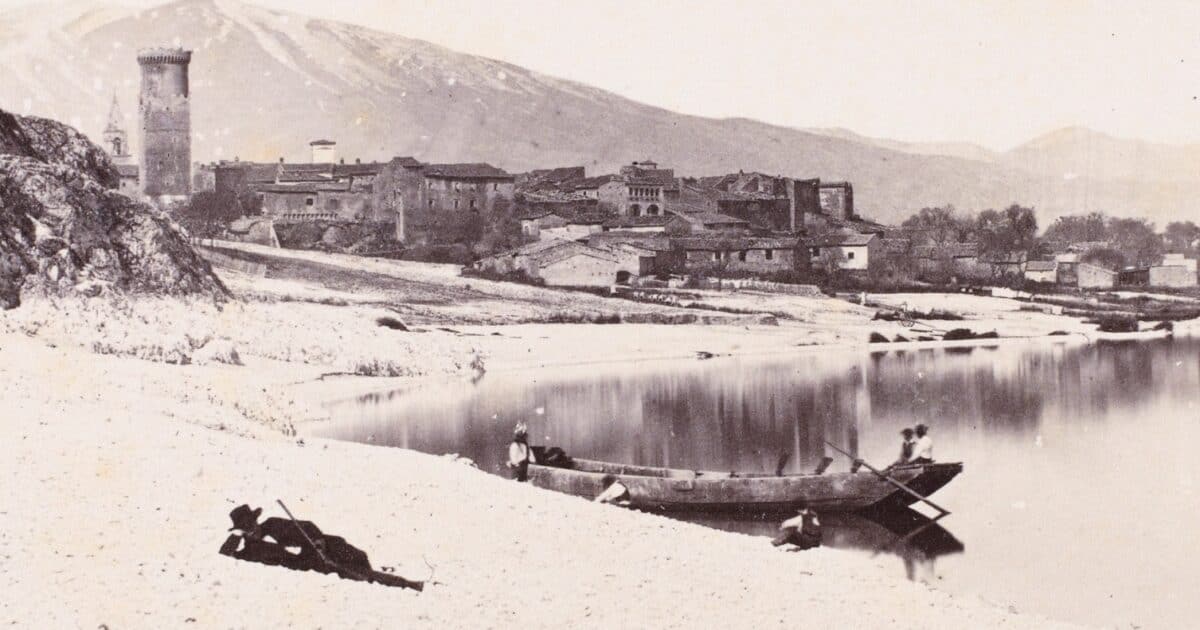
Trasacco on the shore of Lake Fucino, before the draining. Photographs: Becchetti Collection on the Fucino, Central Institute for Catalogue and Documentation (ICCD)
For two thousand years, this was Italy’s third-largest lake. Then, one man drained it. If you stand on the Fucino plain today, you’re standing on the old lakebed and on one of Abruzzo’s longest stories of ambition and exploitation.
An Abruzzo Insiders Club Production for Life in Abruzzo
When you drive into the Marsica from any direction, the land does something rare for Abruzzo: it becomes flat. Perfectly, almost strangely flat, a green table of potato and carrot fields surrounded by mountains. The towns sit up on the rim, as if they’re afraid to come down. In a way, they are. Or at least, they were.
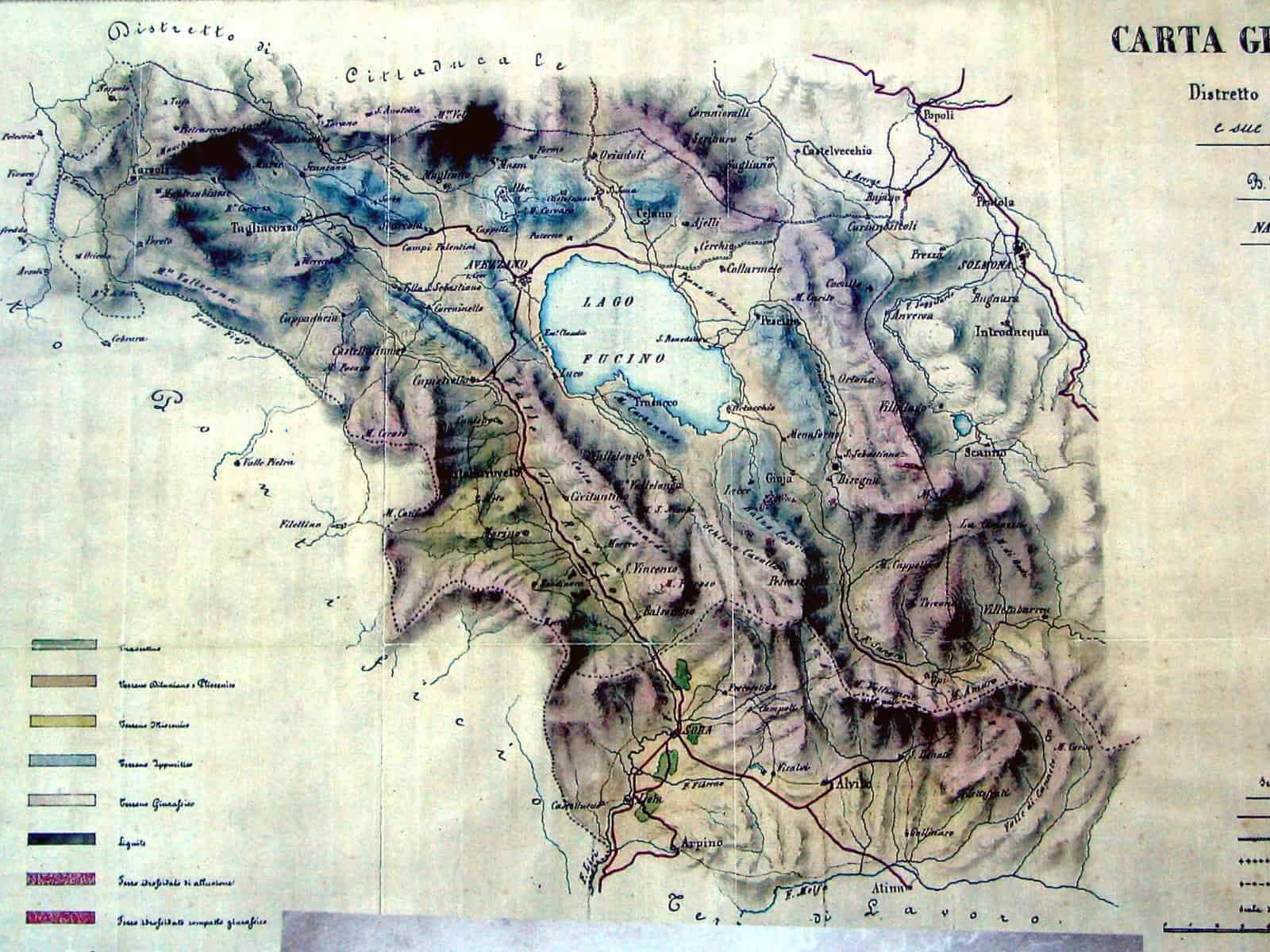
This plain is a kind of illusion. It used to be water. From prehistory to living memory, it was Lake Fucino, or Lago di Celano, the third-largest lake in Italy after Garda and Maggiore, covering more than a hundred square kilometres. Snowmelt fed it, and reeds and fishermen lined its edges. When you look at the towns again, the old logic becomes clear: Celano sits high on its hill, over eight hundred metres up, while Luco, Trasacco, and Ortucchio are strung around the old shoreline like beads. No one built by the water. Everyone built above it.
The name itself may carry the warning. Fucino most likely descends from an ancient root meaning a boggy, marshy place, so the lake wore its danger in its own name. Local memory prefers a stranger story: that the word comes from fucìna, a blacksmith’s forge, after an alga that stained the water forge-red at certain sunsets.
Why Nobody Lived by the Lake
The Fucino was both beautiful and dangerous, and the people living nearby knew it well. The lake had no natural outlet. Snowmelt from the mountains poured in and had nowhere to go, so the shoreline could rise or fall by as much as twelve metres between wet and dry years. Fields planted in hope could be drowned, and in summer, the water would retreat, leaving behind stagnant marshes that bred malaria. For centuries, people farmed and fished by the lake during the day but left before dusk. Villages stayed up on the hills, where the air was clean and the water couldn’t reach.
The Marsi, the ancient people who gave the Marsica its name, figured this out three thousand years ago. Their solution was the ocre, or hillfort, built safely up the slope. When the lake rose during the Bronze Age, they left the low-lying villages and moved higher up. The lake gave them fish and rich black soil, but it also took back whatever it wanted. People lived with it the way you live with a powerful but unpredictable neighbour, at a pleasant distance.
Rome’s Obsession
Rome could not leave it alone. The idea of draining the Fucino, of turning all that treacherous water into obedient farmland, took hold of emperor after emperor like a fever. Julius Caesar planned it and was murdered before he could begin. It was Emperor Claudius who actually tried.
Claudius built one of the ancient world’s engineering marvels: a tunnel five and a half kilometres long, cut straight through Monte Salviano to drain the lake into the River Liri. According to Suetonius, 30,000 men worked in shifts for 11 years, from 41 to 52 AD. This tunnel was the longest in the world until the Fréjus tunnel was built through the Alps in 1871.
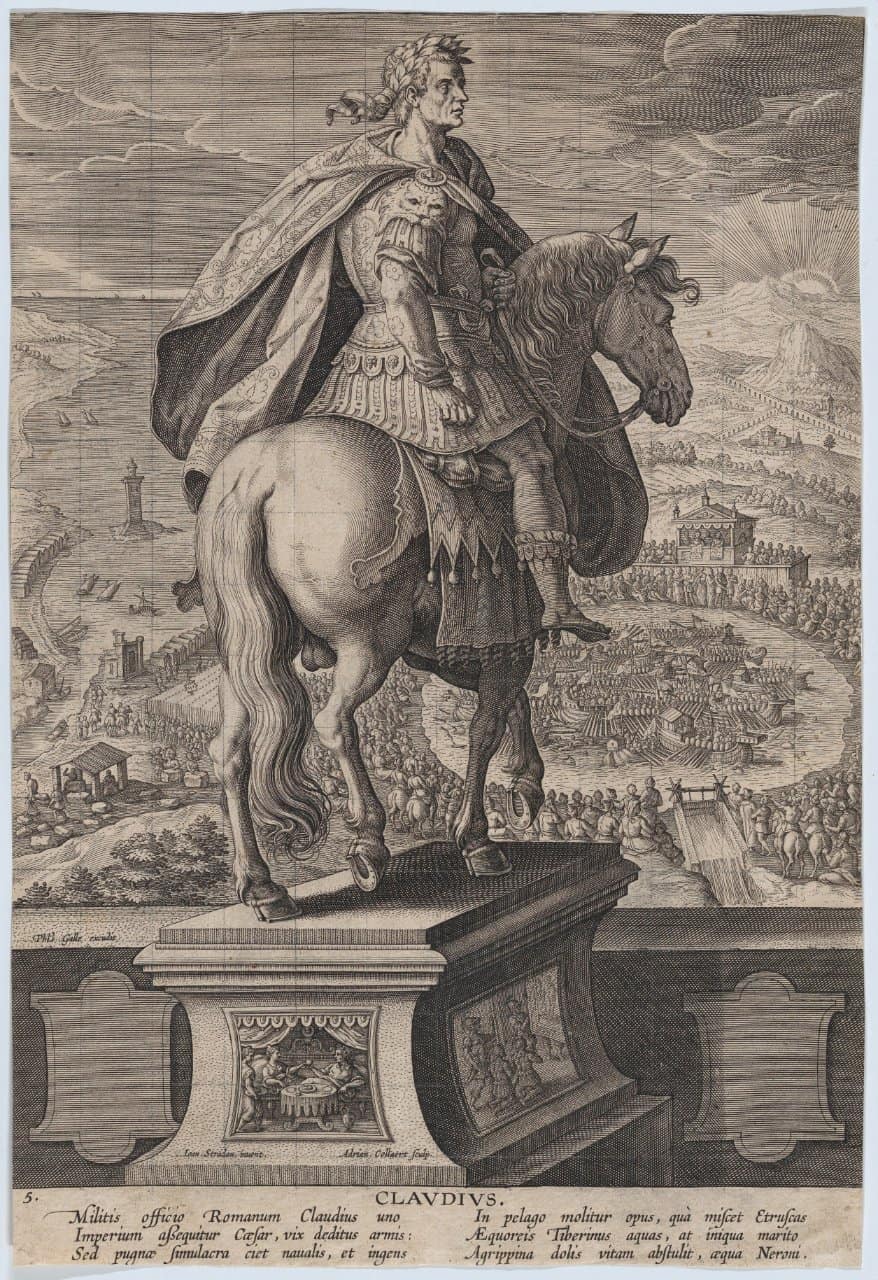
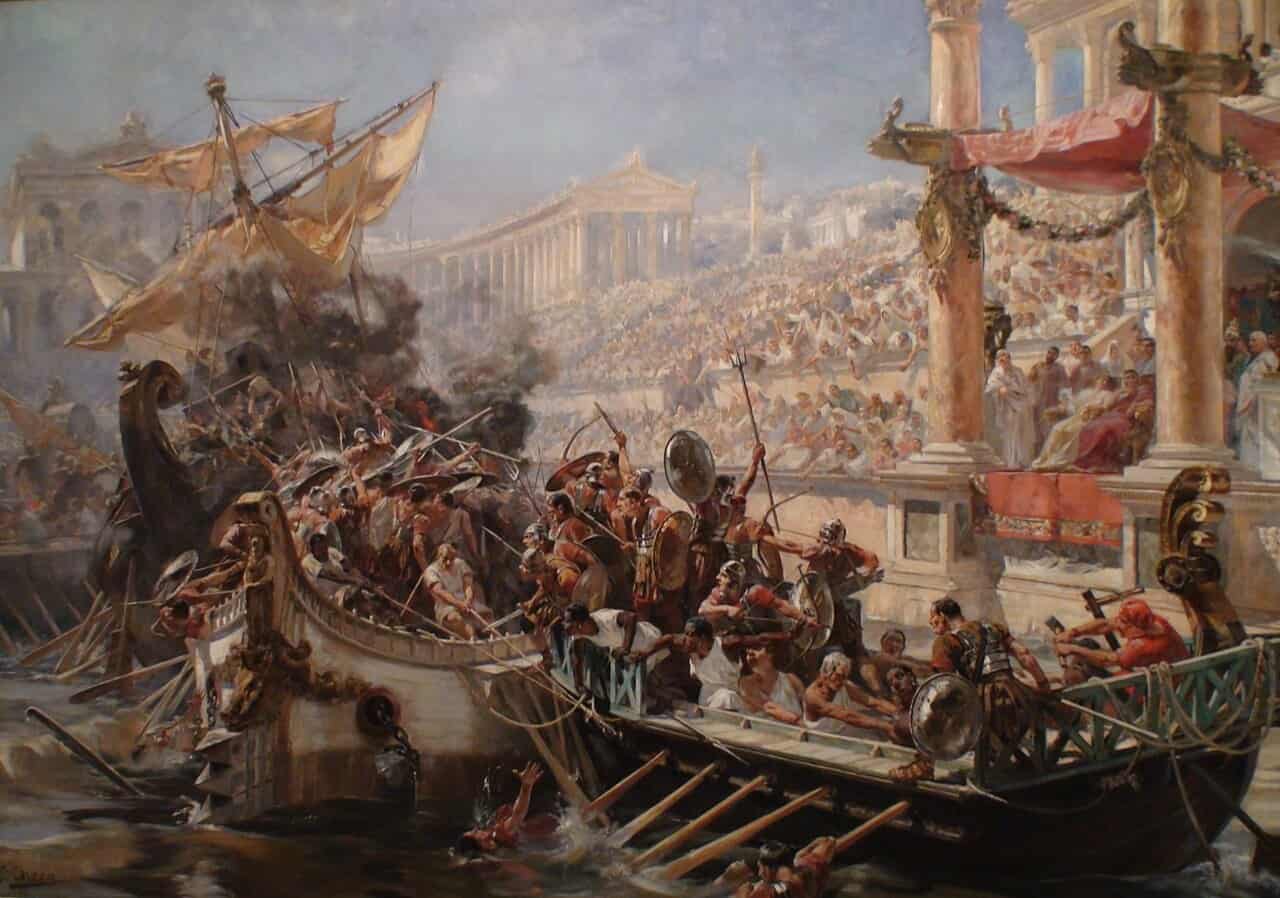
To celebrate the opening in 52 AD, Claudius staged the largest spectacle of his reign, and one of the strangest episodes in Roman history. Before the sluice was opened, he filled the lake with a mock naval battle, a naumachia, on a scale never attempted before or since. Nineteen thousand condemned men were put out onto the water in two fleets of real warships, dressed as rival navies, while the hills filled with spectators and rafts of the Praetorian Guard ringed the fighters so none could swim for shore. It is from that day, and that day alone in all of classical literature, that we have the famous salute the fighters are said to have called up to the emperor: Ave, Imperator, morituri te salutant. Hail, Emperor, those about to die salute you. The popular idea that gladiators said it before every fight is a later invention. It was said once, here, by men who genuinely expected to die, and thousands of them did. And if the lake truly took its name from the forge-red the water turned at sunset, then that evening the colour was not the alga’s. It was theirs.
The battle was the main event, but what happened next was almost comical. When they finally opened the sluice, the water barely moved because the tunnel was cut at the wrong level. Claudius ordered more digging, but the second attempt went so badly that a wall of water surged back and nearly drowned the emperor and his court during the celebration banquet. His wife, Agrippina, publicly blamed the engineer. The feud grew, and within two years, Claudius was dead, most likely poisoned by Agrippina herself.
The tunnel worked, but not well, and only for a while. Trajan and Hadrian repaired it, but when Rome’s control weakened, maintenance stopped. An earthquake in 508 AD blocked the channel, and the lake quietly rose again, taking back the land. For another thirteen hundred years, it rose and fell, both malarial and beautiful. Frederick II tried to drain it in the thirteenth century and failed. A Bourbon king tried in 1790 and failed too. The Fucino outlasted the Roman Empire. It wasn’t impressed by anyone.
The Wager of Prince Torlonia
Then a banker arrived. Alessandro Torlonia was new money in Rome, very rich and eager for the one thing money couldn’t buy: immortality. Draining the Fucino was the impossible task that had defeated emperors and kings, which made it even more appealing.
Work began in 1854. Torlonia’s engineers cleared and enlarged Claudius’s old tunnel, quadrupling its cross-section, and drove a vast new network of canals across the basin. Four thousand men laboured on it at a time. It took twenty-four years. And this time it worked. By the late 1870s, the water was gone. In 1875, a grateful king made Torlonia Prince of the Fucino, and by 1878, the lake that Julius Caesar had dreamed of draining simply was not there any more. In its place lay sixteen and a half thousand hectares of the most fertile silt-rich soil in central Italy, the black bed of a vanished lake.
All of it belonged to Torlonia. That’s the part engineering histories often skip over, but it’s the part that matters most. Of the sixteen and a half thousand hectares that emerged, some fourteen thousand became Torlonia’s own, held for ninety-nine years; barely two and a half thousand went to the people of the lake.
The Kingdom and its Cost
The contadini who had fished and farmed by the lake for generations suddenly found themselves as landless labourers on a private estate as big as a small country. The Fucino wasn’t divided up; it became a latifondo, a nearly feudal estate, and Torlonia ran it for profit through a chain of middlemen. Only decades later, and only after pressure, was the land rented directly to the people who worked it, and even then, only in small, difficult pieces. By the early twentieth century, a typical family rented about a single hectare, scattered in strips across the plain, at rents that kept them in permanent debt to the prince’s bank and sugar refinery.
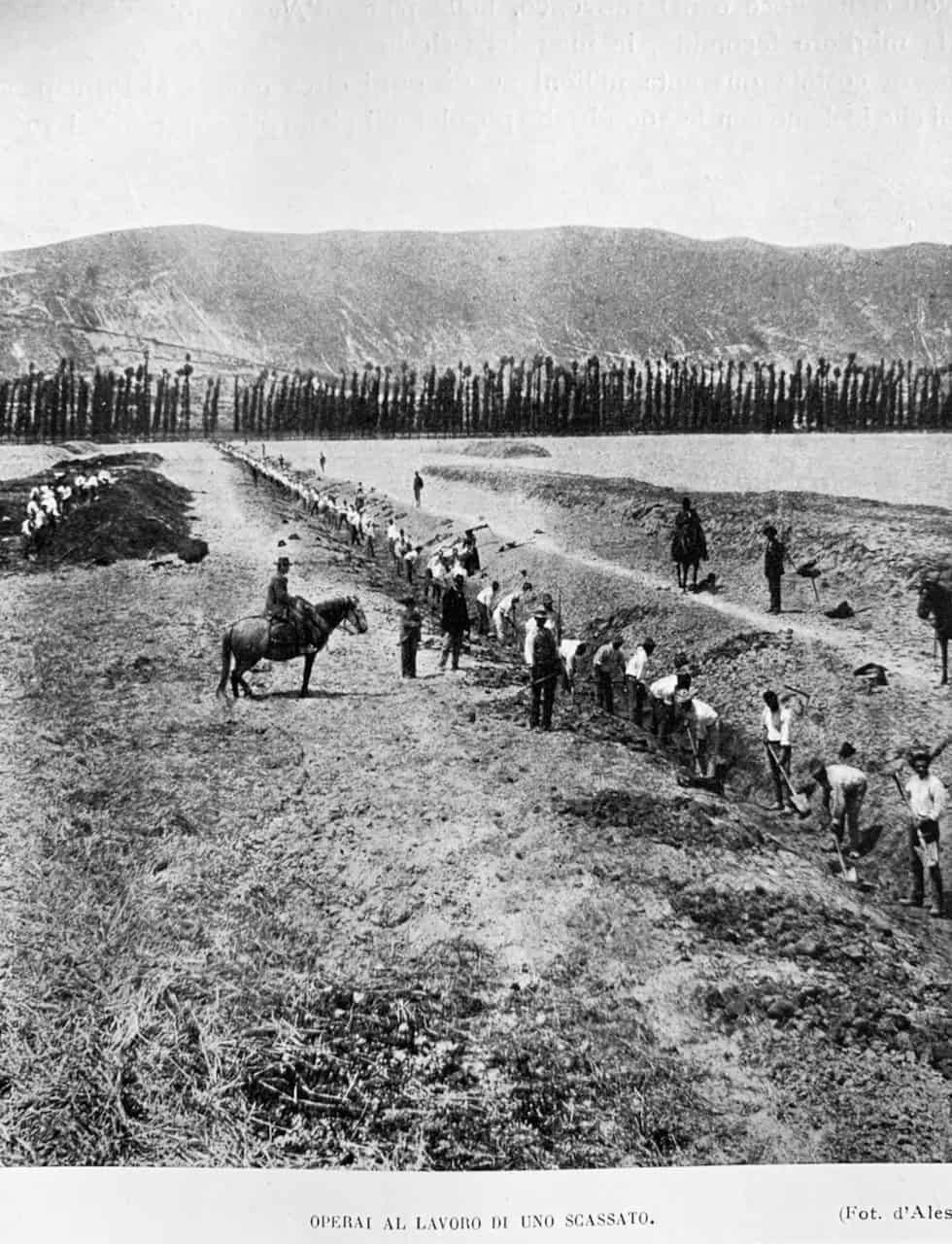
This world had its own hierarchy. The best land, the big, consolidated farms made from the drained lakebed, didn’t go to locals. Instead, sharecropper families from Le Marche, the Vomano valley, and other places were brought in because the Marsicani wouldn’t leave their hill villages to live scattered on the plain. Below them, local peasants rented their small plots not directly from Torlonia, but from gabellotti, local notables chosen town by town, who leased large blocks from the prince and then sublet them at about double the price. So, the hardship wasn’t just a foreign prince squeezing the locals. It was also the plain’s own bosses taking advantage of their poorer neighbours, outsiders on the best land, locals on the scraps, each level pressing down on the one below. Change the century and the nationalities, and it’s the same system running the fields today.
Here’s the harshest part. The main crop on the plain was sugar beet, and after a 1929 arbitration deal, tenants had to pay their rent in beets, delivered to the Torlonia refinery in Avezzano. The problem was that Torlonia’s own administration decided each year how much sugar the beets contained. That sugar content set the crop’s value, and the value set the rent. In other words, the landlord weighed his tenants’ harvest and set his own rent. The tenants called it a swindle, because it was. They paid in crops; the harvest rarely covered their debt, and the moneylenders took care of the rest.
To see what this meant, consider one family a reporter met not so long ago, in 1950, near the end of the estate’s history. An old tenant, paralysed and unable to work, lived with his wife and three children. He rented just over a hectare, kept a mare and a cart, and owed about fifty thousand lire a year for the land. He hadn’t managed to pay in three years. He was in debt to the Torlonia bank and the sugar refinery, overwhelmed by taxes, and his sons walked ten or twelve kilometres each way to reach their scattered plots because they weren’t allowed to use the estate’s internal roads. This wasn’t the worst case anyone found. It was typical.
This was the world Ignazio Silone described in Fontamara in 1933, the novel that gave the poor of Abruzzo a voice in twenty-seven languages. Silone grew up in Pescina, on the lake’s edge, and saw the 1915 earthquake kill his mother and destroy his town. His novel begins with a bitter ranking of the world as his people saw it: at the top, God; then Prince Torlonia; then the prince’s guards; then the guards’ dogs; then nothing, then nothing again, and only at the very bottom, the peasants. This wasn’t really an exaggeration. It was reporting.
A few decades later land itself finished what debt had started. At 7:53 on the morning of January 13, 1915, an earthquake struck the Marsica, killing about thirty thousand people in a single minute and flattening Avezzano almost completely. For tenant families already worn down by rent and debt, it was the final blow. Those who survived, and who weren’t sent off months later to fight in World War I, had only one option left: to leave. The earthquake didn’t just empty the plain of its dead; it emptied it of the living, too. The countryside around the lake never fully filled up again. Even a century later, that’s one reason the fields still can’t be worked by local hands alone.
So the drained lake, promoted as progress, became one of the main reasons people left Abruzzo. Families who couldn’t survive on a debt-ridden hectare, and then couldn’t survive the destruction, did the only thing they could: they left. Some went to America, to Philadelphia and other industrial cities in the northeast. Some went to Toronto, in the post-war wave that made it one of the most Abruzzese cities in the world. Others went to Buenos Aires, in an Argentina that still has more Italians than any other country. Many didn’t cross an ocean at all; they went west to Rome or north to the factories of Milan and Turin, joining the same restless migration that once brought sharecroppers the other way. All of them carried the Fucino with them, as both a memory and a wound. If your family came from the Marsica, this may be why you’re reading this in Boston instead of Luco dei Marsi. The lake made that happen.
After the 2nd World War, others went north to the Belgian coal mines, which were barely a choice. Broke and short of fuel after the war, Italy struck a deal with Belgium in 1946 that was exactly what it sounds like: men in exchange for coal, with 2,000 sent down the pits each week, against so many tons of coal that could be shipped home. When fire tore through the pit at Marcinelle in 1956, it killed 262 men, 136 of them Italian and many Abruzzese, sons of the Roveto valley among them. They had been traded for fuel, and they did not come back up.
The Land the Tenants Finally Won
Justice, when it finally arrived, came slowly and from the ground up. After World War II, the Fucino’s tenants organised, went on strike, and marched. In 1950 and 1951, the huge Torlonia estate was finally taken over and divided up. The land was given to more than eight thousand small farmers, the descendants of the very tenants who had once been crushed by it, who at last became owners of the soil their grandparents had mourned.
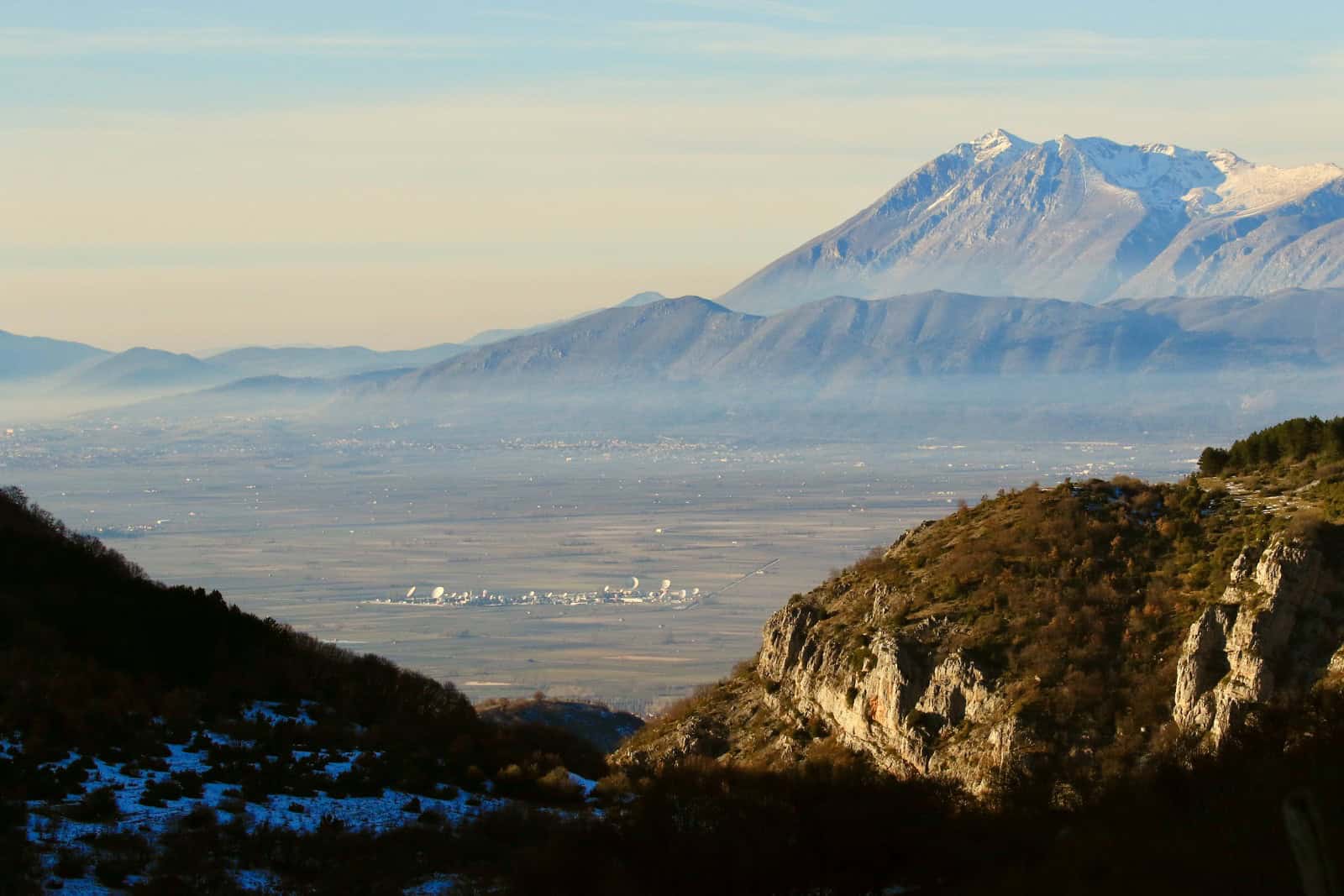
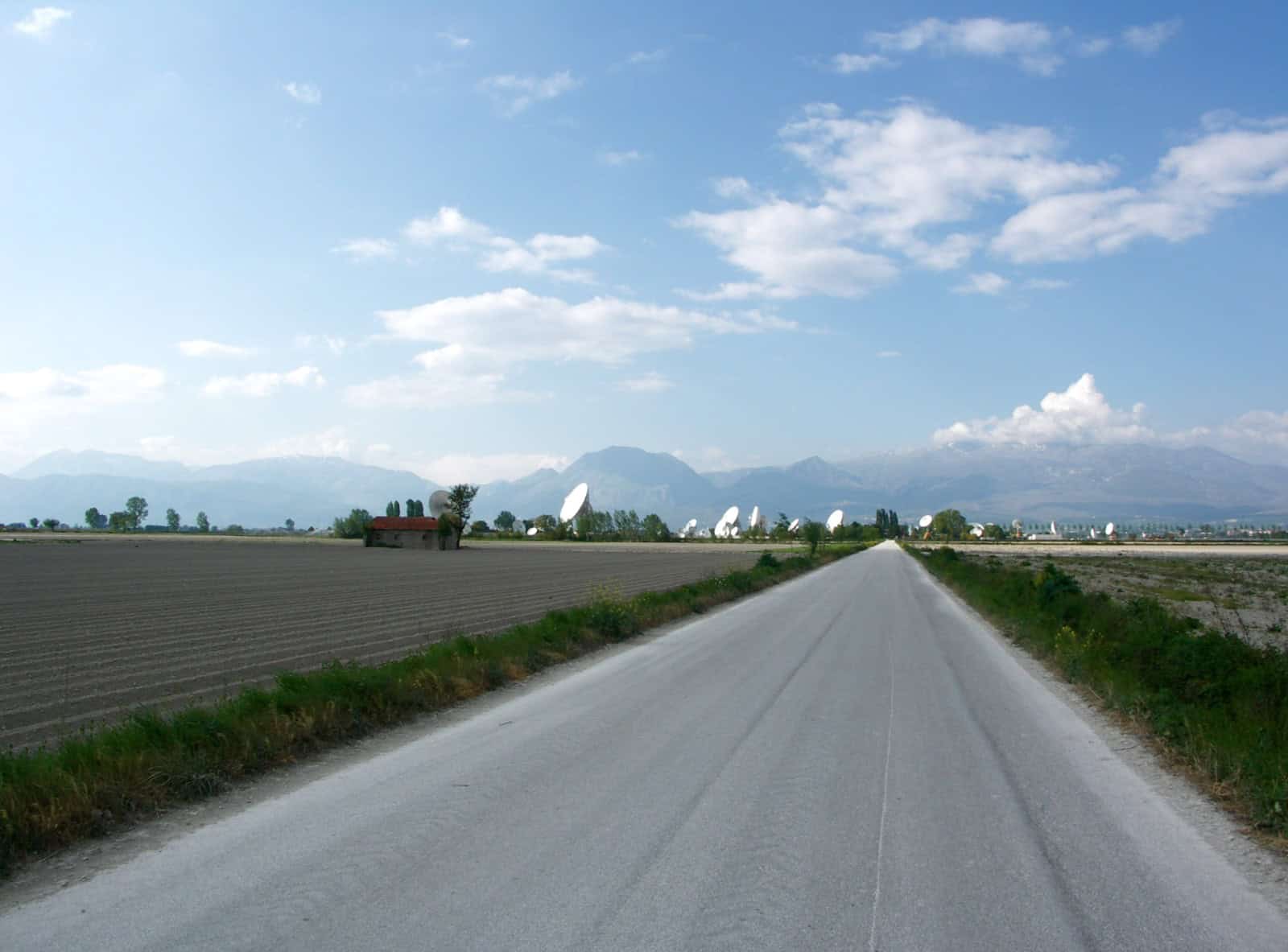
The results came quickly. Once they could farm their own land, these smallholders turned the old lakebed into one of Italy’s most productive farming areas. Within a decade, yields soared. Today, the Fucino produces potatoes and sweet ‘Carota del Fucino’ that are famous across the country, and the plain accounts for a large share of Abruzzo’s agricultural economy. In the 1960s, a satellite ground station, the Fucino Space Centre, was built on the same flat land, tracking spacecraft above what used to be a lake. The Fucino has always been a place where the future is built on top of the past, without ever fully hiding it.
The Hands that Work it Now
That brings us to the fields today, and to the oldest pattern on this plain. The Fucino still needs a huge amount of seasonal labour, and more and more, that labour isn’t local. About nine and a half thousand farm workers move across the plain’s two thousand or so farms, most coming from other places. Farming at this scale couldn’t continue without them. When Morocco suspended flights to Italy in 2020, growers chartered planes to bring in pickers because, without them, the harvest wouldn’t happen. The plain that produces a quarter of Abruzzo’s farm wealth does so mostly with hands that came from elsewhere. Take them away, and you don’t get a poorer Fucino; you get a smaller, quieter one, with its best land turning back to weeds.
There’s a gentle symmetry in that, and it fits here. The plain that once sent Abruzzesi onto boats for America is now quietly filling up again. The largest Moroccan community in Abruzzo has settled on this very shoreline, centred on Luco dei Marsi and especially dense in nearby Trasacco. These are families who came to pick crops and stayed to farm, many here for fifteen or twenty years, many now dual citizens, running shops in side streets and sending their children to schools that would otherwise be emptying. In a region losing its young people to the cities and the north, they are one of the few groups keeping the numbers up, young and working-age, exactly what a struggling village needs. When Morocco reached the World Cup semi-final in 2022, it was Luco’s main street that filled with flags.
But that doesn’t mean life on the plain is easy. It’s still a tough farming economy. In Luco dei Marsi, more than a third of families with young children (37.6%) get by on a single income, the highest rate in all of Abruzzo. This number is worth comparing to the region’s recent headlines about a recovery in women’s employment, a rebound that even analysts admit has already stalled and is mostly in low-paid tourism, construction, and care work. The good-news statistic and the reality at the kitchen table don’t match. Alongside the settled community, there’s a harsher reality: not everyone who arrives gets to stay. There’s a second, seasonal wave of pickers hired by the month; some just arrived, moved, worked, and then were let go. The Fucino is a red-flag area in Italy’s national map of caporalato, the gangmaster system that’s ancient in form, even if the crime is newly named.
In May 2025, a young North African labourer had been taken on for the carrot harvest. He had come the long way into Italy, overland from Turkey and down through the Balkans, past one set of smugglers only to arrive in the hands of another: the caporali of the Fucino. Then a farm machine tore his leg open. According to the FLAI-CGIL union, he was driven to Pescina and made to get out alone outside the downgraded hospital, bleeding, frightened, without a word of Italian and with no one to stay beside him. He was operated on at Avezzano, and he lived. He was luckier than Satnam Singh, left outside a hospital near Latina the year before with a severed arm, who was not.
Of all the towns on the plain that he could have been taken to, ironically, it had to be Pescina. Because Pescina is where Ignazio Silone was born, the man who put the Fucino’s broken farmers into Fontamara and set down that bitter ladder of the Marsican order: God at the top, then Prince Torlonia, then the guards, then the guards’ dogs, then nothing, then nothing again, and at the very bottom the cafoni. Ninety years on, a labourer bled on the pavement outside the hospital in Silone’s own town, dumped like something the harvest had used up. The ladder was never taken down. It only changed the language of the man on the lowest rung.
If that pattern sounds familiar, it’s because it is. The Fucino has relied on replaceable labour since Claudius sent 19,000 condemned men into the lake as a spectacle. Torlonia’s tenant farmers were the next chapter, and today’s pickers are the latest. The names and nationalities change, but the system stays the same. That’s the thread running through these two thousand years, and it’s worth stating clearly. (A fuller account of the Fucino’s gangmaster economy is in our companion land and labour dossier.)
A Plain that Wants to be a Lake Again
Here is the last twist, and it is a modern one. The Fucino is dry only because we keep it dry. It is a closed basin with no natural outlet, kept drained by a permanent, ageing system of canals and channels that do the work the lake’s own geography refuses to do. It has always, in the most literal sense, wanted to be a lake again.
And the climate is now on the lake’s side. Italy’s weather has tipped toward exactly the pattern this basin cannot absorb: long dry spells broken by violent, concentrated downpours that drop a season’s rain in a day. 2025 was among the most extreme years on record for the country, with hundreds of flood and landslide events, and Abruzzo has taken its share of the battering. A flat, enclosed, artificially drained plain is one of the most vulnerable landscapes there is when the sky opens like that. The engineering that beat the Fucino is a century and a half old in places, and the rain it now has to cope with is not the rain it was built for.
So the story is not finished, and it does not resolve into a tidy triumph of man over nature. It resolves, if it resolves at all, into a truce that must be renewed every year. Stand on the plain in the low gold light of an evening, with the mountains going pink around the rim and the potato harvest coming in, and you are standing on a lake that an emperor, nineteen thousand condemned men, a banking dynasty and twenty-four years of labour could not quite kill. It is still down there, at the level of the land and the set of the towns and the water that pools too fast after a hard rain. The Fucino is no longer a lake. It is a ghost. And ghosts, as everyone in these mountains knows, do not really leave.
Where to Visit
Claudius’s tunnel survives, and you can walk into it. The Cunicoli di Claudio, at Borgo Incile on the edge of the plain near Avezzano, is open for free, advance-booked guided visits (the Soprintendenza line is 0863 455734, weekday mornings), led by archaeologists in small groups. The route runs about 200 metres into the intact Roman service gallery of the Cunicolo del Ferraro and up to the monumental three-arched mouth of the Cunicolo Maggiore. Alongside sits the Incile, the nineteenth-century Torlonia sluice-works, and the Museo del prosciugamento at the AIA dei Musei in Avezzano, which tells the whole draining story. And rising over the same Borgo Incile is the vast derelict hulk of Torlonia’s sugar refinery, the mill that once weighed the beet and set the rent; sugar beet ruled the plain until the last Fucino refinery, at Celano, finally closed in 2008. Three ages of the same plain in one spot: the emperor’s tunnel, the prince’s sluice, and the rusting sugar cathedral. Openings are being made more regular, so book ahead. Two thousand years of the same fight against the same water, walkable in an afternoon.
How the Fucino changed
89 BC: The Battle of Fucino Lake is fought on its shores during the Social War.
52 AD: Emperor Claudius completes a 5.6 km drainage tunnel through Monte Salviano after eleven years and thirty thousand workers, and stages the largest naval spectacle in Roman history on the lake before opening the sluice. The drainage only partly succeeds.
c. 100–138 AD: Trajan and Hadrian repair and clear the failing tunnel.
508 AD: An earthquake chokes the channel; the lake rises again and reclaims the land. It will stay for over 1,300 years.
13th century: Frederick II attempts to restore the drainage and fails.
1790: The Bourbon king Ferdinand I tries and fails.
1843: Edward Lear sketches Celano above the still-full lake, published 1846.
1854: Prince Alessandro Torlonia begins his drainage, enlarging Claudius’s Roman tunnel.
1875: Torlonia is created Prince of the Fucino; the water is nearly gone.
1878: The Fucino is declared fully drained. 16,500 hectares of lakebed become a private Torlonia estate.
1915: The Marsica earthquake devastates the basin, killing around 30,000 people.
1933: Ignazio Silone publishes Fontamara, giving the Fucino’s exploited peasants a voice in twenty-seven languages.
1950–51: Post-war land reform expropriates the Torlonia estate and redistributes it to more than 8,000 smallholder farmers.
1960s onward: The Fucino becomes one of Italy’s great vegetable-growing plains; the Fucino Space Centre is built on the old lakebed.
Today: Farmed by an increasingly migrant workforce and kept dry only by an ageing drainage system, the closed basin faces rising flood risk as the climate shifts toward violent, concentrated rainfall.
With thanks to
Pete Austin for use of his book collection and his own wonderful photos of Abruzzo
Abruzzo writer and historian Vincenzo Battista, whose work on the Fucino sharecroppers helped inspire this piece.

Alongside raising a teenager, Sam hosts guests at her family’s traditional home, the Little House of the Firefly in Abruzzo, offering a warm welcome and insider tips on local culture, food, and hidden gems.

Author: Sam Dunham
Sam is a freelance SEO content creator and IGCSE Geography and English teacher in Rome. She also runs the Life In Abruzzo Cultural Association, sharing stories and insights about this captivating region. Alongside raising a teenager, Sam hosts guests at her family’s traditional home, the Little House of the Firefly in Abruzzo, offering a warm welcome and insider tips on local culture, food, and hidden gems.