A note on why I wrote this. It started in an IGCSE ESL classroom in Rome, where I teach. We were discussing Band Aid and protest songs. The class declared that Italy had none. I said that couldn’t be right. What about Bella Ciao and the partisans? One student agreed; the rest dismissed it as a ‘Communist’ song. One out of twenty-six.
I’m not writing this to be political. I’m writing it because the near history is fading. Bella Ciao belonged to every Italian who fought the fascist and Nazi regime, of every political stripe. If twenty-five out of twenty-six bright Italian teenagers in Rome don’t know that, the rest of what follows matters more, not less.
April 25th, Festa della Liberazione, marks the day in 1945 when the Italian resistance movement issued a call to national insurrection. Mussolini was captured two days later, executed three days later, and the path was set for the German surrender on 2 May, the end of Nazi occupation, and the close of the Fascist regime. While the retreating Nazis left devastation in their wake, it is vital to remember: they were not the architects of Italian oppression.
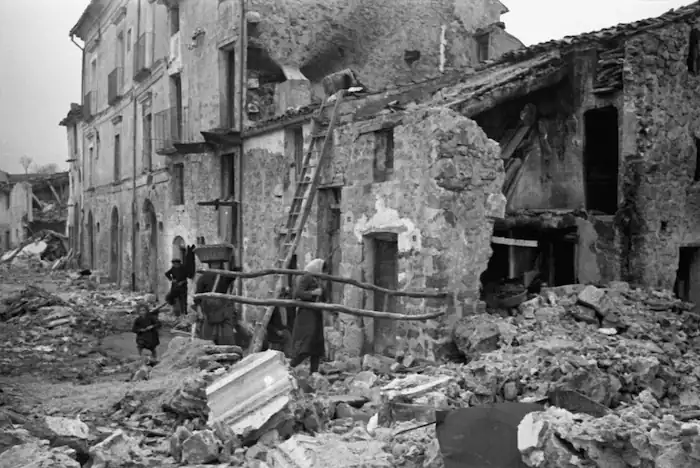
Mussolini had already done that work.
For over two decades, Fascism eroded Italy from within, dismantling free speech, banning opposition, glorifying war, and criminalising identity. Over 15,000 Italians were imprisoned, exiled, or sent to internal colonies for opposing the regime. Others jumped ship before they could be arrested, like the family of the late Pope Francis, who moved to Argentina in 1929; his father was a known anti-fascist. Francis once said on the subject: “They were filled with pain about leaving their homeland, but my father told me they could no longer speak freely, that everything was becoming suffocating under Fascism.” It is no small thing that his death fell in this same week one year ago.
More than 7,500 Jews were rounded up under Mussolini’s Racial Laws, passed in 1938 without German coercion. He didn’t just submit to Hitler. He led the way in excluding residents and citizens.
Who Mussolini Excluded, and When
The Fascist regime didn’t just dismantle political opposition. It systematically excluded entire groups from Italian public life, often laying the groundwork for Nazi collaboration and genocide. These policies were not accidental, and they were not forced on Italy by anyone else. They were deliberate, homegrown, and ideologically driven.
Women
Exclusion began in the 1920s and 1930s.
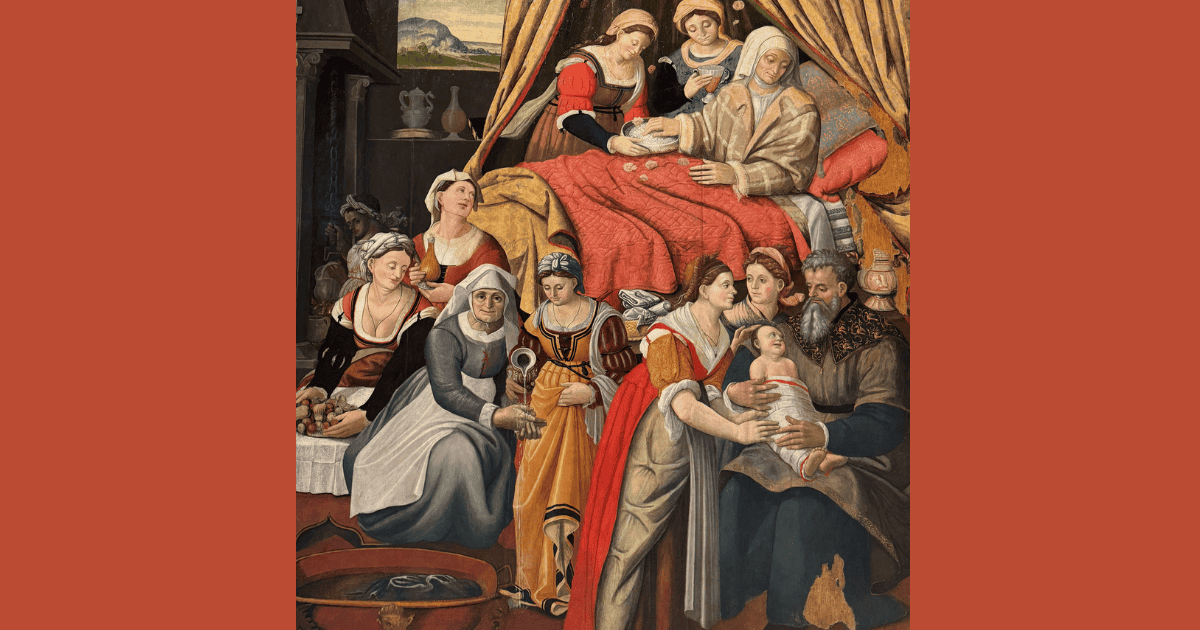
Women were pushed out of public and political life under Fascism’s “pro-natalist” agenda. Mussolini’s regime treated women’s bodies as tools of the state, aiming to boost Italy’s population not for social good but to prepare for war and empire-building.
- Contraception and abortion were outlawed, branded as crimes against the state.
- Large families were rewarded with tax breaks, job advantages, and better housing.
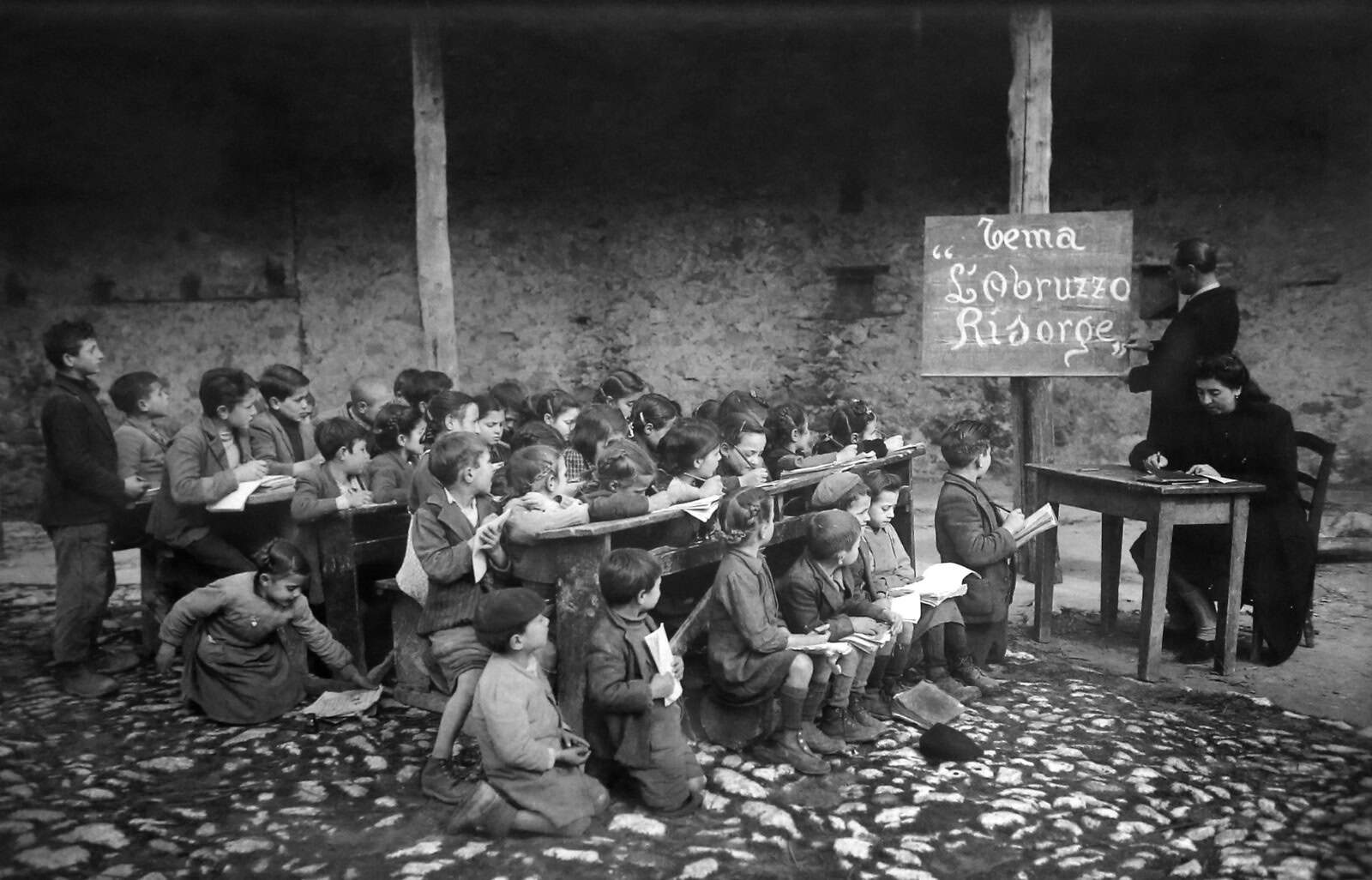
- In 1925, women were banned from teaching history or philosophy in secondary schools.
- By the 1930s, women were barred from most civil service jobs and political associations.
- State-run motherhood organisations claimed to “support” women but mostly controlled them.
- A massive ruralisation campaign pushed families to the countryside, on the belief that rural life raised birth rates.
- Mussolini formed a strong alliance with the Catholic Church, reinforcing traditional roles and suppressing reproductive rights.
- Motherhood was glorified as a national duty, with slogans like “Give birth for the nation!”
Mussolini declared, “Women must obey. This is their mission in life.” This was not about care. It was about control.
Jewish Italians
Exclusion began in 1938, with the Racial Laws (Leggi Razziali).
Jews were stripped of Italian citizenship, banned from attending or teaching in schools, working in public offices, or marrying non-Jews. Jewish-owned businesses were boycotted or confiscated. These laws were Mussolini’s initiative, not Hitler’s, and they laid the groundwork for the deportations that followed under Nazi occupation from 1943.
Abruzzo sat at the centre of this apparatus. Of Mussolini’s 48 internment camps, 15 were located in Abruzzo, the highest concentration of any Italian region. The Fascist Interior Ministry chose the area for its inaccessible locations, low population density, and poor communication routes. Camps and “places of internment” operated at Civitella del Tronto, Casoli, Lanciano, Notaresco, Nereto, Corropoli, Città Sant’Angelo, Tortoreto, Tossicia, Isola del Gran Sasso, Chieti, Lama dei Peligni, and Tollo.
What is striking about the surviving testimonies is the consistent kindness of local Abruzzese people. Horst Stein, a German Jew who interned at Tossicia and Civitella del Tronto as a teenager, said decades later:
[pullquote cite=”Horst Stein, German Jewish refugee interned in Teramo”]Italy saved my parents and me. Without Italy, I would not have been able to enjoy the last sixty-plus years, my marriage, my children, and my grandchildren.[/pullquote]
Simon Kort, a Berlin-born engineer, was interned in the same towns. Inside an abandoned hospital, he ran an improvised English school for fellow internees: business people, mechanics, artists, musicians, even an Orthodox rabbi who had run a kosher restaurant in Venice.
Natalia Ginzburg’s short essay Inverno in Abruzzo describes her family’s internamento at Pizzoli, in the province of L’Aquila, where her husband Leone Ginzburg was held from 1940 until 1943. Leone was murdered in Regina Coeli prison in Rome in 1944. The essay remains one of the most lyrical accounts of life in confino, and of the dignity Abruzzese villagers offered the displaced.
Roma and Sinti People
Exclusion began in 1926, intensifying through the 1930s.
Labelled “asocial elements,” Roma and Sinti communities were subject to police surveillance, forced relocation, and internment in camps. On 11 September 1940, police chief Arturo Bocchini signed the circular ordering the systematic internment of all Roma and Sinti in Italy, including Italian citizens, with no German pressure required.
Three of Italy’s main Roma and Sinti concentration camps were in central southern Italy. Two were in what is now Molise (Boiano and Agnone, both historically part of Abruzzi until 1963), and the third, Tossicia, was in the Abruzzese province of Teramo. Tossicia opened in summer 1942 and held 118 Roma and Sinti from the annexed province of Ljubljana. Conditions were described in survivor testimony as appalling, with children making up over half the deportees. The camp was not liberated until 27 September 1943.
Smaller “places of internment” for Roma and Sinti also operated at Torino di Sangro, Fontecchio, and Chieti itself. Many internees were later handed over to Nazi forces for deportation. After the war, no juridical investigation was held into crimes against Sinti and Roma, and no compensation was ever awarded. Only three of the Italian sites today carry plaques commemorating those interned. Tossicia is one of them.
Political Dissidents and Leftists
Exclusion began from 1925 onward.
After declaring a dictatorship in 1925, Mussolini’s regime banned all opposition parties and jailed, exiled, or killed socialists, communists, anarchists, and anti-Fascist intellectuals. Confino, internal exile, was used to isolate dissenters in remote villages and on the prison islands of Ventotene, Ponza, and the Tremiti.
Disabled and LGBTQ+ People
Exclusion began in the 1930s.
Fascism promoted a myth of the “strong, virile Italian” and treated disability and queerness as weaknesses, even as something foreign. LGBTQ+ Italians were criminalised and persecuted, excluded from public life and employment under public decency laws designed to “preserve morality.” Many were sent to dedicated camps, including the one Mussolini established on the Tremiti Islands. People with disabilities were institutionalised; mortality rates rose during Mussolini’s tenure, and disabled people were systematically refused state pensions by Fascist medical boards.
48 Brigades of Resistance
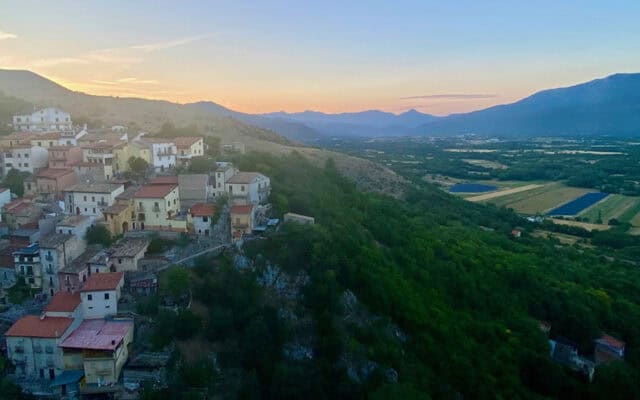
Abruzzo, wild, mountainous, and proud, became a stronghold of partisan resistance during the Nazi occupation. Forty-eight brigades fought across the region for their neighbours’ freedom, and many paid a terrible price. All four provinces, L’Aquila, Teramo, Chieti, and Pescara, witnessed banishment, horrific reprisals, and in some cases massacres. On top of being bombed and caught in the crossfire between Nazis and Allies, the Atlante delle Stragi Naziste e Fasciste lists 903 victims from 309 episodes in Abruzzo. The most documented include:
- Gessopalena, 21 January 1944. Nazi troops killed 42 civilians in retaliation for partisan activity.
- Pietransieri (Roccaraso), 21 November 1943. Nazi troops massacred 128 civilians, including 60 women and 34 children, in the Limmari woods.
- Capistrello, 4 June 1944. Nazi and Fascist forces executed 33 civilians, mainly shepherds and farmers, near the railway station.
Dictators Know Their Own
Mussolini did not act alone. He found comfort and camaraderie in fellow authoritarians, especially Hitler. They exchanged admiration, methods, and ideological fervour. It is no coincidence that both glorified mythic pasts, scapegoated minorities, and crushed dissent with patriotic slogans.
It is also no coincidence that modern strongmen, from Trump to Orbán to Putin, follow the same path, often praising each other, copying tactics, and stoking fear to consolidate power. They know their audience and how easily people forget. In countries where headlines fade fast, it is chilling how quickly some forget that it was Russia who invaded Ukraine, not the other way around, while voices like Trump’s work to rewrite the story and blame the victim.
[pullquote]Fascism does not arrive as a foreign invader. It is built, accepted, and even cheered from within.[/pullquote]
Article 11: The Constitutional Answer
The men and women who drafted the Italian Constitution of 1948 had lived through everything described above. They had been imprisoned, exiled, or had buried family. Many had fought in the partisan brigades. When they sat down to write the founding document of the new Republic, they made sure one principle could not be quietly amended away.
L’Italia ripudia la guerra come strumento di offesa alla libertà degli altri popoli e come mezzo di risoluzione delle controversie internazionali.
Italy rejects war as an instrument of aggression against the freedom of other peoples and as a means for the settlement of international disputes.
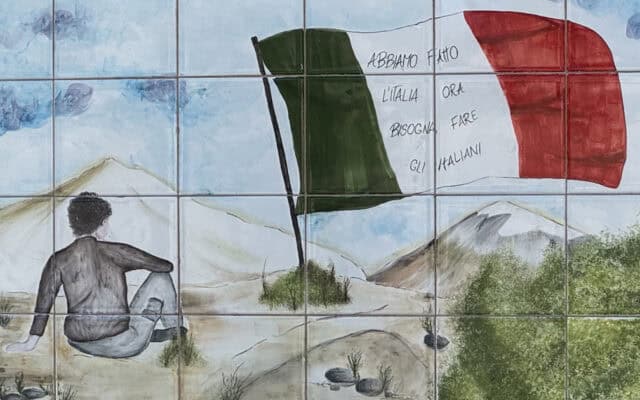
This is Article 11. It was not written in the abstract. It was a direct response to two decades of Fascism, to the invasions of Ethiopia and Albania, to the entry into war on Hitler’s side, and to the sons and daughters who never came home. The drafters, communists, socialists, Christian Democrats, liberals, all of them had reason to want different things, but on this one they agreed completely. Italy’s break with its nationalist past was to be permanent.
That permanence is being tested. Each time a government circumvents Article 11, each time the language of “defence” stretches to cover something else, the cost is paid in memory. The partisans, the women silenced, the Jewish refugees hidden in Tossicia, the Roma children who died in the camps. They all have a stake in whether anyone notices.
A Warning, Not Just a Memory
Liberation Day should not be a distant holiday of flags and marches. It is a living reminder of what happens when a society looks away, rationalises hate, or lets one man place himself above the law.
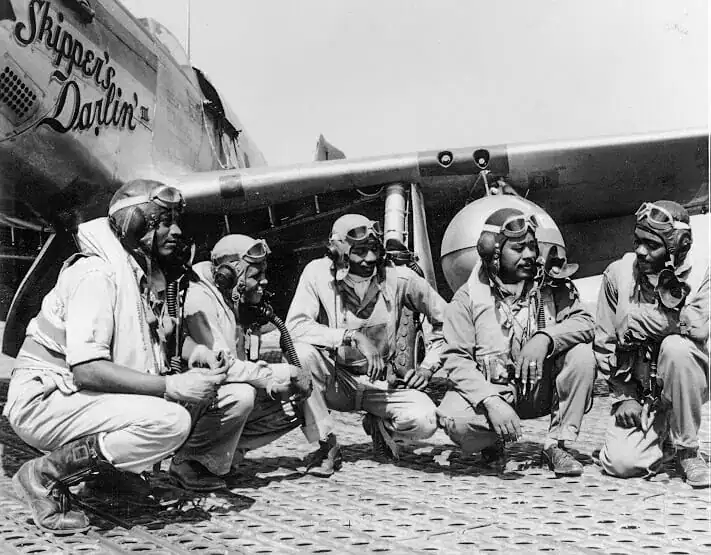
Authoritarian rhetoric is rising again across the globe, cloaked in populism, “law and order,” or conspiracy. The partisans, the victims of every Abruzzese massacre, and the Allied soldiers who gave their lives for freedom: we owe them more than a wreath.
We owe them vigilance.
Footnote
The term “fascist” used in this article describes someone who supports a nationalist, authoritarian political ideology that emphasises:
- strong centralised power,
- suppression of opposition,
- control of society and the economy,
- and often the glorification of the nation and its leader.
The word comes from fascio, meaning bundle, symbolising unity and strength through authority.
Further Reading from Life in Abruzzo
- Abruzzo’s Internment and Concentration Camps: the full account of Mussolini’s 15 Abruzzese camps and the local resistance to them.
- The Graffiti Remains of Mussolini at Fontecchio: what the Fascist regime left written on village walls.
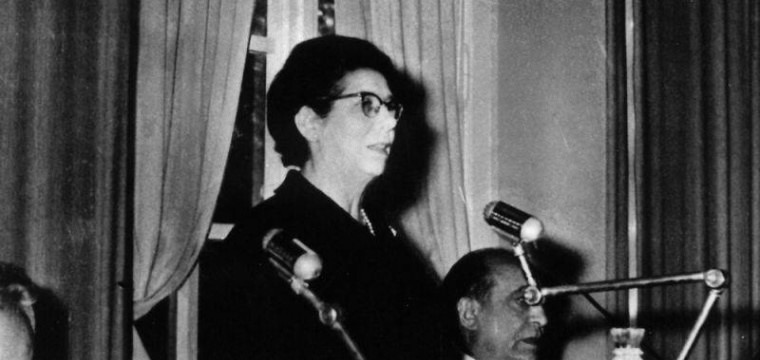
- Honouring a Founding Mother: Maria Agamben Federici: one of the women who rebuilt Italy after Fascism.
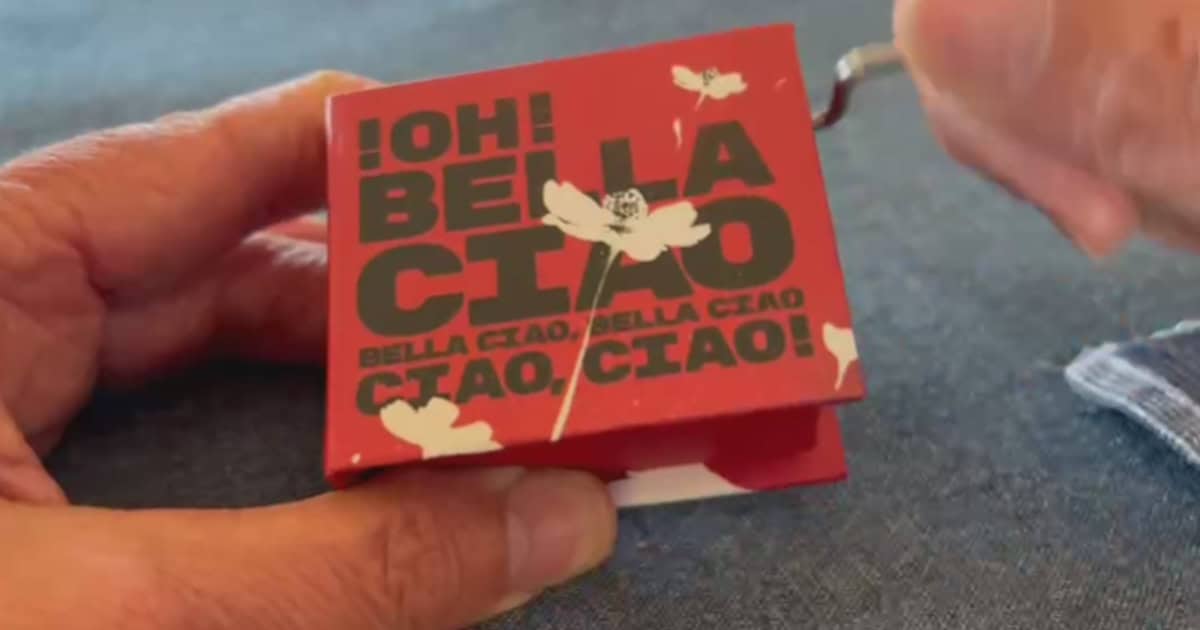
With grateful thanks to Christina Yocca, a member of our Life In Abruzzo community, for her music box video. She bought the music box in Bologna to celebrate the partisans’ rescue of her father, who was an American serviceman serving with the Allies in the 2nd World War.

Alongside raising a teenager, Sam hosts guests at her family’s traditional home, the Little House of the Firefly in Abruzzo, offering a warm welcome and insider tips on local culture, food, and hidden gems.

Author: Sam Dunham
Sam is a freelance SEO content creator and IGCSE Geography and English teacher in Rome. She also runs the Life In Abruzzo Cultural Association, sharing stories and insights about this captivating region. Alongside raising a teenager, Sam hosts guests at her family’s traditional home, the Little House of the Firefly in Abruzzo, offering a warm welcome and insider tips on local culture, food, and hidden gems.