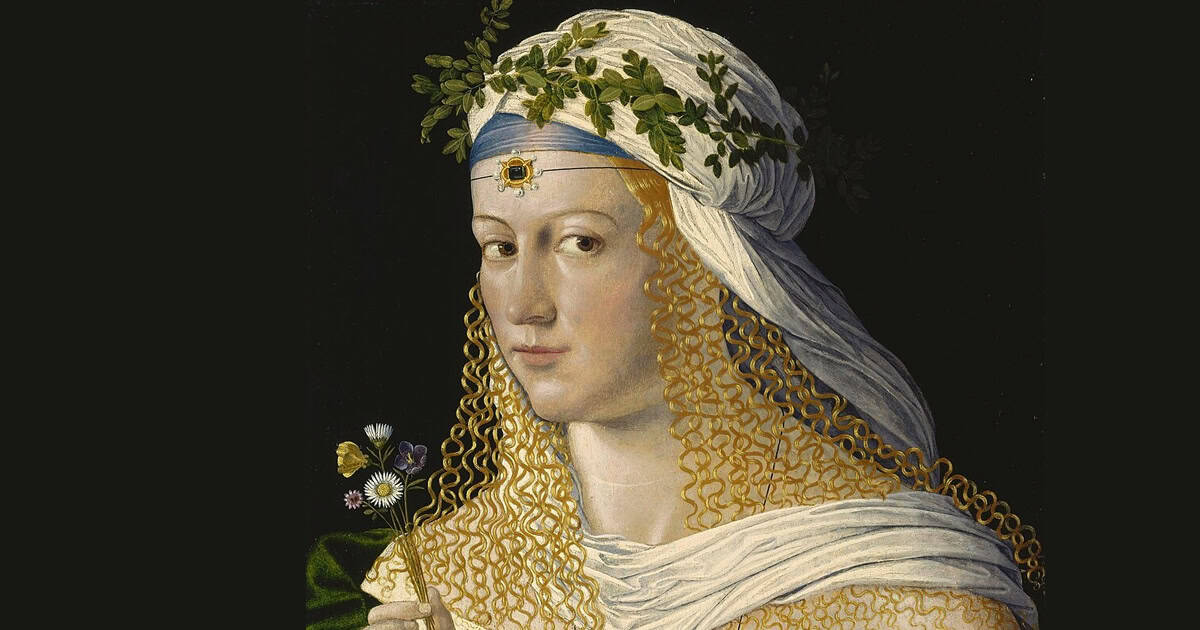
The Power of Legend - The image most commonly associated with Lucrezia Borgia around the world isn't actually her at all, it's an idealised figure of Flora, goddess of spring, long misattributed by tradition rather than by evidence. © Bartolomeo Veneto, Städel Museum in Frankfurt
Under the shadow of the Corno Grande, on the border of Gran Sasso National Park, sits the comune of Colledara, home to a ghost village with an incredible Lucrezia Borgia tale and festa, probably the most notorious woman of the Italian Renaissance.
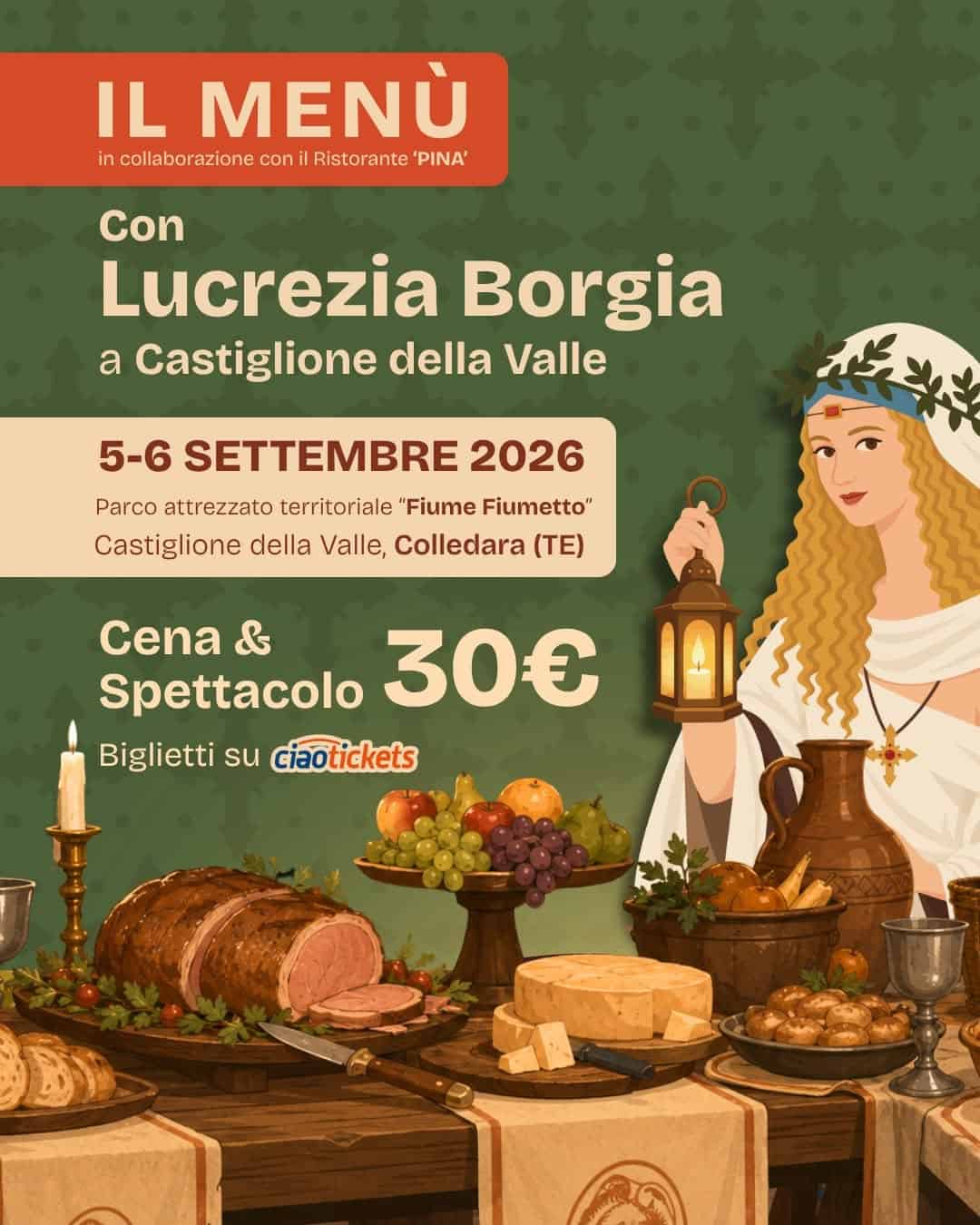
This weekend, September, the village, called Castiglione della Valle and previously known as Castrum Leonis, will once again bring its most famous legend to life through a spectacular historical banquet and entertainment in the borgo.
Who was Lucrezia Borgia?
Even before any legend connected her name with Abruzzo, Lucrezia Borgia was one of the most talked-about women in Europe. She was born in 1480 near Rome and was the daughter of Cardinal Rodrigo Borgia, who later became Pope Alexander VI, and his mistress, Vannozza dei Cattanei; her brother was Cesare Borgia, the ruthless soldier and politician who inspired Machiavelli.
Lucrezia’s life was shaped by political considerations, leaving her as a young woman caught in the middle. She was married at the age of thirteen to Giovanni Sforza to form an alliance, but the marriage was cancelled when the need for it disappeared. She then married Alfonso of Aragon, this being the link at the centre of the Abruzzo legend, although that marriage ended in violence when Cesare had Alfonso killed. In her third marriage, she married Alfonso d’Este, Duke of Ferrara, which at last gave her some security. In her later years, she became a respected and well-bred duchess, supporting the arts and managing the court in Ferrara.
Even though she achieved a great deal later in life, Lucrezia’s early reputation remained with her. For centuries, stories about poisoning, incest, and murder were told about the Borgia family, which caused Lucrezia to be portrayed as the typical femme fatale in a great number of plays, operas, and films, particularly in Donizetti’s works. Nowadays, historians generally view her differently: rather than as a schemer, they see her as a young woman used by her father and brother as a means of negotiation. Yet she demonstrated that she was a capable governor and did in fact rule Spoleto and Subiaco before going on to take charge of Ferrara. She died in 1519, having been in her thirties at the time, as a result of complications arising from childbirth.
Her real political ability, combined with a centuries-long record of scandal, means any story that associates her name with something is immediately interesting.
A Princess on the Run
According to local tradition, in 1499 two young members of the nobility arrived in the Valle Siciliana with a large crowd, fleeing for their lives. These were Lucrezia Borgia, daughter of Pope Alexander VI, and her husband, Alfonso of Aragon, Duke of Bisceglie. The account states that they were escaping Cesare Borgia, Lucrezia’s brother, who at that time held the title of Duke Valentino.
The villagers were glad to protect such important guests and succeeded in driving off their pursuers. It is shown that there once was an inscription on the old walls, devoted simply to ‘I Borgia’, as evidence that an event had taken place here, even though the history books do not refer to it.
The Evidence, Such as it is
The story is mainly based on 16th-century Latin manuscripts discovered in the village archives, written by P. L. Azzunos, and on the research of Ulderico Martelli, a humanist doctor who later wrote a book about the couple’s stay. He states that they arrived “at the castle with a large retinue”, and that a smiling princess in white silk embroidered with gold, having her golden hair confined in a jewelled net, washed it each day in the river.
It is stated that Lucrezia frequently prayed at the little Church of San Michele Arcangelo, which is of 12th-century origin, and made a generous donation for a chapel there as a thank-offering after the prolonged rainfall in the valley had at last ceased; she is said to have promised a papal bull in order to give the donation official status, but this never arrived.
Legend or History?
To be clear, this is folklore, not something proven. It is recorded that Lucrezia’s marriage to Alfonso came to a tragic end the following year, since he was attacked in Rome and then killed on Cesare’s orders. There is no reference of a visit to Abruzzo. We cannot be certain whether the couple actually went to Castiglione della Valle. What is certain, however, is that the village has maintained the story for centuries by carving it into its walls and passing it down even after the last inhabitants left.
A Landscape Made for Disappearing
It is easy to see why a couple on the run might have chosen these mountains, real history or not. Abruzzo was not merely close to Aragonese power; it was part of it. From 1442, when Alfonso V “the Magnanimous” claimed the throne of Naples, the whole kingdom, Abruzzo included, belonged to the House of Aragon. That rule held through the reign of his son Ferrante and on into the final, chaotic years of the century, only slipping away in 1501 as France and Spain fought over Italy, with the region passing fully into direct Spanish hands by 1503. Lucrezia’s legend places her here in 1499, which puts the story squarely within that Aragonese chapter, not after it. Alfonso of Aragon, her own husband, belonged to the very dynasty that had ruled these mountains for two generations. A village in the Valle Siciliana knowing the name Aragona, or by extension Borgia through marriage, was not remote gossip reaching an obscure hamlet. It was the name of the region’s own royal house.
Abruzzo has always had plenty of places where one can hide: some villages are located at a high elevation on rocky hills where strangers are easy to spot, while in others the valleys are so deep that sunlight isn’t seen until midday. The Gran Sasso region alone includes numerous small villages such as Castiglione della Valle, accessible only via a narrow road and tucked away in gorges and ravines that cut off both sound and sight.
For centuries, this area has provided refuge for shepherds, outlaws, hermits, and, as the story goes, from time to time a runaway noblewoman. Instead, it has many hidden spots rather than open fields, making it a place where a “large retinue” could go and disappear for a time, with local people keeping the guests’ secret. Even if Lucrezia actually came here or not, the mountains of Abruzzo have always had what someone fleeing needs: distance, privacy, and villagers who can keep secrets.
The Village Today
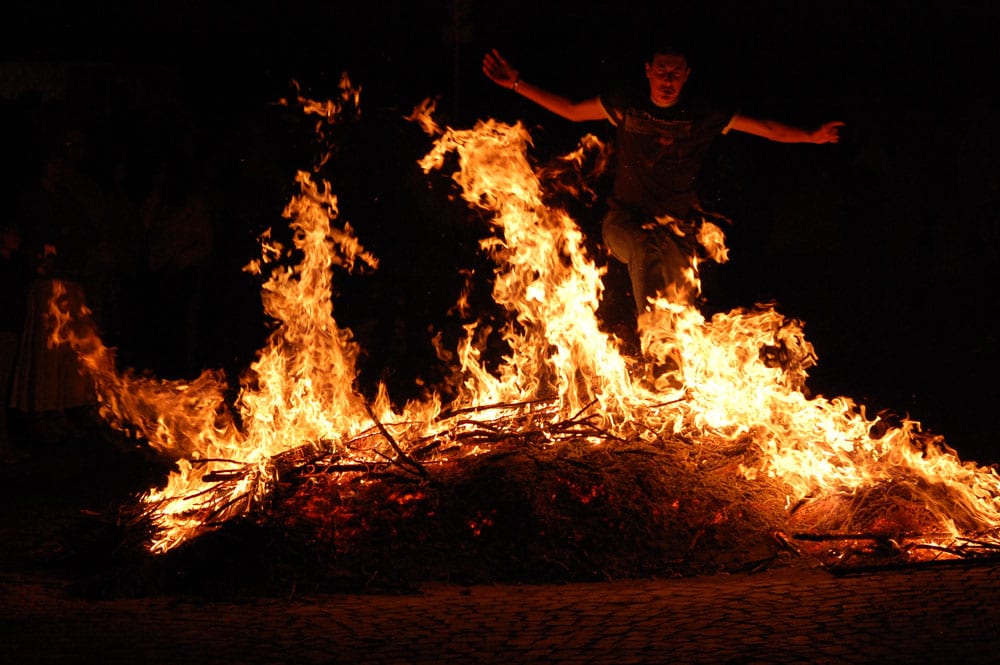
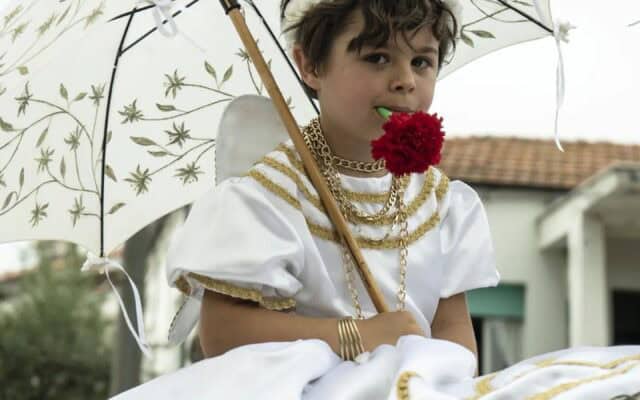
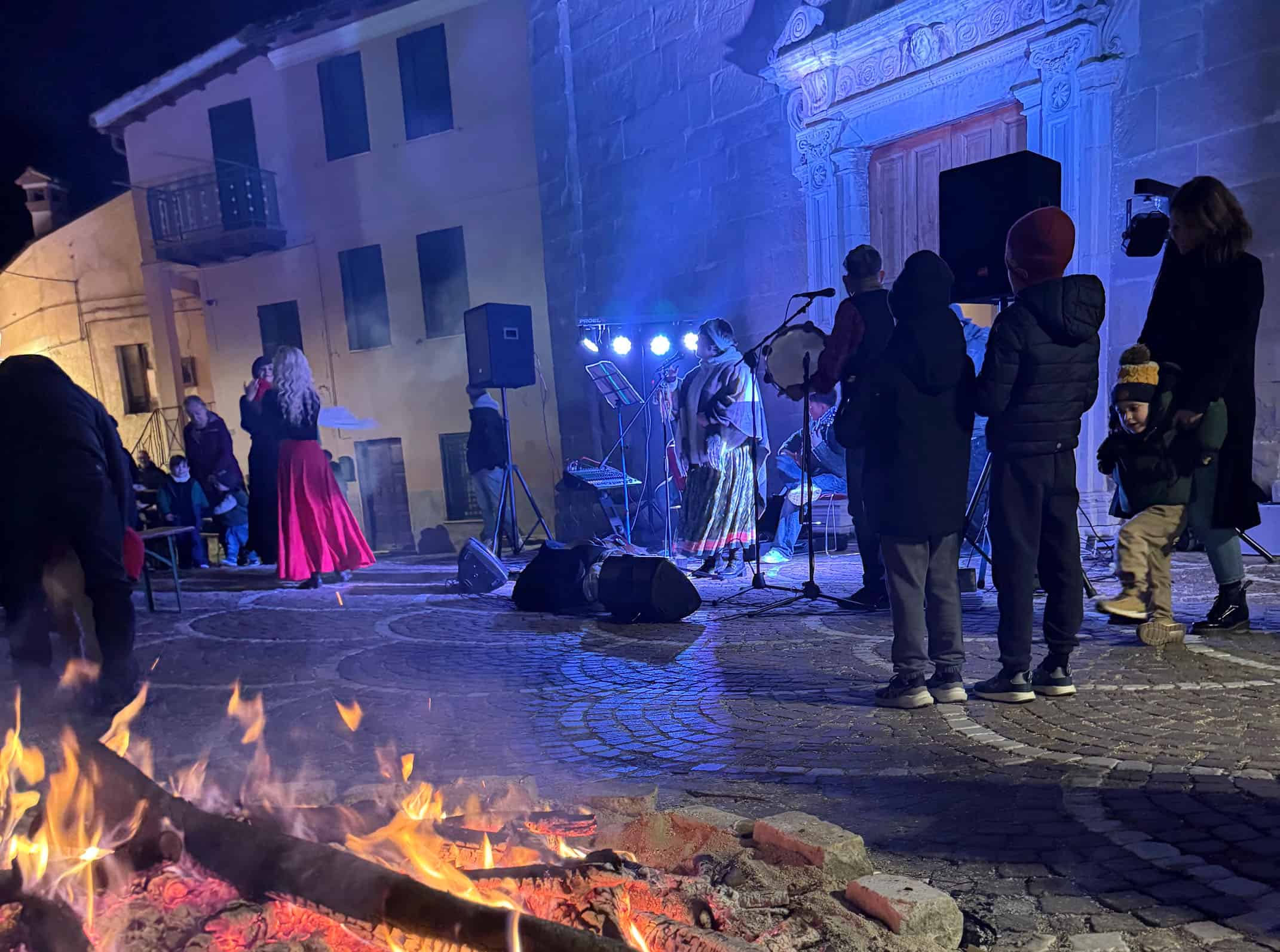
The present-day population of Castiglione della Valle is very small. The stone houses in the village were damaged first by the earthquake that struck L’Aquila and then, 10 years later, by the earthquake in Amatrice. Although the church is still standing, it has been considered unsafe to enter since 2009 and yet it still dominates the little square. For most of the twentieth century and well into the 2000s, the village became busy every August for the event called “Con Lucrezia Borgia a Castiglione della Valle”, which included music, dancing, and a Renaissance-style banquet. The tradition ended after 2007, but last year it was revived as “Aspettando Lucrezia Borgia”, bringing the legend and tourists back to the valley. I found it to be one of the loveliest and most entertaining small festivals in Abruzzo, transporting you back to the Renaissance with great food from the time. This year there is a torchlit medieval banquet, flag throwers, jesters and musicians, a fire and aerial troop, costumed reenactment, ancient dance troops, a bird-of-prey show, and a medieval market to buy from. When we visited, like all guests, we were gifted a little wooden box and ducats to take home; this year’s gift is a bowl and mug!
Local restaurant Pina will be providing the banquet,
- Pan brusco with ventricina
Toasted country bread piled with Teramo’s mildly piccante squishy salami - Scarapiccia with wild pickled greens and prosciutto
A local flatbread, blistered and golden, topped with tangy pickled shoots and eggies and prosciutto - Fiumetto bean soup
A humble, slow-simmered soup made with the prized local beans of the Fiumetto River valley - Oven-roasted pork with mountain vegetables
Slow-cooked pork, tender from the wood-fired oven, served alongside hillside vegetables - Mountain cheese
A wheel of aged cacio, shaped by shepherds and Gran Sasso pastures - To finish: cantuccelle and masticarelle
Little crunchy almond biscuits, paired with the chewy, honeyed sweetness of masticarelle.
It is wonderful that this festival has risen against all odds; we will never know if Lucrezia really made it here, but the festival’s message of love, solidarity, and keeping a secret is sure to prove popular, just like it did centuries before.
Book tickets online here
Driving instructions: Take the Colledara (TE) exit on the A24, then turn right after the tolls onto the main road. Drive into Colledara, and you will see signs and free shuttle bus instructions down to the borgo!

Alongside raising a teenager, Sam hosts guests at her family’s traditional home, the Little House of the Firefly in Abruzzo, offering a warm welcome and insider tips on local culture, food, and hidden gems.

Author: Sam Dunham
Sam is a freelance SEO content creator and IGCSE Geography and English teacher in Rome. She also runs the Life In Abruzzo Cultural Association, sharing stories and insights about this captivating region. Alongside raising a teenager, Sam hosts guests at her family’s traditional home, the Little House of the Firefly in Abruzzo, offering a warm welcome and insider tips on local culture, food, and hidden gems.