Eugenio Panichi
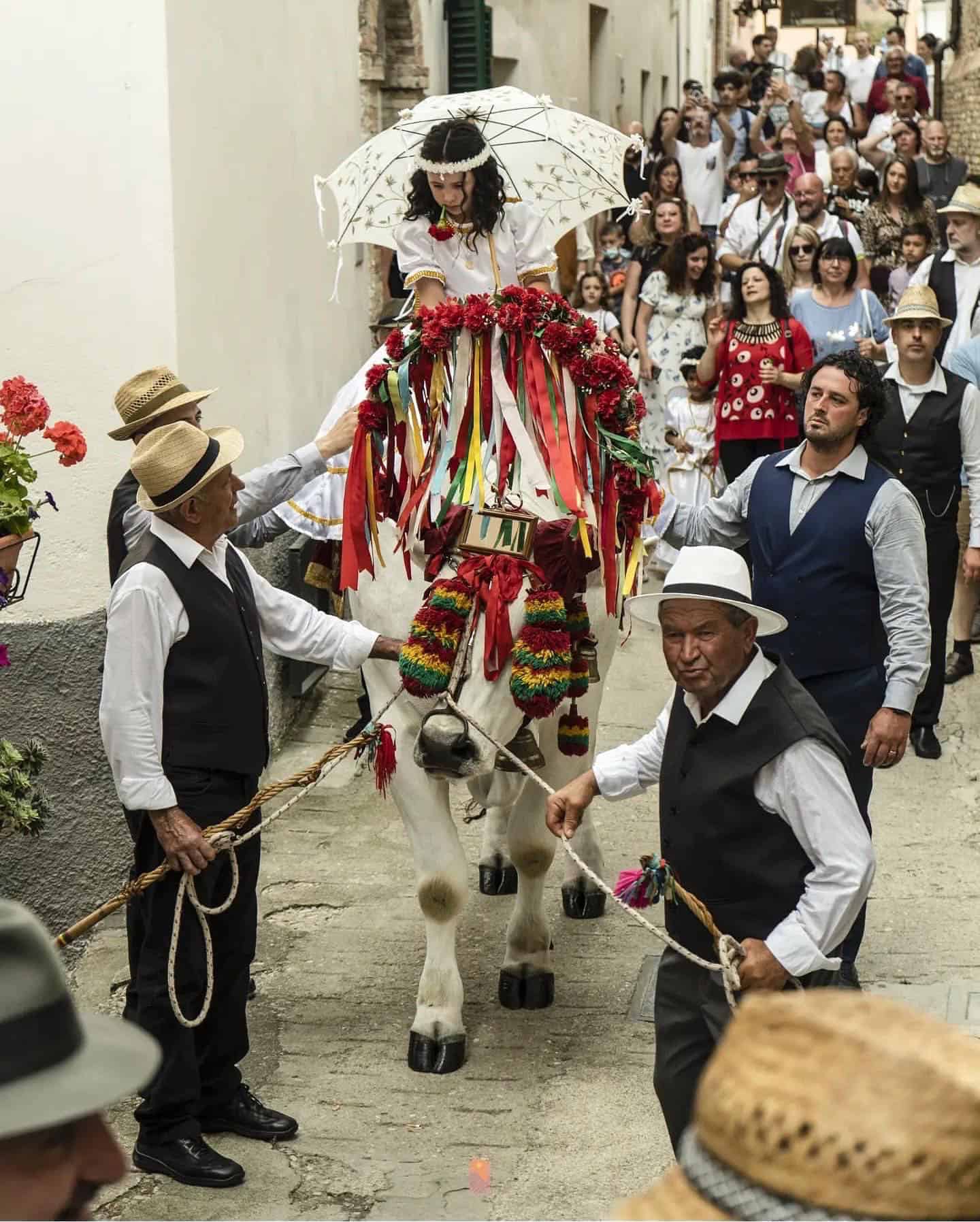
Have you ever wondered why Italian Pentecost is celebrated the way it is? Think of the red vestments, the red flowers scattered on the altar, and the red carnation held by the schoolgirl riding the white ox at Loreto Aprutino’s Festa di San Zopito.
The answer goes back further than the Holy Spirit, the apostles, or even Rome itself.
It is the harvest.
Every major seasonal festival in the Mediterranean happens at a special moment: when the sun is in a certain place, and a certain kind of work is happening in the fields. Pentecost is no different. In late May, wheat ripens, the first hay is cut, and rural Europe shifts from spring planting to waiting for the harvest. These festivals were never random. They join the farming year and the solar year, with religious meaning added over thousands of years. This is what religion was before it became separate from daily life.
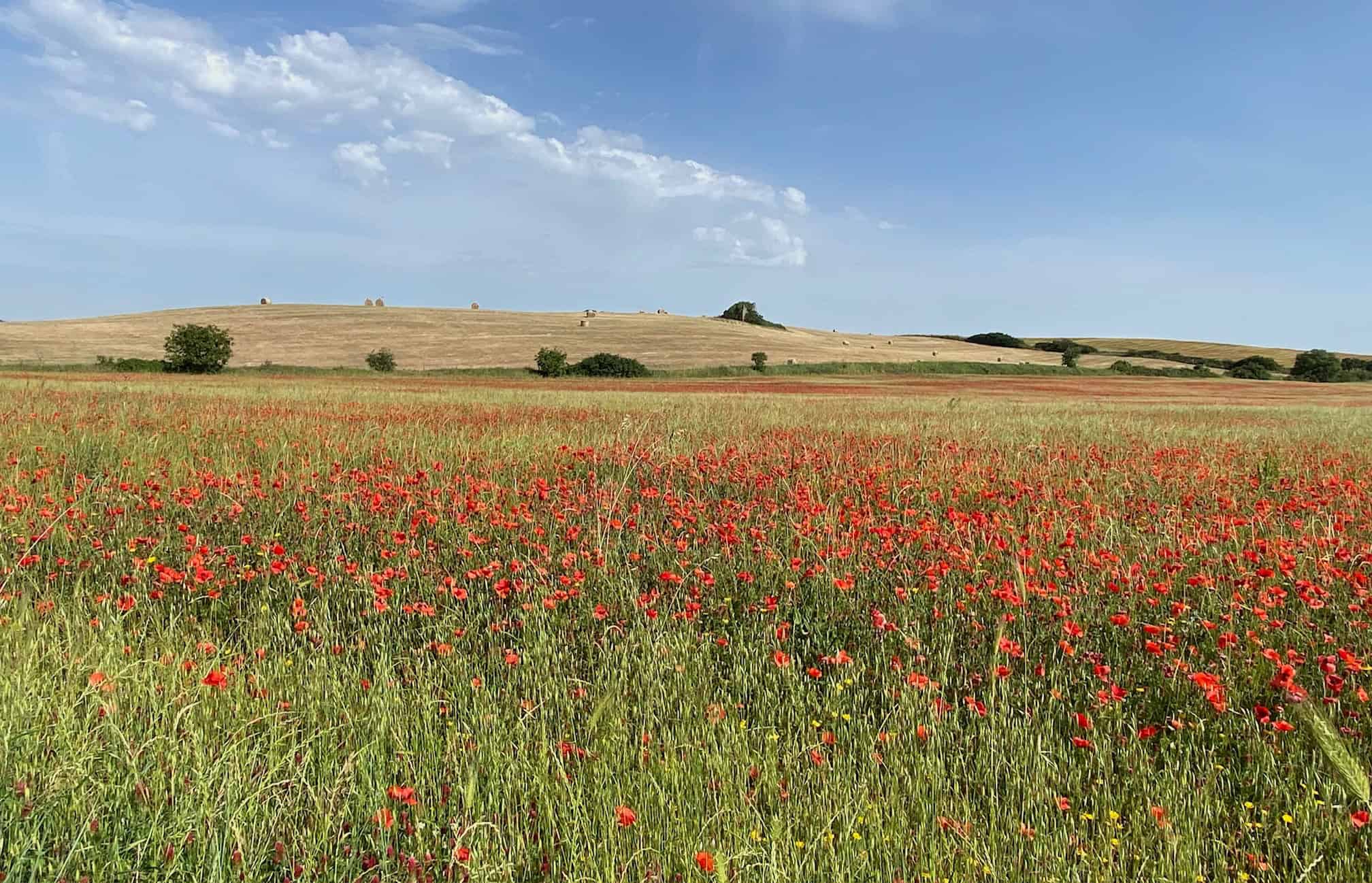
For three thousand years, the same images have returned: red flowers in the meadows and wheat fields, sacred fire, new grain, hay being gathered, and the ox that ploughs but is spared. Italian Pentecost is so striking because all these layers come together on one Sunday.
A Timeline of the Wheat-Feast, From Ancient to Modern
Fertile Crescent grain religion, from c. 3000 BCE
The deepest layer. Wheat was first domesticated in Mesopotamia around 9,500 BCE, the foundation of settled farming. By the third millennium BCE the Sumerians had built an elaborate grain theology: Nisaba, goddess of grain and also of writing because the earliest cuneiform tablets were grain inventories; Iškur, the storm god of rains; and the Akitu, the spring New Year festival of grain offerings, sacred fire, and royal renewal. Long before Shavuot existed, the wheat-and-fire theology that Italian Pentecost still carries was already thousands of years old.
Shavuot, c. 13th century BCE onward
The Israelite “Feast of Weeks”, fifty days after Passover, is the omer count from the barley harvest to the wheat harvest. Two loaves of new wheat bread were baked, brought to the Temple, and burned on the altar as the first-fruits offering. Fire and the new grain, literally. Later tradition added the gift of the Law at Sinai, where the Bible describes a theophany of fire, thunder and smoke on the mountain.
Cerealia, 5th century BCE onward
Rome’s April festival of Ceres, goddess of grain. Ceres was a sister of Jupiter, not his wife (that was Juno), and the mother of Proserpina. Her followers wore white. Ovid’s Fasti records a specific instruction for the feast: spare the ox.
“Let the ox plough, while you sacrifice the lazy sow,
It’s not fitting for an axe to strike a neck that’s yoked:
Let the ox live, and toil through the stubborn soil.”
Ovid, Fasti, Book IV
This is the white ox who, two thousand years later, kneels in a Loreto Aprutino piazza on Pentecost Sunday.
Floralia, 240 BCE onward
Rome’s six-day flower festival, late April into early May. Floral wreaths, brightly coloured clothing, a general riot. The Italian instinct for strewing red petals from church rafters at Pentecost descends from here.
Vestalia, 7 to 15 June, ancient
The Roman festival of Vesta. The Vestal Virgins offered the first ears of the new wheat harvest, ground into mola salsa, on Vesta’s sacred fire. Sacred fire plus first-fruits of the wheat. The most explicit Italian pagan precedent for what Pentecost would become.
Christian Pentecost, c. 33 CE
The events of Acts 2 occurred on Shavuot, when Jerusalem was full of pilgrims who had come for the wheat harvest feast. The Holy Spirit descended as tongues of fire. The fire image deliberately quotes Sinai, and Sinai itself stands inside the longer Near Eastern tradition that began in Mesopotamia. The Christian feast layered itself onto a fire-and-grain theology that was, by then, well over five thousand years old.
Pasqua Rosatum, medieval Italian
The Italian name for Pentecost, “rose Easter”, comes from the red vestments and red flowers strewn from church rafters. The colour stuck in Italy more than anywhere else in Catholic Europe, partly because the landscape supported it. The Papaver rhoeas poppy, a companion plant of disturbed soil, blooms across the hay meadows and wheat fields of rural Italy exactly when the feast falls. The Christian theological red landed on a landscape that was already red.
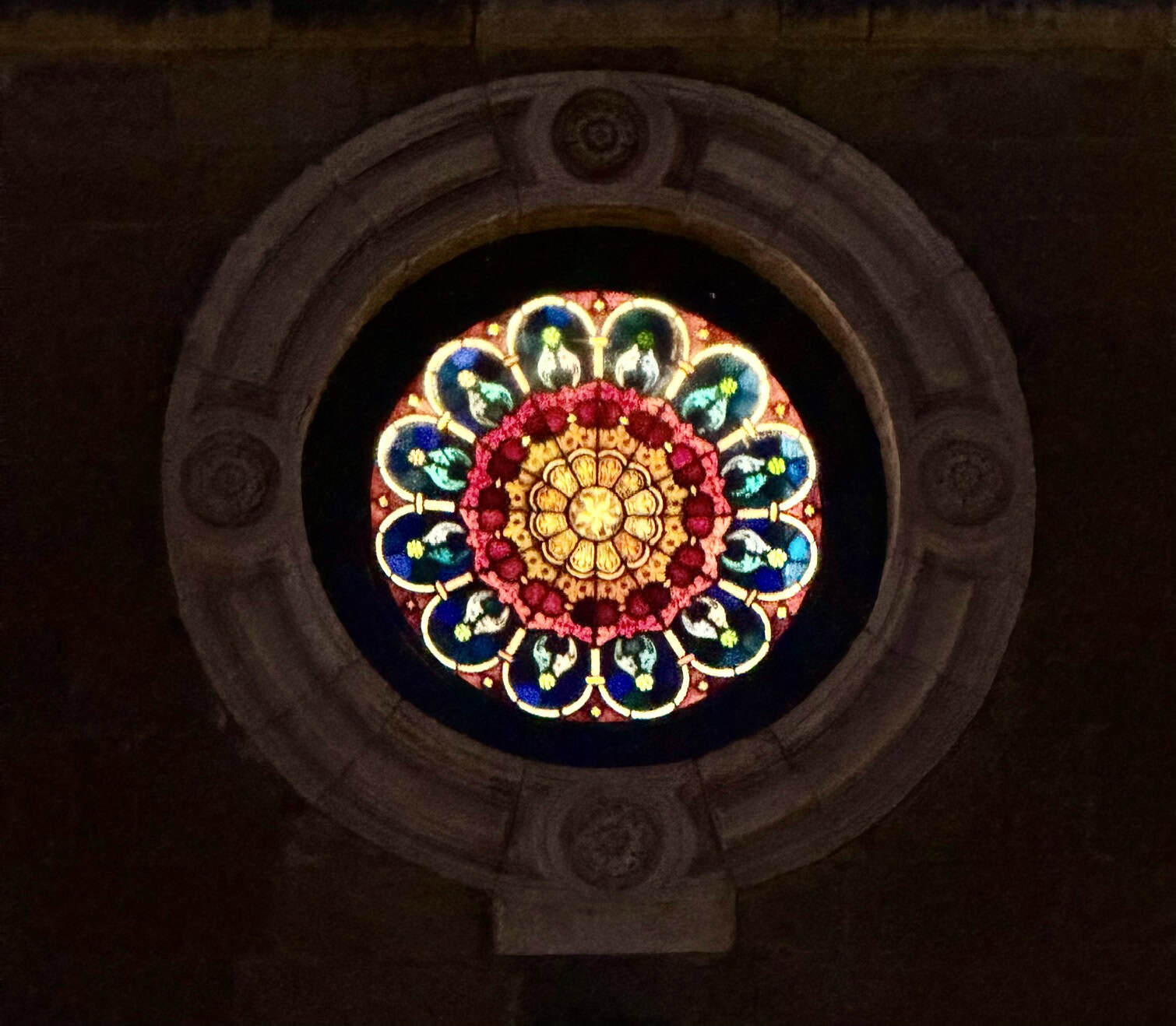
Architecture also plays a role. By Pentecost, the sun is high enough that light shines directly through the west-facing rose windows, making the red glass and petals above the door glow just as red as the flowers scattered below. The rose window was not made just for Pentecost—its main meaning is Marian, the rose as Rosa Mystica, but the timing and the building come together beautifully.
If you want to chase the poppies, the lowland fields of the Pescara and Sangro valleys peak around Pentecost itself. The upland meadows of Campo Imperatore, at 1,500 to 2,100 metres, run about a month behind, so the wildflower display there carries on through June and into early July.
Calendimaggio and the Maggio Festivals, medieval onward
The Italian May Day cycle is a folk survival of the Floralia. Branches, garlands, and processions are still observed across smaller Abruzzese villages.
Festa di San Zopito, Loreto Aprutino, from 1711
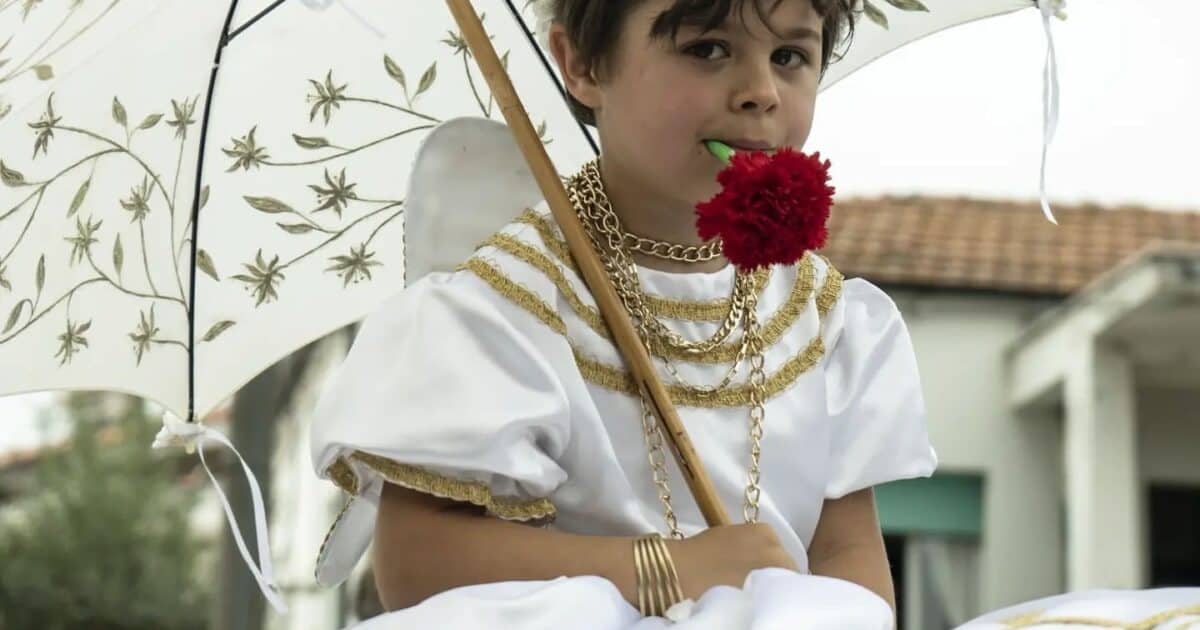
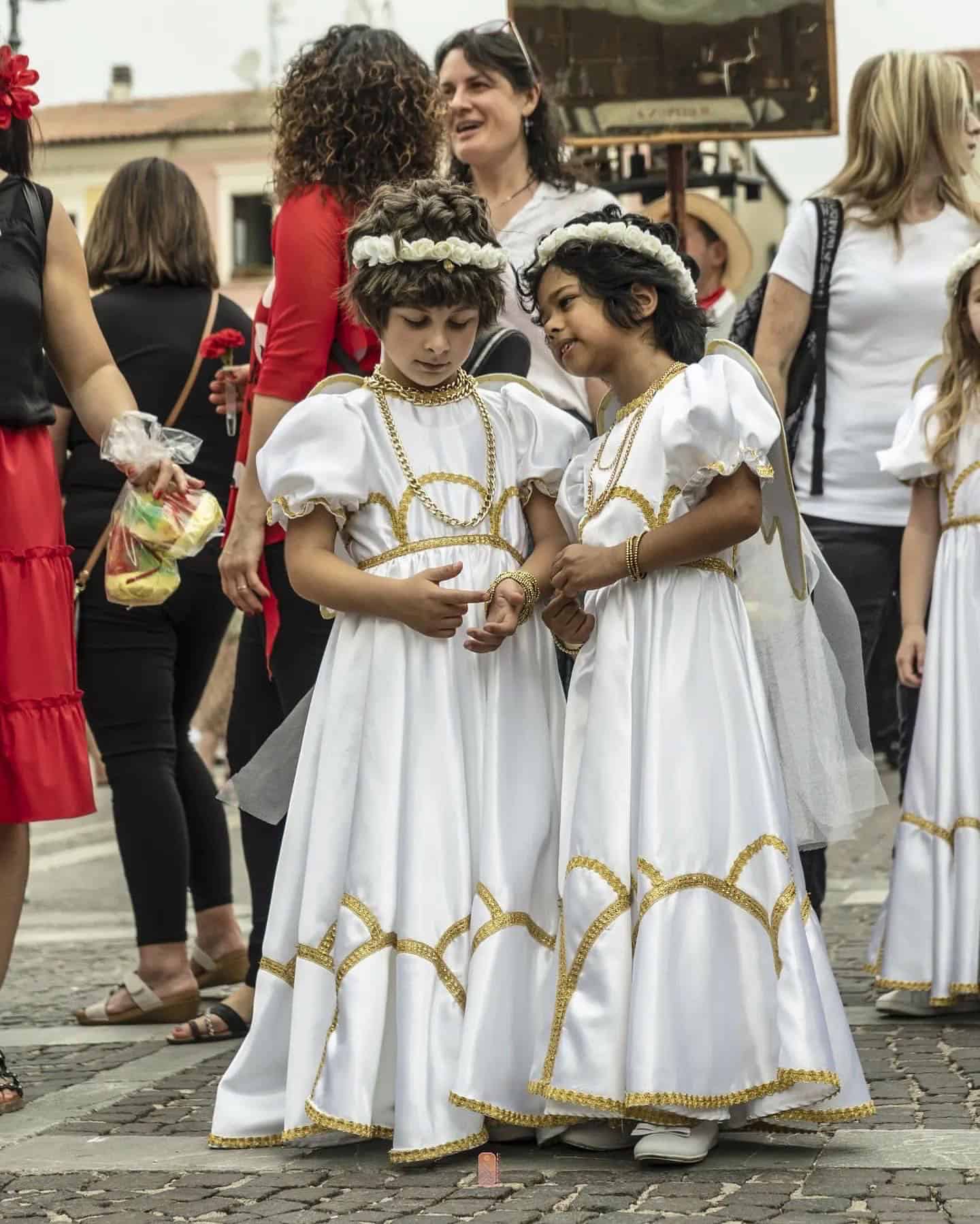
A trained 13-tonne white ox, in a scarlet cloak, with a primary schoolgirl on its back wearing silver wings and a red carnation in her mouth, is led around the historic centre on Pentecost Sunday. Read the full festival profile here. The kneeling ox is the ox of Ceres. The red carnation is the poppy. The schoolgirl is in white because Ceres’s followers wore white. All of the layers, in one twenty-minute procession.
Infiorata del Corpus Domini, 17th to 19th century onward
Two weeks after Pentecost. Streets carpeted with elaborate pictures made from flower petals, in Abruzzese towns including Castel di Ieri and Castiglione a Casauria. A Floralia survival, given Christian content and a fixed liturgical date.
The Abruzzo Field Year at Pentecost
In Abruzzo, late May is the precise moment when two things happen at once. In the high pastures around Campo Imperatore, Solina, the region’s most prized heritage wheat, is in the milky-grain stage. In the lower valleys, Senatore Cappelli durum is heading out. Saragolla and Rosciola are doing the same. The farro of the upland Apennines is a few weeks behind, but already committed.
At the same time, the first hay cut of the year happens. The lowland meadows are mown from mid-May, the upland prati a few weeks later. The whole point of haymaking, today as in the past, is winter feed for the animals. A field cut, dried, and stored at Pentecost can mean the difference between livestock surviving the next winter or not.
But Abruzzo’s hay is special. The upland meadows of the Gran Sasso, the Majella, and Campo Imperatore are called prati polifiti, or polyphytic meadows. These are rich, unsown grasslands managed in the old way, with dozens of wild grasses, legumes, and aromatic flowers growing together. Yarrow, thyme, wild mint, fennel, anise, vetches, clovers, knapweed, dandelion, and the red poppy all grow here. The same flowers that make the meadows beautiful in late May also give the hay its unique flavour. Cows and sheep that eat this hay produce milk full of these aromas, and from that milk come the famous cheeses of upland Abruzzo. Check out our cheese trail, prepared by Slow Food, to sample the best!
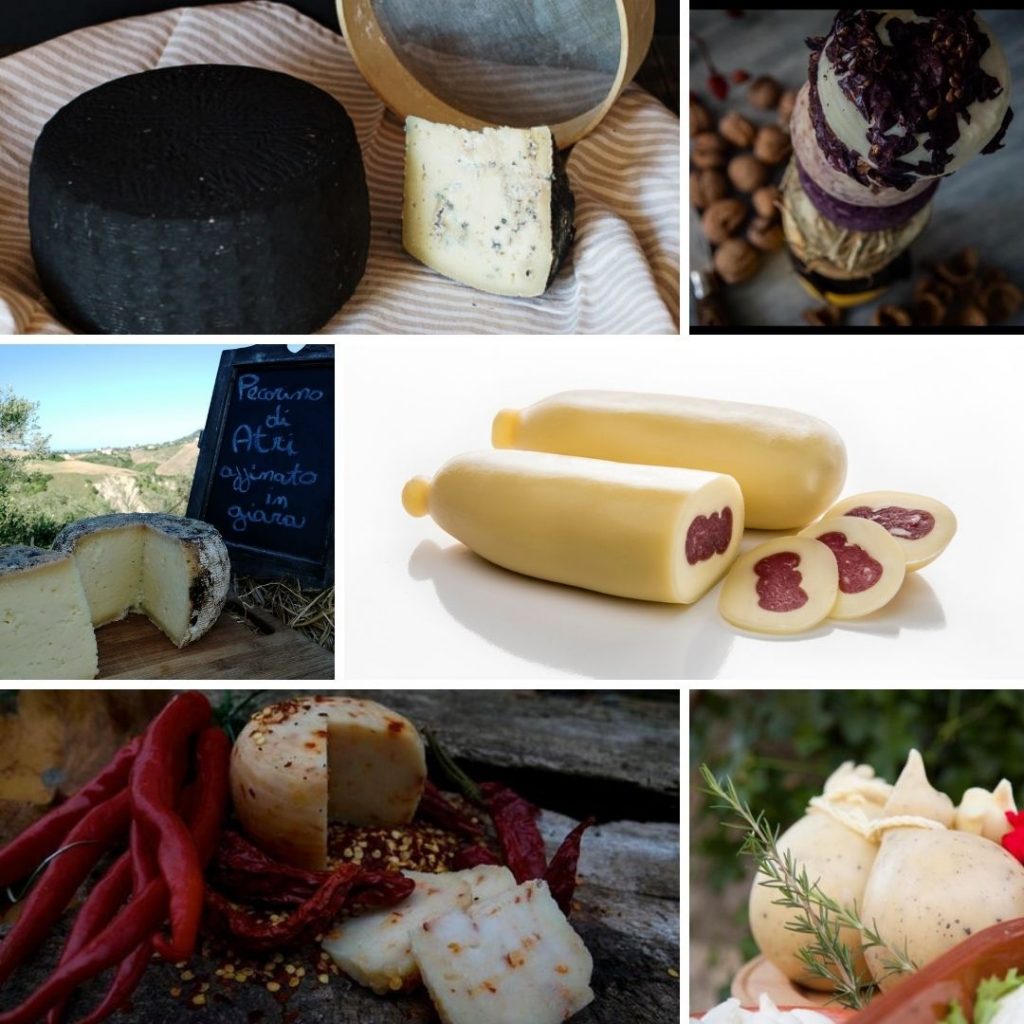
So Pentecost is the feast that comes when the wheat is safe, the hay is being stored, and the meadows that fed the animals are at their best. The frosts are gone, the spring storms have ended, and the grain is growing well. It is a time to thank the Spirit, the Saint, and quietly, deep down, Ceres.
A red poppy at the edge of a wheat field is one of the oldest images of Pentecost in the Mediterranean. It is the red of the Spirit and the red of the harvest.

Author: Sam Dunham
Sam is a freelance SEO content creator and IGCSE Geography and English teacher in Rome. She also runs the Life In Abruzzo Cultural Association, sharing stories and insights about this captivating region. Alongside raising a teenager, Sam hosts guests at her family’s traditional home, the Little House of the Firefly in Abruzzo, offering a warm welcome and insider tips on local culture, food, and hidden gems.