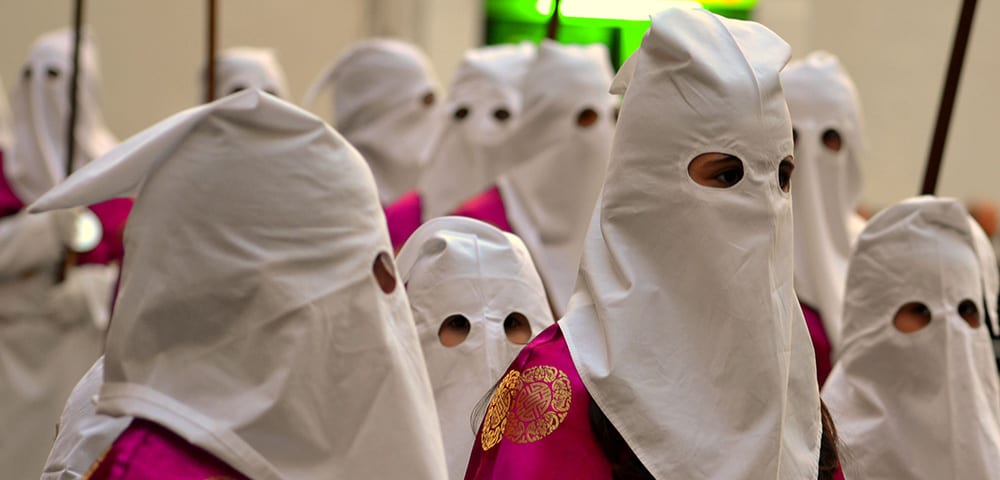
Easter in Abruzzo in a simple snapshot: exploring its ceremonies and processions over the revered holy weekend and recipes eaten locally to welcome spring and take on the first picnic of the year.
Easter in Abruzzo lasts an entire week, filled with processions, old traditions, and shared meals that mark the end of Lent. Whether you visit for the events, the food, or to explore the region, it’s a highlight of the year here.
Here’s what happens throughout the week.
Palm Sunday
Palm Sunday is a gentle start to the week. Families all over Abruzzo bring olive branches, trimmed from their own trees in winter, to church for a blessing. These local branches, not imported ones, are then hung above the door at home for the year. Following a farming tradition common in southern Italy, last year’s branch is taken down and burned in fields, orchards, and vineyards, while the new blessed branch is put up to protect the next harvest. Read Article
Holy Thursday (Maundy Thursday)
Holy Thursday, or Giovedì Santo in Italian, remembers the Last Supper, when Jesus washed his disciples’ feet and told them to love one another. The word Maundy comes from the Latin for commandment. In Abruzzo, this evening has its own special traditions.
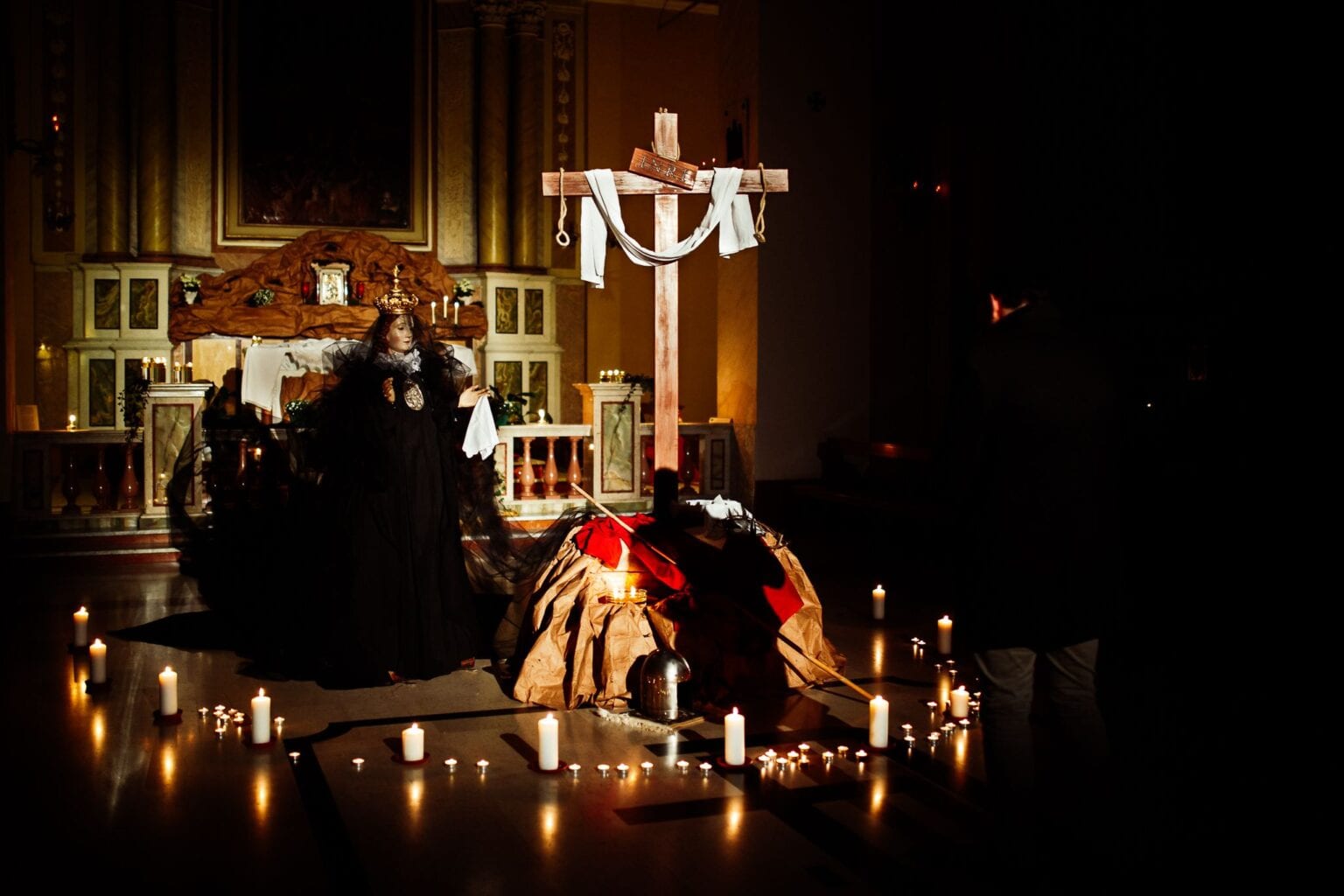
In Lanciano, after dark on Holy Thursday, the hooded brothers of the Arciconfraternita della Morte e Orazione leave the church of Santa Chiara with torches, joined by a brass band. At the centre is the Cireneo, a barefoot brother secretly chosen by the Prior, who carries a heavy wooden cross through the streets to honour Simon of Cyrene, who helped Jesus on the way to Calvary. Only the Prior knows who he is. If the chosen brother refuses, the Prior carries the cross instead.
Good Friday
On Good Friday night in Abruzzo, the streets become the Via Crucis. In many towns, hooded brotherhoods walk in processions, carrying statues of the dead Christ and the grieving Madonna through the old, darkened centres. These events include torchlight, brass bands, and the slow, mournful Miserere. Each town’s procession has its own name, history, and style, but all share a sense of sorrow.
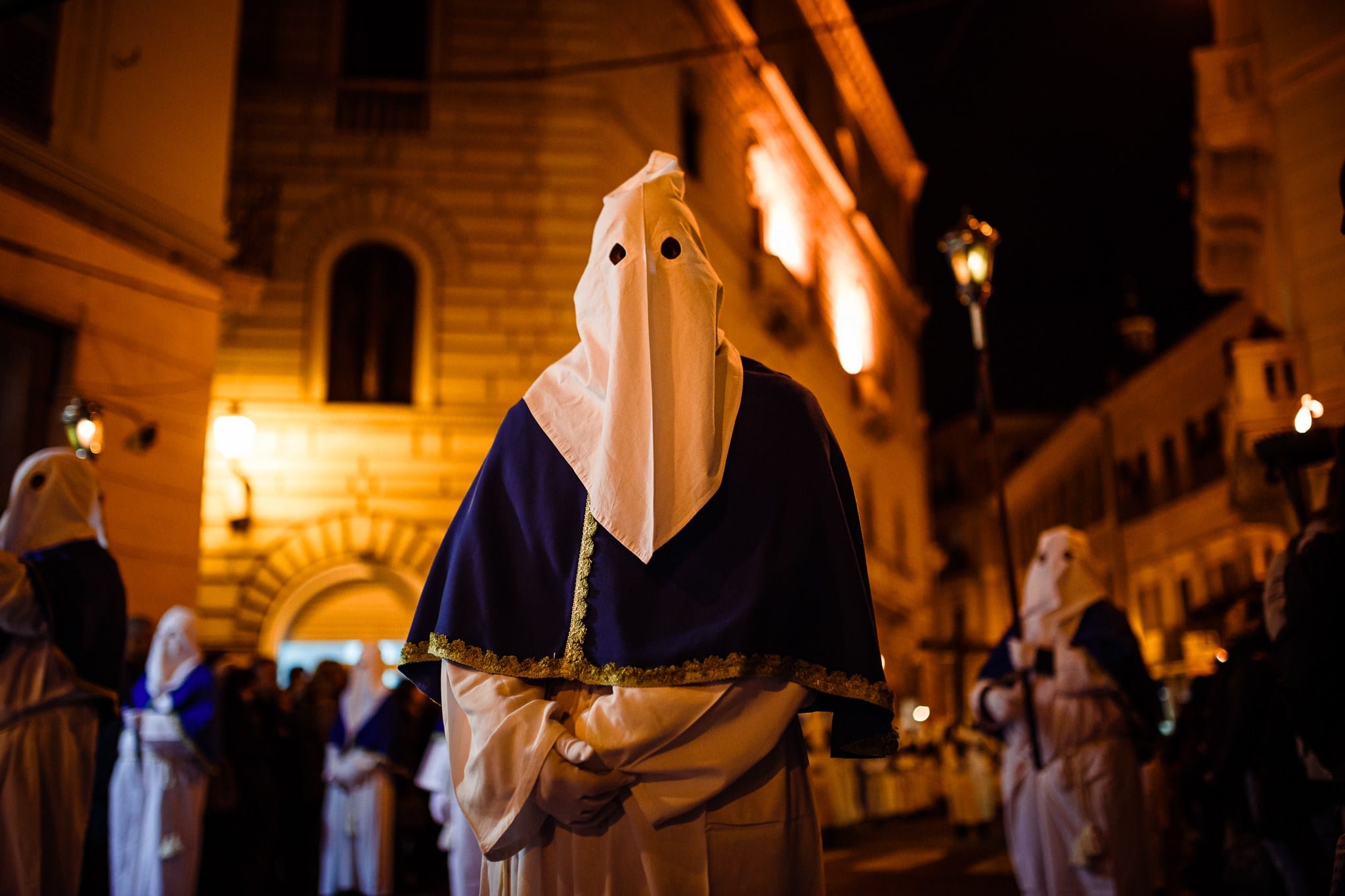
The most famous is in Chieti, where the Processione del Venerdì Santo has been held since 842 AD. To experience the event, arrive before 18:30 and eat pizza from the street stalls while you wait. After dark, the procession begins, winding through the torch-lit streets of the historic centre. Hooded brotherhoods in coloured robes lead, followed by an orchestra of 100 violinists and a male choir singing the Miserere, an 18th-century composition by local master Saverio Selecchy that is performed nowhere else in the world. You do not need to be religious to be moved by it. Read the article
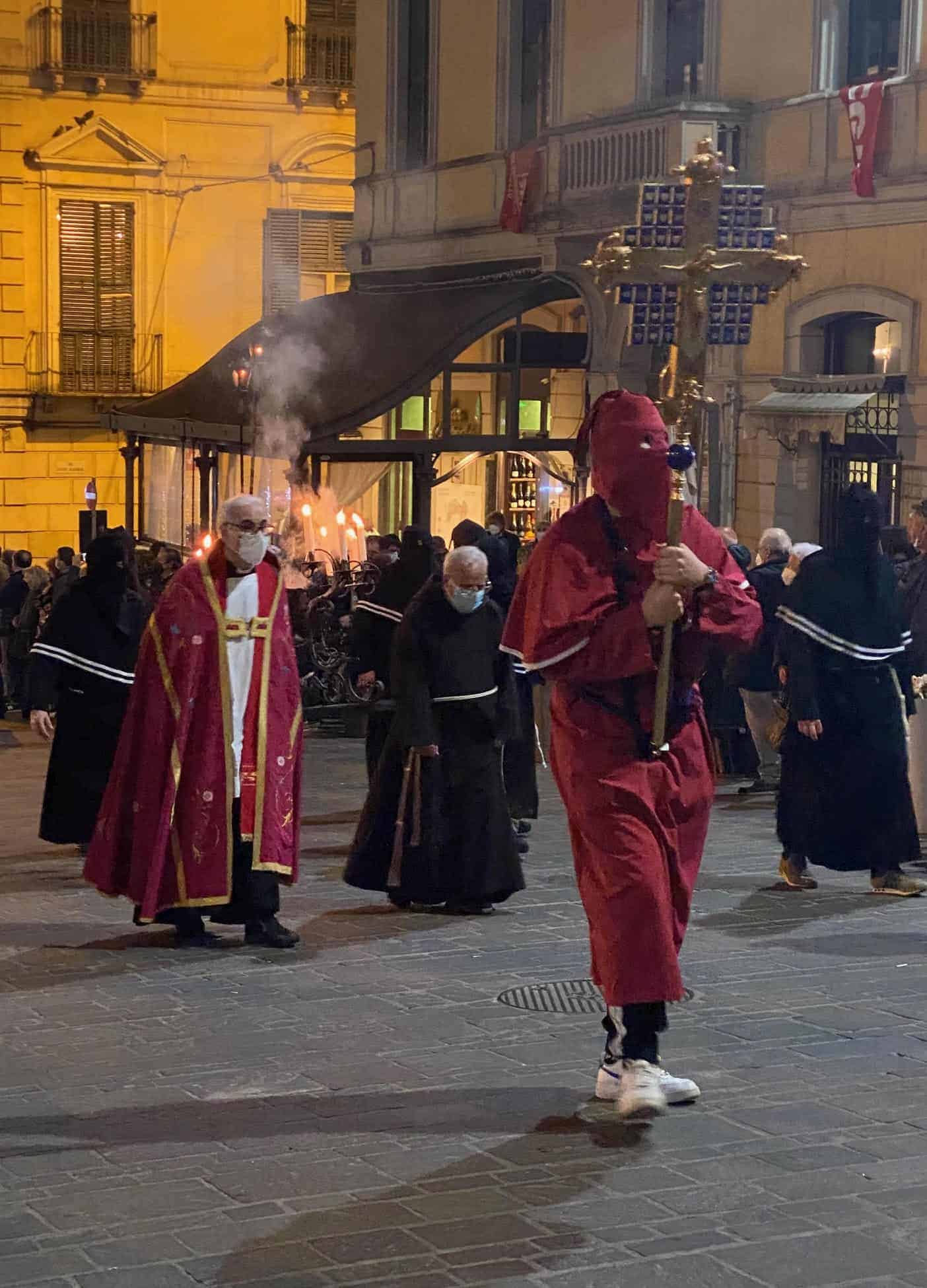
The second-oldest Good Friday procession in Abruzzo takes place in Penne. Dating to 1570, the event begins at dusk as candles line the streets and doorsteps, and the procession climbs the hill through the medieval town, accompanied by the choir singing Allegri’s Miserere. Read the article
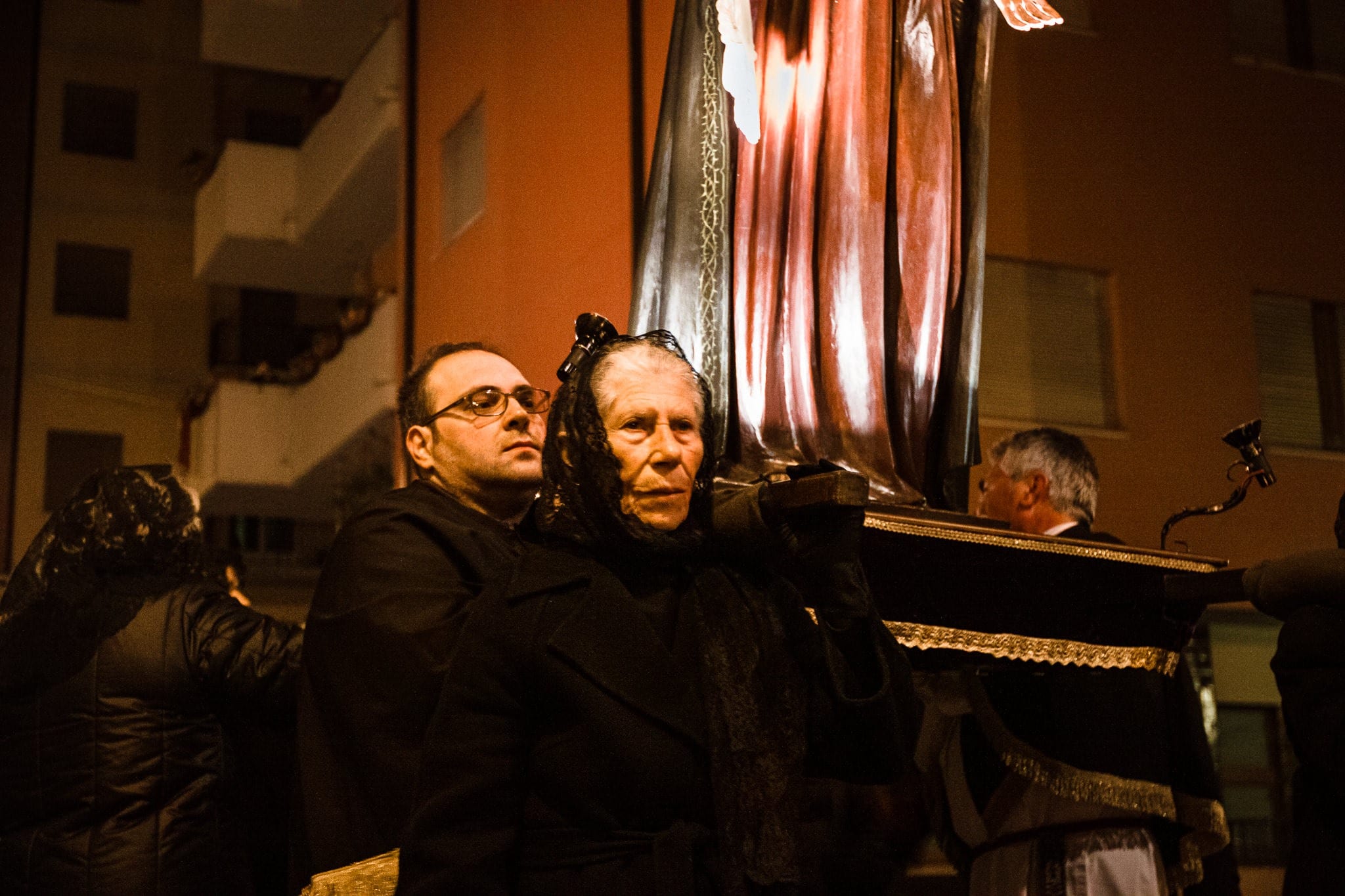
In Teramo, Good Friday features La Desolata, a procession that dates to 1260. It reenacts a mother’s search for her son, condemned to death, as participants move through the city’s seven main churches. Originally, men in black tunics carried the cross, and in 1921, after the brotherhood’s numbers dropped, women began carrying the statue of Our Lady of Sorrows on their shoulders. Since then, this has been a women’s procession.
In Ortona, women lead the Good Friday procession, maintaining a rare tradition documented by photojournalist Pier Luigi Fabrizio.
Easter Sunday

If you’re near Sulmona on Easter morning, be sure to see La Madonna che Scappa. In Piazza Garibaldi, a statue of the Madonna dressed in black is carried through the crowd. When she meets the Risen Christ, her black cloak drops to reveal green, a symbol of spring, resurrection, and new life. The crowd cheers. This tradition has taken place every year since the 11th century and still feels special today. Read article
Easter Monday / Pasquetta
Pasquetta is a day when everyone in Italy gets outside. In Abruzzo, three special events make the day memorable.
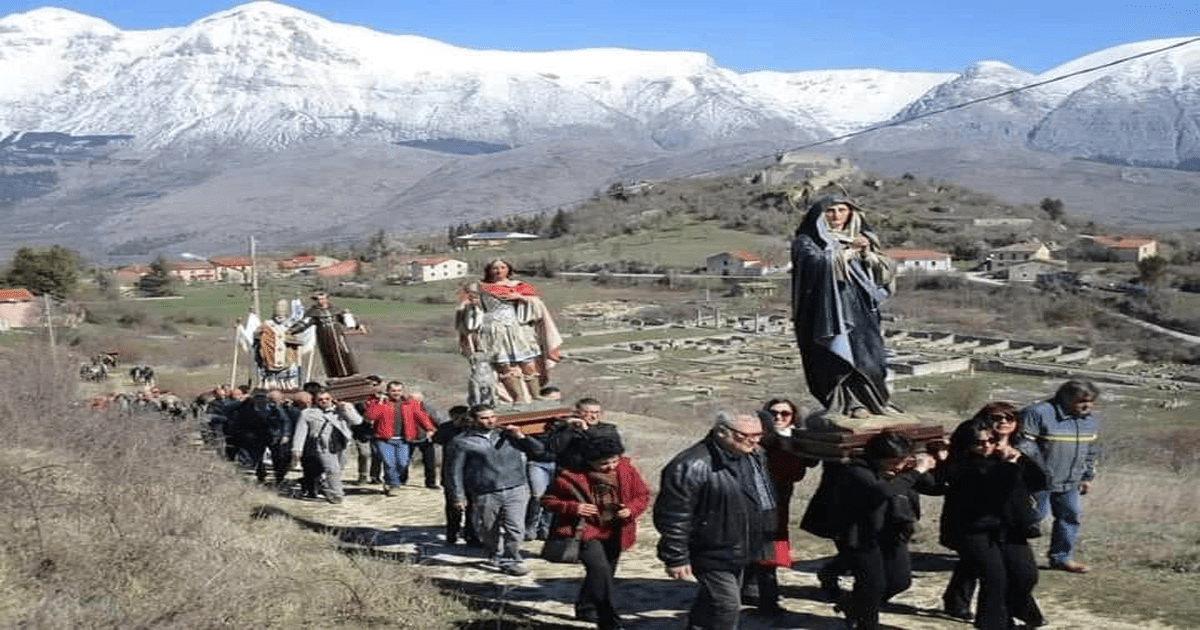
On Easter Monday in Alba Fucens, a tradition dating back to the 1600s begins early with fireworks, wreath-laying, and Mass. Afterwards, there’s a solemn procession through the town’s stone streets and along the old Roman road from San Nicola church to San Pietro. To see it all, arrive by 10:00. If the weather is nice, people often picnic in the Roman amphitheatre after the procession. Read article
Also on Easter Monday, Roccascalegna castle holds a medieval fair with falconry shows, jousting, street performances, and local food stalls in the village below.

In the hills above Tagliacozzo, the village of San Donato celebrates the Festa delle Tre Madonne every Easter Monday morning. Three nearby villages join together under the Madonna della Pace in a ritual of truce that goes back to 1639. The day features a procession, a shared meal, sweet fiadoni, bell ringing, and a morning walk along the Cammino dei Briganti path.
The Food
Easter in Abruzzo ends Lent with tables full of dairy, eggs, and lamb, foods that have been avoided for forty days.
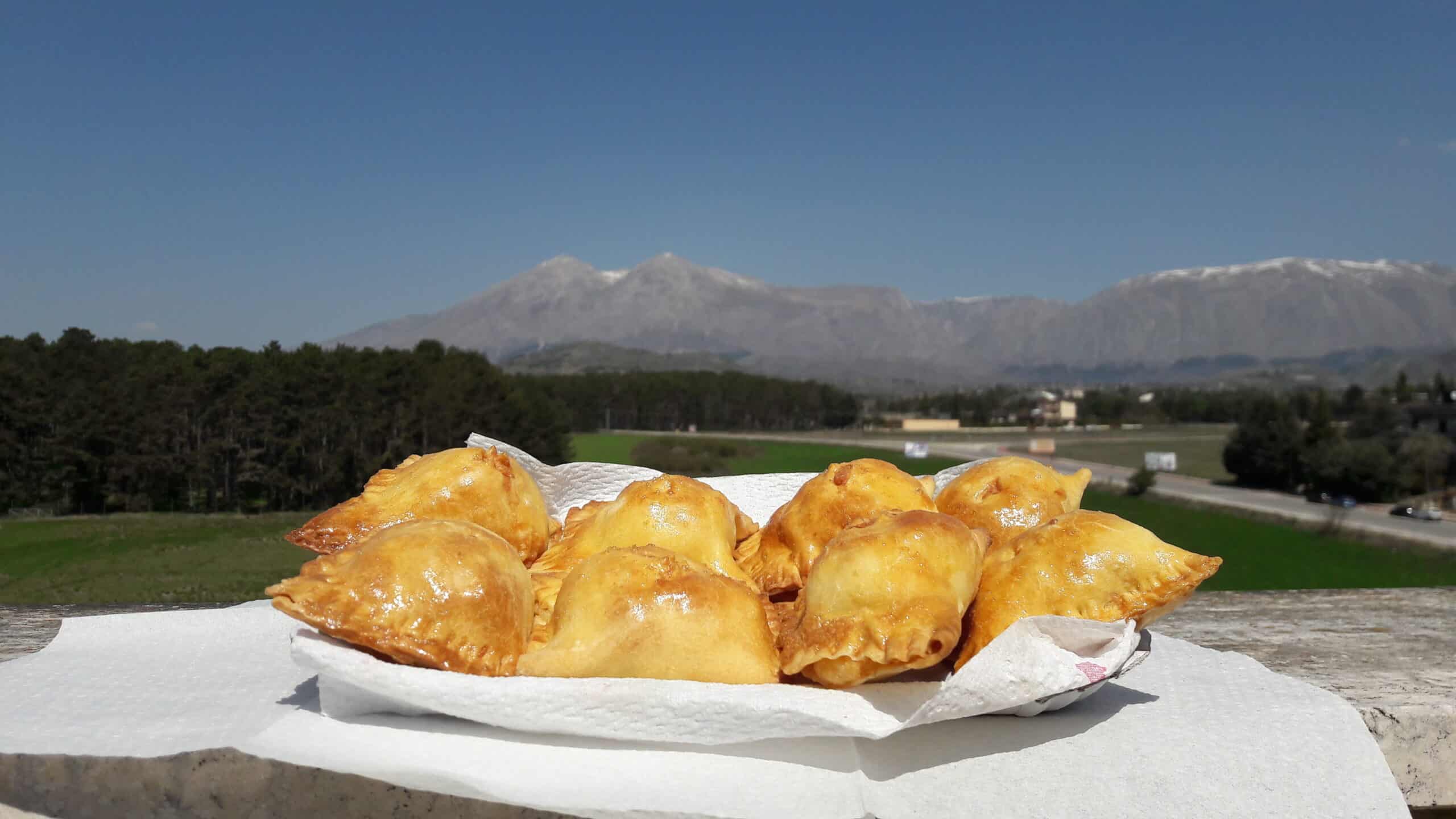
Fiadoni are Abruzzo’s favourite Easter food. These small crescent pastries are filled with pecorino, eggs, and sometimes saffron or ricotta. Shepherds once took them to the summer pastures. You can find them in every bakery and many butchers. See recipe
Agnello Cacio e Ovo is a dish of lamb braised with pecorino and egg. This recipe from Santo Stefano di Sessanio uses simple ingredients to great effect. See Recipe

La Pizza di Pasqua isn’t a pizza. It is a tall, sweet cake from Teramo with sultanas and candied peel. It is scented with anise and lemon. Traditionally, people bake it on Holy Thursday so it can rise overnight. It’s the first sweet after Lent. Read article
La Pupa e il Cavallo are big, decorated cookies made for children – horses for boys, dolls for girls, each with a blessed egg inside. They were also traditionally shared between newly engaged couples.
Photos by photojournalist Giancarlo Malandra, Sam Dunham

Author: Sam Dunham
Sam is a freelance SEO content creator and IGCSE Geography and English teacher in Rome. She also runs the Life In Abruzzo Cultural Association, sharing stories and insights about this captivating region. Alongside raising a teenager, Sam hosts guests at her family’s traditional home, the Little House of the Firefly in Abruzzo, offering a warm welcome and insider tips on local culture, food, and hidden gems.








The Chieti procession is very moving, the music pulls at heart strings. Did you see the link included in the post to Pierlugi’s beautiful photo journal of the Ortona one? Unusually it’s organised and led by women and quite different, – here’s a video snapshot https://www.facebook.com/fabrizia.arduini/videos/vb.1327538757/10209279253001503/?type=2&theater
it’s just that the hoods over their heads look too much like the Klu Klux Klan!
Renee Diluigi-Holme lol, they’ve spoilt it for hood wearers everywhere!
Easter in Abruzzo as I remember – http://casa-giardino.blogspot.com/2011/04/easter-many-years-ago.html
Why are they dressed like the Klu Klux Klan?!! :O
They’re penitents, their costumes let you know which brotherhood they belong to whilst making them anonymous. They pay penance on Good Friday as they accompany the ‘body’ of Christ round the streets .