Wildfires are getting worse everywhere as the climate crisis continues, and Europe is no different. Last summer, fires destroyed an area about the size of Abruzzo. If you are thinking of buying a house in rural Abruzzo, whether in a village or out in the countryside, fire is now a real concern each summer. It is something you need to consider before you buy. Here is what you should check.
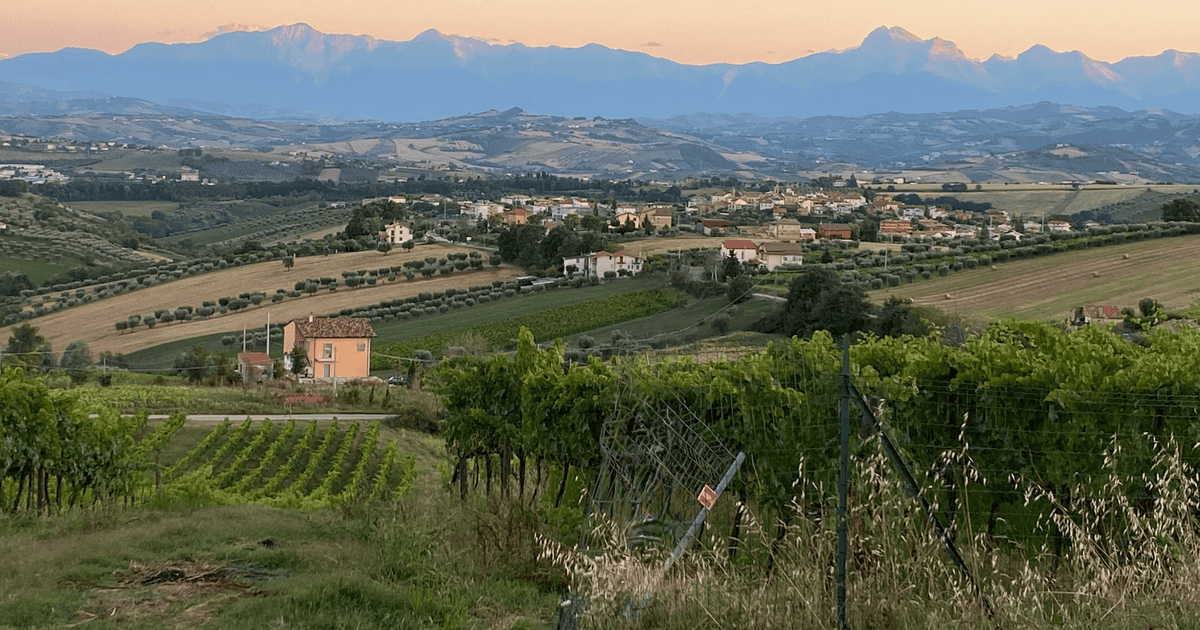
Most people visit in April. The hills are green, the false acacia is blooming over the roadsides, and nothing looks like it could burn, including the abandoned terrace next door, the broom, and the scrub in the gullies. Around here, that covers most of the hillside. The house you love might be at the top, along a track that a fire engine cannot reach.
No one usually talks you through this list. Not the agent, who just does not think about it, and not the survey, which only covers things like the roof. The real issues are water, access, slope, and the land you do not own.
None of this means you should not buy. We live here ourselves. It just means you should ask these questions early, not in the middle of a summer night.
This is a companion to the guide on what to do during a wildfire in Italy, which explains emergency procedures.
How the Fire Service Actually Works Here
You will not find a hydrant at the end of your driveway, and there will not be one in the future. This is not neglect. Italy has strict rules for hydrants, but only for places like schools, hotels, and factories. There is no rule that requires a town to put hydrants on its streets, especially not on your country track.
So fire engines bring their own water. A standard engine carries 2,500 to 4,000 litres, and a tanker can hold 6,000 to 8,000 litres. When they run out, they have to refill, either by driving to a water source and back or by using open water near your home. The time it takes for that round trip is what really matters for your house.
So everything that follows comes down to two questions: Can the fire service reach you, and is there water available when they arrive? Let’s look at these one at a time.
Will a Fire Engine Even Get to My House?
This is the first question, but hardly anyone asks it. A loaded tanker weighs over ten tonnes and cannot easily get out of tight spots. If it cannot reach your house, nothing else matters.
- Can it get up the track, turn at the top, and get out again?
- Is the track single-width? You will be driving out while they are driving in.
- What does the surface do after heavy rain, and after a summer with none?
How Big Does My Gate Need to Be?
Your gate needs to be big enough for a fire engine, which is larger than most people expect. A small car like a Fiat 500 can fit through an old stone gateway, but a fire engine cannot.
- Measure the width of the gate. Do not just guess; use a tape measure.
- Check the bends in your driveway as well. A tanker needs a wide turn, not the quick manoeuvre a car can make.
- Look up for overhanging branches and low wires. These can stop a tall vehicle just as much as a narrow gate can.
- If you have a small bridge on your driveway, find out how much weight it can hold. Often, there is no rating because no one has ever checked.
What Happens if the Engine Gets Stuck?
It is actually worse if a fire engine gets stuck than if it does not come at all. A stuck tanker blocks the only way in for other vehicles and takes one out of action. The crew leader knows this and will decide quickly, so if the track is bad, they will not risk it.
- Expect a practical response, not a dramatic one. They will stop where it is safe and run a hose from there, or they might send a small pick-up with 400 litres of water instead of a large tanker with 8,000 litres.
- So the real question is: How far is your house from the last spot where a heavy vehicle can safely park? If the hose has to run uphill from far away, it will lose pressure and may not reach.
Is There Water They Can Actually Use?
The fire crew brings water, but it can run out. After that, it all depends on what water is available on your land. They can use a hose to draw from open water, so a pond or tank near your house is not just for looks; it is a place to refill.
- Is there any standing water a vehicle can reach? A pond, irrigation tank, pool, or storage tank on a hill is more valuable than a fancy kitchen.
- If you are renovating, consider installing a storage tank (a cisterna) large enough to supply the house by gravity. It will be one of the most useful things you can add.
- Where is the nearest pond, river or reservoir a tanker could refill from, and how long is that round trip?
Will My Taps Work in a Power Cut?
If your water relies on a pump and the fire knocks out the power, you will not have water when you need it most.
- Find out if your water comes by gravity or needs a pump. Water from a spring (a sorgente) or a tank above the house will keep flowing during a blackout. Water pumped from a well (a pozzo) stops as soon as the power goes out. Not less water, no water at all.
- Mains water (the acquedotto) is somewhere in between. Many Italian systems use gravity, so your tap might still work during a blackout, but that depends on the water company and is not guaranteed.
- Test it yourself. Turn off the power at the fuse box and open a tap. In two minutes, you will learn something important about the house.
What Makes a House Catch?
It is usually embers, not a wall of flames, that start house fires. Fires send burning debris far ahead, and a house catches fire when embers land somewhere they can smoulder.
- Check the roof, gutters, and eaves. Fires often start in gaps or where dry leaves collect.
- A woodpile stacked against the wall acts like a wick. Move it away from the house.
- Wooden shutters, pergolas, plastic furniture, and fuel cans in the shed all add to the fire risk.
- Make sure you know where the gas bottles are and how to turn them off, even in the dark.
Which Way Does the Land Slope?
The slope of the land is more important than almost anything else, and the best view is not always the safest. Fire moves uphill much faster than on flat ground because it dries and heats the area above as it climbs.
- A house at the top of a slope covered in scrub is in the most dangerous spot. A gully below acts like a chimney for fire.
- The most beautiful spot is often also the most dangerous.
- Check what plants grow nearby. Pine, broom, and juniper burn quickly and intensely. Olive trees are more resistant.
What About the Land I Don’t Own?
This is the factor that can decide your fate, even though you cannot control it. Look at the surrounding land before you look at the house. Fire does not care about property lines.
You can keep your own land clear, maintain your track, and install a water tank, but you could still lose everything if a terrace below you has not been touched in twenty years. This is not just bad luck; it is common because the land around you is being abandoned.
People moved away to Rome, Milan, and even places like New Jersey and Toronto. The terraces they left behind are still there, but no one maintains them. The land often passes to many heirs, some of whom have never seen it, and it cannot be sold because not everyone can be found to sign. So it sits, and over time, broom and juniper grow, creating decades of fuel for fires.
None of this is anyone’s fault. Over time, people lose their connection to the land. The person who left knew every stone; their children remember visiting, and the grandchildren have only seen photos. After two generations, the land becomes just an idea, and ideas do not get maintained.
For those reading from the East Coast, some of this land might belong to your family. It may not mean much to you from far away, but it matters a lot to people living nearby during fire season.
- Check the land downhill and upwind first, since that is where fires usually start and where they come from.
- Find out who owns the neglected land nearby and whether anyone ever maintains it.
- Ask your neighbours what happened the last time the area burned, because it probably has before.
Whose Track Is It, Legally?
Ask about this before you buy, because the answer determines who pays to keep the road usable, and that is a yearly expense. The local comune keeps a record of its roads.
- A council road (strada comunale) is the comune’s problem.
- A shared private road carrying public traffic (strada vicinale di uso pubblico) is owned by the landowners it crosses, but the public has a right of way, and the comune must contribute between a fifth and a half of the upkeep. Courts have held comuni liable where they let such roads fall apart.
- A wholly private road serving only you is entirely yours. No claim, no argument, just you and a quote from someone with a digger.
- The register is a public document. Make sure to read it before you buy, not afterwards.
Can I Afford the Road Every Year?
This is an expense that often gets overlooked, and it is caused by the same climate that brings fires. Rain now comes in heavy bursts, damaging the track by lifting tarmac, cutting gullies, dropping the edges, and blocking culverts. What was a road in October can become a streambed by November, full of holes that a fire engine cannot cross in August.
That is the usual problem. In the worst case, the track disappears completely. Rebuilding it is expensive, and most people do not have that kind of money saved.
- If the track is completely private, you are responsible for maintaining it every year for as long as you live there. You will need a digger, a driver, materials, and someone who knows how to shape the road. It is not a one-time cost, but an ongoing one.
- The bill comes whether you can pay it or not. Ask yourself if you could find that money, maybe even twice in a bad year, especially if you are older or on a fixed income.
- Being owed a contribution is not the same as having a usable road. Even if the comune is responsible for part of the cost, it involves budgets and paperwork, and you cannot drive a fire engine on a process.
- If you cannot get out, no one can get in, not the grocery delivery, the ambulance, or the fire engine.
- Ask who paid for repairs last time, how much it cost, and how often it has happened in the last five years. Ask the neighbours, not the agent. The costs are only going up.
What Should I Look for When I Visit?
Visit again in July, not just in April, and pay attention to how well the comune is maintained, not just the scenery. A well-kept area tells you a lot.
- Check if the roadside verges have been trimmed recently. Well-maintained verges show that the comune understands the fire risk.
- Look for scrub cut back at road junctions, clear ditches, and low branches removed from roadside trees.
- A comune that is very careful about trimming is usually one that has experienced a fire and wants to prevent it from happening again. That is the kind of neighbour you want.
- Look up the emergency plan (the piano di emergenza comunale) on the comune’s website and check when it was last updated. A plan from 2009 says one thing; a plan revised last year says something else.
- Ask people in the local bar what happened during the last fire. You will learn more in twenty minutes than from any official document.
The Questions Nobody Asks the Agent
- Check if there is a mobile signal inside the house, not just at the gate. Coverage maps are often overly optimistic in mountainous areas. Some newer phones can call 112 by satellite if there is no signal, but you should check if this works here. Even then, it only covers emergency calls, not warnings or messages from neighbours. A house with no signal gets information late
- How far is the nearest fire station, honestly, by road, at the speed a loaded tanker travels?
- Ask if the comune has a volunteer civil protection group and if the emergency plan shows a water source near your property.
- Check if the house has fire insurance and read what it actually covers. Ask the broker if access to the property affects your coverage, and get their answer in writing. There is no general rule in Italy that a bad track cancels fire insurance, but what you declare when you sign is important, as is updating it if the risk changes. Insurance usually considers building type, value, earthquake, flood, theft, and nearby woodland, but not access for fire crews. If you are used to insurance premiums based on distance to a fire station, do not assume a low Italian premium means you are safe. No one has factored in your track.
Do I Have to Clear My Own Land?
No, and this surprises people from places like California or Australia, where clearing defensible space is required by law. In Italy, there is no rule that says you must clear the ground around your house. The law bans open flames, vehicles in the woods, and lit cigarette ends, and requires landfills to keep a cleared strip, but it does not mention your garden.
So it is your responsibility, and timing is tricky. Since burning is banned during fire season, you have to clear and burn debris in the months when you least want to do it. Cut the grass, move the woodpile away from the wall, remove dead branches under the trees, and burn prunings in late winter. By June, burning is both illegal and dangerous.
The Last Word
None of this is on the estate agent, and none of it is on the seller. It is on you, before you sign.
Nobody in the buying chain is paid to raise any of it. The agent wants the sale. The seller wants out. The survey looks at the walls, not at the water, the track, or the hillside above you. So the questions in this piece are yours to ask, and the time to ask them is before the deposit, not after the first bad summer.
And ask yourself the quiet one, too. Why has this house been on the market so long? A beautiful place in Abruzzo that has sat unsold for three years has usually done so for a reason, and often that reason is one of the things above: the track, the water, the isolation, the land nobody maintains. Or the opposite signal, a sudden push for a quick sale at a tempting price, which can mean a seller who knows something you do not.
None of it means do not buy. We bought. It means buy with your eyes open, with these questions answered, with your head running ahead of your heart. And if you truly cannot come and see it yourself, send someone who can, a surveyor, a friend who lives here, anyone who will walk the track and look up the hill for you. Buying a house you have never stood in front of, in a landscape that burns, is the single riskiest thing in this whole piece. The house will still be beautiful. You will also know what you are taking on.

Author: Sam Dunham
Sam is a freelance SEO content creator and IGCSE Geography and English teacher in Rome. She also runs the Life In Abruzzo Cultural Association, sharing stories and insights about this captivating region. Alongside raising a teenager, Sam hosts guests at her family’s traditional home, the Little House of the Firefly in Abruzzo, offering a warm welcome and insider tips on local culture, food, and hidden gems.