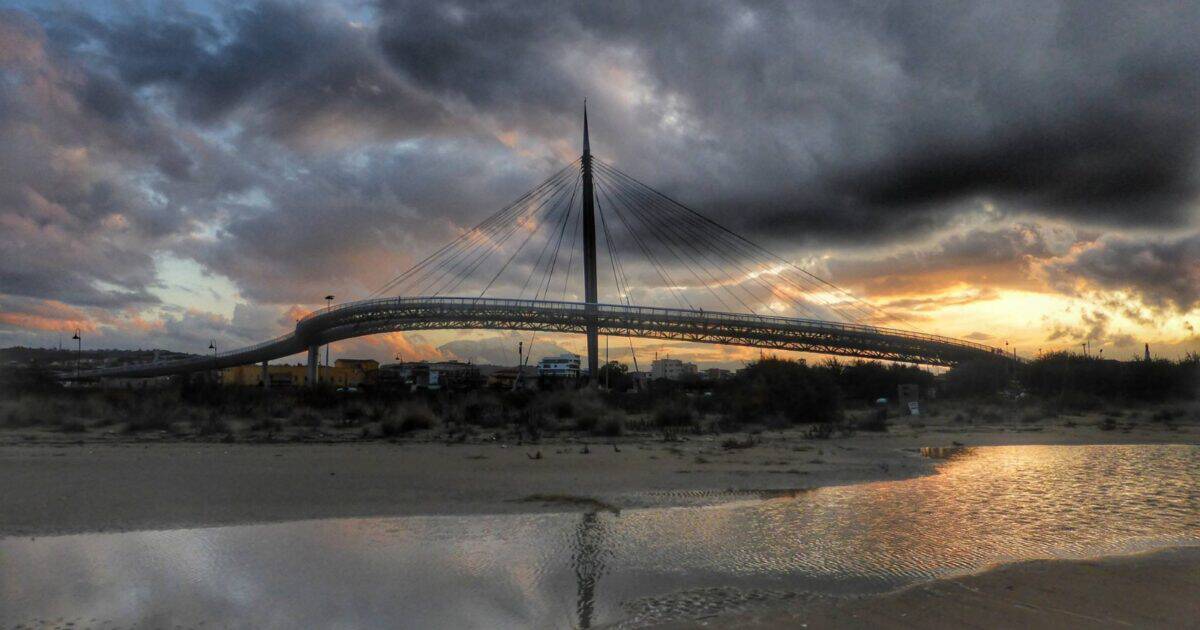
Ponte del Mare, Pescara © Rob Barke
On 1 January 2027, Pescara, Montesilvano, and Spoltore will join to form a new city of 195,000 people, also called Pescara. This will be the largest town merger in Italian history. The new city will be the biggest in Abruzzo, about the same size as Trieste, and the third-largest on Italy’s Adriatic coast after Bari.
A regional referendum in May 2014 approved the merger. Across the three towns, 64% voted yes, and 36% voted no. Pescara’s strong support, with more than twice as many yes votes as no, made the difference. In Montesilvano and Spoltore, the results were much closer, with each passing by only a few hundred votes. A regional law in 2018 set the merger for 1 January 2023, but another law in 2023 delayed it to 2027. Since then, the councils of Spoltore and Montesilvano have asked for more time or to withdraw.
The main reason the regional government is keeping the current timetable is not mentioned in any press release. It is about the budget.
The Shortfall, the Merger, and the Money Behind it
The budget shortfall is only in healthcare. About 80% of Abruzzo’s budget is spent on healthcare, and when healthcare costs go over, it affects everything else. In 2024, healthcare ended with a deficit of €112.9 million. The 2025 figure remains an estimate of €83 million, with the final number expected in July 2026 after the four local health authorities complete their accounts.
The region has followed a recovery plan with the Ministry of Economy since 2007. In January 2026, Italy’s national audit court, the Corte dei Conti, said that Abruzzo was the only Italian region in which the recovery plan was worsening.
To cover the healthcare deficit, the regional council raised the regional income tax (IRPEF) in November 2025. It changed from a flat rate to three brackets, with the top rate at the legal maximum. The regional business tax (IRAP) is also at its legal maximum. There is no more room to increase either tax.
Inland towns in Abruzzo have also been affected. A national review in 2026 removed 27 of them from the special national fund for mountain comuni. This fund paid for items such as snowploughs, school buses, road safety projects, and small healthcare programs. The fund itself was cut by more than half for 2026.
Old infrastructure is struggling with more frequent storms. On 17 September 2024, Pescara’s main hospital, Santo Spirito, was flooded. The basements, ground floor, operating rooms, and the central sterilisation unit were all underwater. Even the recently rebuilt COVID wing had water coming through the roof. In April 2026, Cyclone Erminio caused about €7 million in damage in Pescara alone. It broke a regional water pipe, so Penne Hospital had to use water from a tank for several days. The storm also forced 80 families in Spoltore to leave their homes.
The regular budget has no money for new construction and barely enough for basic repairs. National development funds and EU cohesion money still go to specific projects, such as the €15.9 billion upgrade of the Pescara-Rome railway. But these funds are separate and can only be used for their assigned projects. They cannot be used to cover the healthcare deficit, flood-proof a hospital, or fix water pipes.
How This Affects Households and Businesses
National pay scales mean that classroom assistants, teachers, nurses, and junior civil servants in Italy earn the same gross salary no matter where they live. The difference shows up in their regional income tax. For example, a classroom assistant earning about €18,000 pays €293 more per year in Abruzzo than in the North due to the deficit. A secondary school teacher on €30,000 pays about €521 more, and someone earning €80,000 pays about €890 more. That is on top of national IRPEF and an average municipal addizionale. Total income taxes are around 7% of gross for the assistant, 21% for the teacher, and 37% for the higher earner. The Abruzzo Constitution currently rules out a wealth tax, so like the rest of Italy, it taxes income heavily and wealth lightly. The cost of the deficit, therefore, falls on working-age earners, even though retirees are the heaviest users of the regional healthcare system.
The same idea applies to local business tax. Abruzzo’s IRAP rate is at the legal maximum of 4.82%, compared to the rate used in most northern regions, which is 3.90%. Higher business taxes lead to higher prices. Bakers, supermarkets, plumbers, mechanics, and stone house restorers in Abruzzo all pay more tax than similar businesses in other regions, and they pass these costs on to customers.
Le Marche, just north of Abruzzo, has a similar landscape and economy and a slightly larger population. It does not have a healthcare deficit, so it has not hiked its tax rates. Abruzzo does have a deficit, so its rates have increased.
How the Deficit Grew
In 2018, under a centre-left regional government, Abruzzo’s healthcare books closed with a €88,000 surplus. The region had only just emerged in 2016 from commissariamento, the special national takeover that Rome imposes on regions whose healthcare finances are out of control. For the first four years of the current Fratelli d’Italia regional government, the books stayed mostly balanced. In 2024, an election year, the healthcare deficit jumped to €112.9 million.
The official line is that the deficit comes from factors beyond regional control. Staff costs grew by €43 million in a single year, to €941 million. The growth was driven by national pay deals struck by Rome and the unions, as well as the conversion of 1,850 short-term workers into permanent staff.
Drugs added €22 million. Sending patients to private clinics and other regions added €14 million. Inflation pushed up energy and supply costs. The region’s payment-timing index tracks how quickly suppliers are paid. It went from 15 days early in 2023 to eight days late in 2024.
The opposition tells a sharper story. The PD group in the regional council has accused the regional government, in plain Italian, of cooking the books. In April 2025, the regional council’s oversight commission found accounting issues at the local health authorities in Chieti and L’Aquila. It also found breaches of the hiring rule at the local health authorities in Pescara and Teramo. The commission questioned the use of “sopravvenienze attive”, one-off income entries used to balance the books. In August 2025, a leaked internal letter from a senior official at the Department of Health told a different story. None of the four local health authorities had met the 2% cost-cutting target. The Region had publicly announced that target. Staff, drugs, private clinics, IT, medical devices and contracted pharmacies account for around €94.5 million. Total healthcare spending rose by €130 million. That leaves around €35 million in extra spending that the public breakdowns do not clearly account for.
Opposition figures using official data say about 120,000 people in Abruzzo have given up on non-urgent treatment because of long waits. More and more are travelling to other regions for routine care, with the costs billed back to Abruzzo.
Money From Rome
In 2022, the Italian parliament passed a national law that provides additional funding for very large municipal mergers. Italy has long offered standard incentives to merging comuni, based on a percentage of the smaller comune’s transferred revenue. The 2022 change created a separate, larger fund just for mergers that create municipalities with more than 100,000 residents. There are very few of these in Italy. The new Pescara is the largest in Italian history and qualifies for the full amount.
The total amount is €105 million. It is paid as €5 million in the first year after the merger, then €10 million each year for the next 10 years. The money comes from the Ministry of the Interior, goes through the regional government, and then to the new comune. The first payment depends on the merger happening on time.
Each year of delay means losing €10 million that the region cannot replace. If the merger is delayed to 2029, as some have suggested, the first payment would not arrive until 2030. That would mean two years of lost funding. The law that secured this money was passed by a centre-left government in Rome, but it is now being implemented by a centre-right government in Abruzzo.
The Politics Behind the Merger
The three mayors come from different parties. Pescara is from Forza Italia (centre-right). Montesilvano is from Fratelli d’Italia (centre-right), the same party as the regional president. Spoltore is from the Partito Democratico (centre-left). Spoltore has long been a PD town.
The regional government overseeing the merger is led by Fratelli d’Italia, which has been in office since 2019 and was re-elected in 2024. The president of the regional council is from Forza Italia. The merger is being delivered by a wholly centre-right line-up.
What Spoltore and Montesilvano Tried, and What Happened
Pescara takes the cream at both levels of the new structure.
The central council, which governs the whole city, is elected city-wide through party lists. With 60% of the new voter base, Pescara’s candidates will take most of the seats.
Below the central council, the city is divided into four “municipi”, each with its own local council. Historic Pescara is split into two, doubling its presence at this level. Montesilvano gets one. Spoltore gets the smallest.
In April 2026, the councils of Spoltore and Montesilvano called local votes to ask residents if they still wanted the merger, scheduled for 14 June and 20-21 June. The pro-merger group, Associazione Nuova Pescara, appealed to the regional court. On 29 May 2026, the TAR struck down both referendums, holding that the creation of new comuni falls within the Region’s sole authority under Article 133 of the Italian Constitution, and that the 2014 referendum is already binding under Regional Law 13/2023.
The president of the regional council responded the next day. The new city, he said, “will be called only Pescara, and the merger process can no longer be stopped.”
A Look Back at 1927
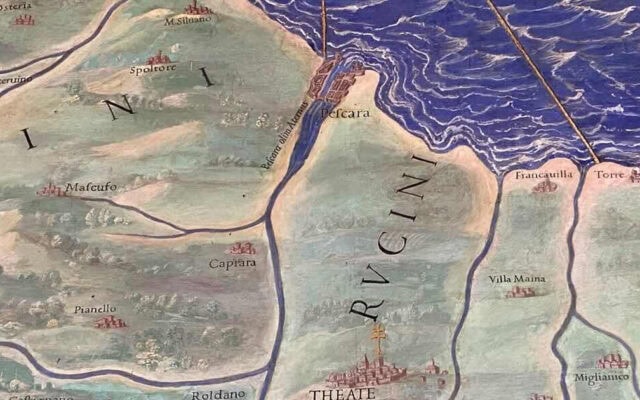
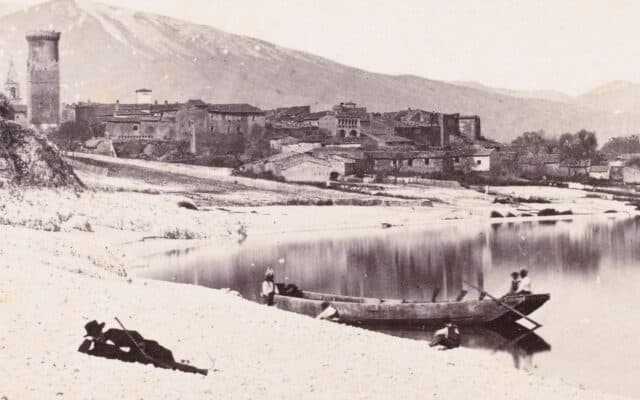
This is the second time Pescara has been built at this scale. In January 1927, Mussolini signed a decree merging Pescara, on the south bank of the river, with Castellammare Adriatico, on the north, creating a single fascist provincial capital. A separate decree in February 1928 added Spoltore. After the fall of fascism, Spoltore regained its independence on 1 September 1947. Check our history piece for more details.
Almost eighty years later, the same towns are being merged again. This time, it is happening through a democratic vote rather than under Mussolini, but Spoltore is losing its independence once again.
What the Merger Will and Will not Fix
The €105 million from Rome will be received over 11 years. This money will not fix the main problems. Spread out over a decade, it is not enough to rebuild the city’s drains, protect the hospital from floods, or replace the regional water system. It can only help ease some of the pressure on a budget already stretched by healthcare costs and climate damage.
The 2014 vote focused on creating a new city. The 2027 deadline is now about managing the budget.
A note for retirees considering Spoltore for the 7% flat tax
Right now, Spoltore is one of the comuni where foreign retirees can opt for the 7% flat tax on foreign pension income. The rule is set out in article 24-ter of the TUIR. The rate is locked in for nine tax years, which works out as roughly a decade. On 1 January 2027, Spoltore will cease to exist as a separate comune. Its residents will become residents of the new Pescara. The new Pescara has a population well above the 30,000 limit set by the regime.
The Agenzia delle Entrate has not yet explained what will happen to people who have already opted in if a qualifying town merges into one that does not qualify. The general rule under Article 24-ter is that the benefit ends as soon as you move to a non-qualifying town. The safest guess is that the regime will end on 1 January 2027 for anyone whose nine-year option is still active. Anyone considering moving to Spoltore for this tax benefit should consult an Italian tax advisor before deciding.

Author: Sam Dunham
Sam is a freelance SEO content creator and IGCSE Geography and English teacher in Rome. She also runs the Life In Abruzzo Cultural Association, sharing stories and insights about this captivating region. Alongside raising a teenager, Sam hosts guests at her family’s traditional home, the Little House of the Firefly in Abruzzo, offering a warm welcome and insider tips on local culture, food, and hidden gems.







Thank you for the informative article.
So glad you found it useful!