Recommendations
Visitors to Abruzzo this week who are driving are advised to check and note:
- Google Maps before setting off.
- Comune Fb pages and local websites for information on closures and avalanche threat
- Drive slowly, you don’t know what you may find in areas, particularly around Vasto, where landslides are still occurring.
9th April
The Italian government has declared a 12-month state of emergency in Abruzzo, Molise, Puglia, and Basilicata and established a fund to help with storm damage in those regions. Abruzzo was awarded 15 million euros and assistance from civic departments.
The A14 motorway between Vasto Sud and Termoli in the direction of Bari, and between Poggio Imperiale and Vasto Sud in the direction of Pescara, was reopened. Only the northbound carriageway, the one closest to the landslide, will be used, with single lane, two-way traffic.
There were 2 avalanches on the Maiella and Campo Imperatore.
7th April
A historic landslide has come back to life following the extreme weather in Petacciato, Molise, causing fractures in the A14 coastal autostrada and the train line. The road is closed from Vasto Sud down to Termoli until further notice.
5th April
The weather emergency Is Over. Now the real work and clear up begins.
The sun has returned. Abruzzo’s skies are clear and warm, making for a beautiful Easter weekend. The red alert has ended. Flooding in Pescara has gone down, and most people who were evacuated during the storm are back home.
But now the real work begins: counting the damage, clearing roads, and fixing what Erminio left behind. Here’s what happened and where things stand today.
The Bridge
The most dramatic moment happened on the morning of April 2nd, when the SS16 bridge over the River Trigno collapsed. Crews were checking if it was safe to reopen when the reinforced concrete gave way under the pressure of floodwater, mud, and debris. A fisherman driving to his work in Ortona (CH) from Bari is feared dead after his car went over the edge.
This bridge was the main coastal road between Abruzzo and Molise. While it is being rebuilt, the A14 motorway between Vasto and Termoli will be toll-free. There is no confirmed timeline for repairs yet. This will take time.
Water
A break in the main water pipeline near Farindola cut off water to a large area, including Penne, Loreto Aprutino, Pianella, and Montesilvano. Penne Hospital had to use emergency tank reserves. Engineers worked throughout the emergency, and the water supply has now mostly been restored.
Planned repairs to the Giardino supply conduit, which affects 22 towns and about 274,000 people in the provinces of Pescara, Chieti, and Teramo, are set for April 13-14. This work is needed because of the storm, not regular maintenance. The prefecture has confirmed that hospitals and vulnerable people will be protected during the repairs.
Flooding
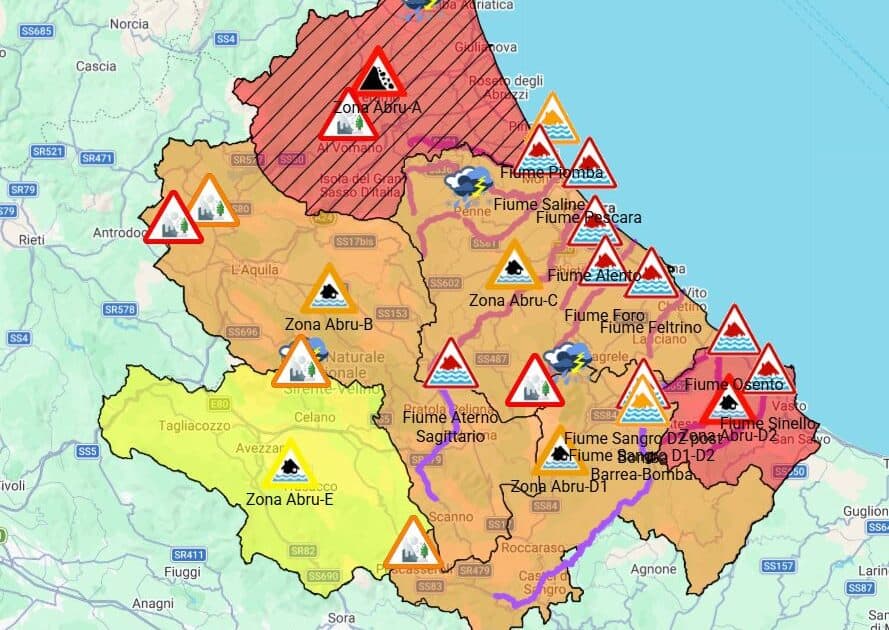
Pescara and much of the Chieti coast, the Sangro and Osento valleys, and communities throughout the Teramano interior were flooded. Eleven rivers went above the alarm level during the storm. More than 400 people were evacuated across the region. In Spoltore alone, 80 families spent the night in a sports hall. The Adriatic rail line between Fossacesia and Porto di Vasto was suspended after the Osento overflowed, but trains are now running again.
Landslides: The Count by Province
We are still getting the full numbers, but they are significant.
Teramo was among the hardest hit. By the third day of rain, the province had more than 30 roads compromised and around 15 stretches at risk of closure. By the end of the emergency, 60 roads were closed or reduced to single-lane alternating traffic. Slides cut the link between Villa Vannucci and Montorio, with a second coming down overnight after the first was cleared. Communities around San Giorgio, Montorio al Vomano, Campli, Bisenti and Valle Castellana were among those worst affected.
Chieti bore the brunt along the Sangro and Osento corridors – the area under red alert right through the storm. Landslides, road closures and flooding hit Lanciano, Vasto, San Salvo and dozens of smaller towns. Two people were injured in Lanciano when a slide struck a van and a building. The province’s president formally requested national emergency status, saying the damage was too extensive to handle with ordinary local resources.
Pescara province: emergency operations have been running without a break since 31st March. A landslide appeared behind a community building in Città Sant’Angelo. The Feltrino burst its banks near the coast. The main water network rupture near Farindola falls within this province.
L’Aquila province: the Aterno-Sagittario stayed above the alarm level throughout. Avalanche warnings were issued for the Eastern Gran Sasso and the Maiella resorts. At Lama dei Peligni (CH), a large avalanche came down the Maiella and approached the lower village, almost at valley level. Campo Imperatore remains closed pending technical checks.
The total number of landslides is still being counted. What’s clear is that this was not just a few isolated incidents. It was a region-wide cascade, from the Adriatic coast to the high Apennines.
Vasto, the Marina and the Alta Vastese
Vasto has known this kind of disaster before. On 22nd February 1956, one of the worst catastrophes in the city’s modern history struck when a massive landslide brought down much of the Muro delle Lame – the old retaining wall on the eastern escarpment of the old town overlooking the sea. It was not a sudden event. Local records show landslide activity on the same escarpment going back to the end of the 1700s, and a journalist writing at the time noted that the problem had been “on the agenda since 1816, repeating itself from time to time.”
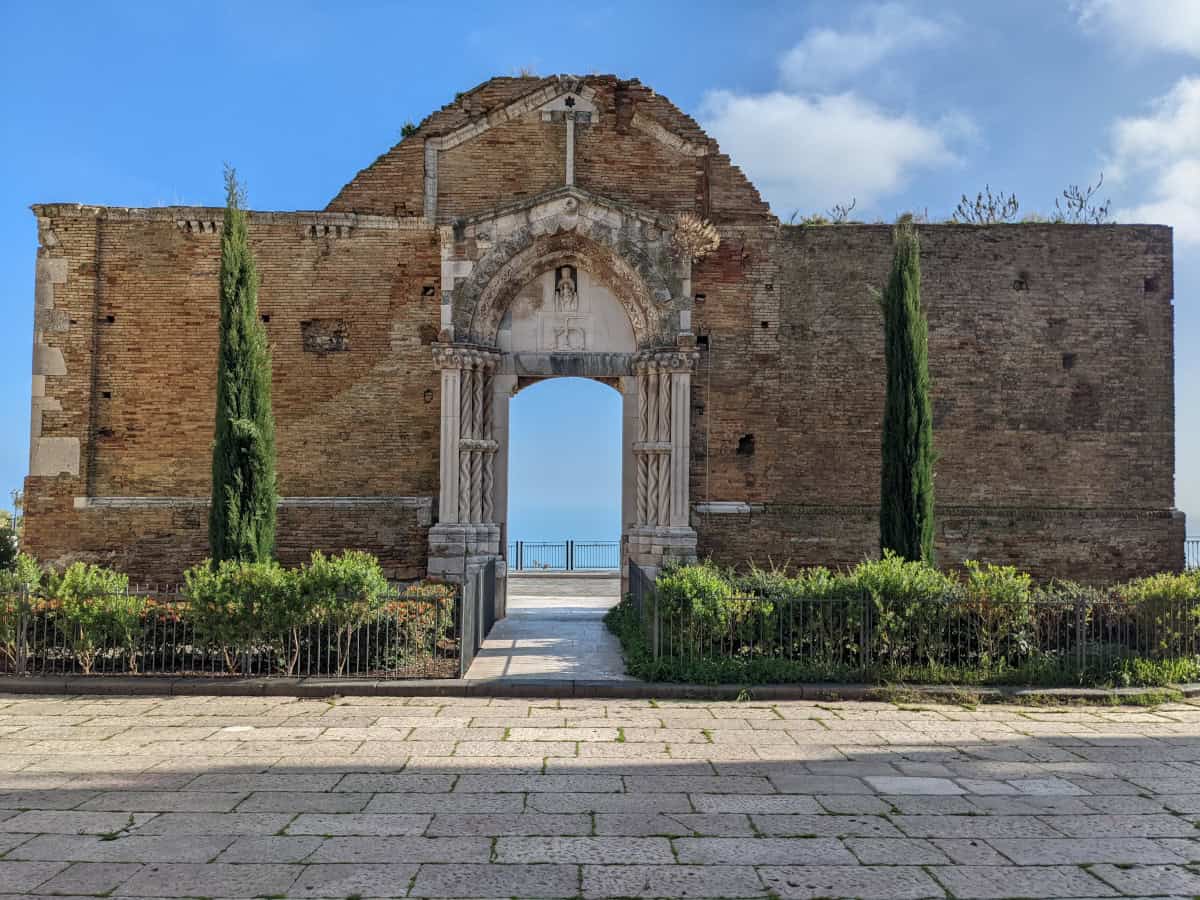
After 1956, the national government funded drainage tunnels under the Muro delle Lame to help manage the groundwater that causes instability. These tunnels had not been inspected in over twenty years, according to a formal request sent to the city council in February 2026, just weeks before Erminio arrived. As one geologist put it, Vasto sits on clay, and it is impossible to remove all the risk. What matters is how much water falls on that clay and how quickly.
In the days after the storm, Vasto and the surrounding Vastese area were hit hard. Roads were cut off, homes were damaged, and families had to leave. The Marina di Vasto, which is lower and closer to the river mouths, faced its own flooding and drainage problems. The rail suspension along this part of the coast directly affected the town.
After the worst weather passed, the deeper emergency moved inland to the Alta Vastese. The real crisis in the hinterland started after the storm ended. Two problems made things worse: water supply and road access. The ground kept shifting, damaging pipes and roads. Restaurant owners who were hoping for Easter visitors found themselves cut off and without running water.
A landslide destroyed the main Sinello aqueduct supply line. This same section was damaged before, in June 2024, and repairs from that time were still temporary. Engineers thought they would need to replace 300 meters of pipe, but since the ground is still moving, over a kilometre of new pipe will have to be laid along the road. Mayors in the area waited for the national Civil Protection chief to arrive by helicopter at Fresagrandinaria, only to hear what everyone already knew: these communities need water now.
Castiglione Messer Marino, one of the most beautiful hilltop towns in the Alto Vastese, was almost completely cut off. Four out of five road access routes were blocked by landslides, leaving only one route, and even that one is in poor condition. Drone footage of the road between Castiglione Messer Marino and Fraine, which connects the town to Vasto and the coast, shows parts of the road completely missing. Children have already been sent back to online lessons.
When a community loses its road connection, small businesses, restaurants, and local producers who survived Covid and the energy crisis are left without support. If a community loses its economic base, people leave. In these towns, people already talk about their children moving away for university, work, or better connections. Every road closure that lasts months instead of weeks, and every pipe that is only patched instead of replaced, makes it harder for people to stay.
These communities are not fragile. They have lasted for centuries. They deserve infrastructure that is taken just as seriously.
This Is Not Just Mismanagement. It Is What Supercharged Storms Do
Whenever Abruzzo faces a disaster like this, people talk about hillside management, rural depopulation, and years of underinvestment. These are real problems, but they are not the whole story of Erminio.
The cyclone stayed almost still over the Ionian Sea for about 72 hours, fueled by the mix of cold air above and a warmer Mediterranean below. It is not unusual for a Mediterranean cyclone to form, but what made Erminio different was its intensity and duration. A warmer sea means more moisture for these storms. They may not happen more often, but when they do, they bring more rain, and it falls faster. More than 150mm of rain fell across large parts of the region, not just a local downpour, but steady, widespread, and relentless.
Abruzzo’s landscape is steep and clay-rich, rising quickly from a narrow coastal plain to the Apennine ridge. This means heavy rain has nowhere to go slowly. That’s why we saw so much damage. This will happen again. The real question is whether our infrastructure, early warning systems, and emergency response can keep up.
The Cost
Early estimates put the total damage across the region at over 100 million euros, and that number will rise as more is counted. President Marsilio has said he will officially request a national emergency once the full assessment is complete. The national head of Civil Protection, Fabio Ciciliano, visited Abruzzo on April 5th to see the damage in person.
Thank You
Everything that kept this region together during those four days was the result of hard work.
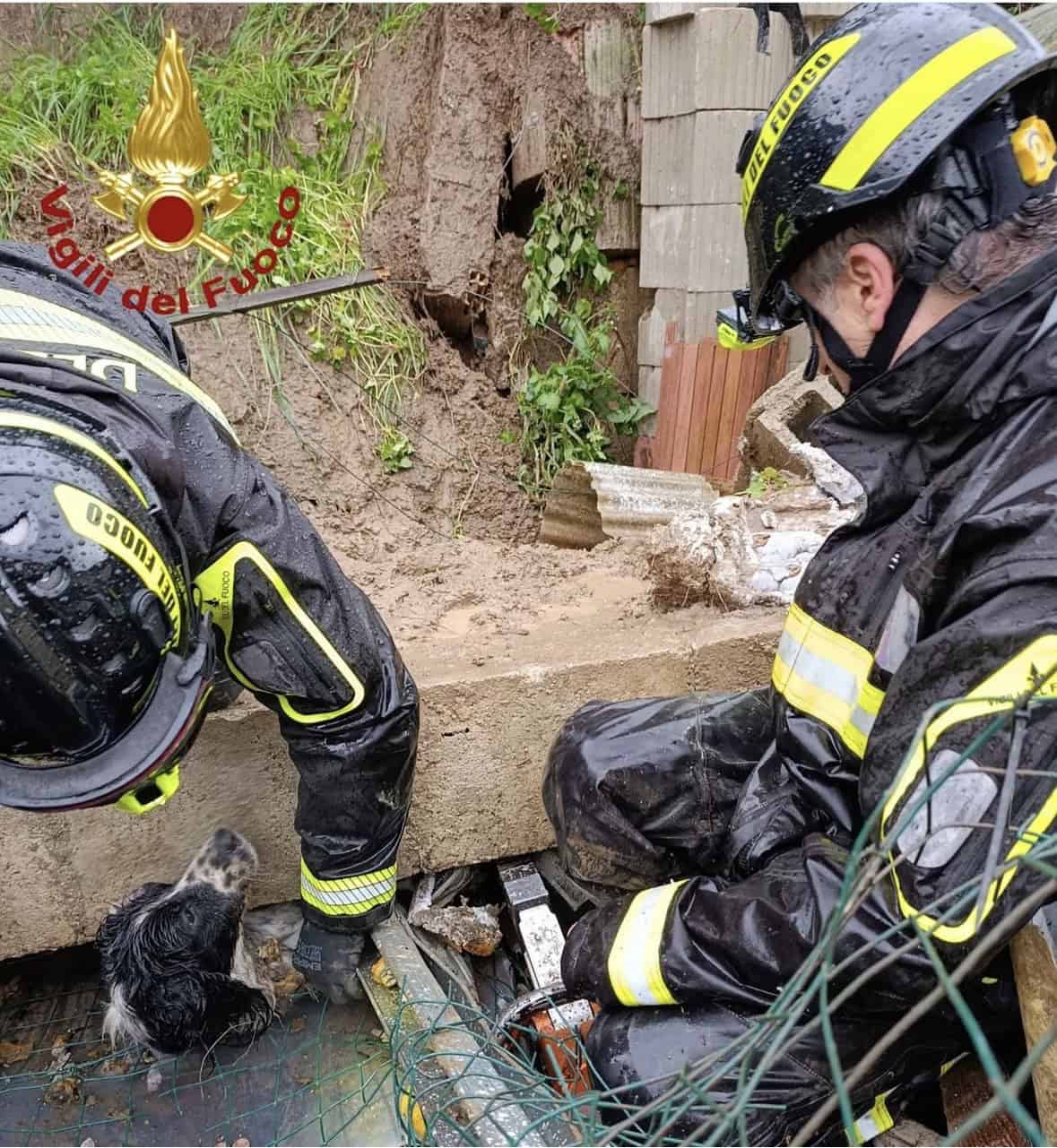
Over 800 emergency interventions took place across Abruzzo, Molise, and Puglia from the night of March 31st alone, with 337 in Abruzzo. More than 600 firefighters were sent to the affected areas, with extra help from Lazio, Campania, Marche, Tuscany, and Emilia-Romagna. Civil Protection volunteers worked nonstop on river watch, clearing roads, and helping with evacuations. Mountain rescue teams went out in conditions most people would avoid. Local mayors answered calls all night. Municipal workers cleared mud from roads and checked on people in isolated homes. As one mayor said, it was “a quiet, tireless commitment – the best face of this country.”
To everyone who worked through this—firefighters, Civil Protection volunteers, mountain rescue teams, road crews, water engineers, mayors and municipal staff, medical teams, and all the ordinary people who checked on neighbours and helped where they could—thank you. Abruzzo is lucky to have you.
Come Anyway. Abruzzo Is Open
Easter weekend is sunny, warm, and beautiful. The coast is clear. Markets are open. Roccaraso and Ovindoli are open for skiing, and Campo Felice has been open all week.
If you plan to ski this Easter, please check conditions before you go. The eastern resorts are still closed because of avalanche risk. The heavy snow from Erminio, along with the quick rise in temperatures, has made the slopes dangerous until they can be checked. Prati di Tivo, Campo Imperatore, Passolanciano, and Maielletta are all closed for now. The western resorts, Campo Felice, Ovindoli, and Roccaraso-Aremogna, are open and running as usual. Check each resort’s website before you leave, as the situation is being updated daily.
Cyclists should know that the Via Verde coastal bike path is closed between Mottagrossa and the Sinello River because of landslide risk after the cyclone. We will update this page as soon as it reopens.
Abruzzo has faced earthquakes, droughts, snowstorms, and now a cyclone. This is not a fragile place. It is one of the most resilient regions in Italy. The same communities that spent four days pumping out floodwater and clearing roads will welcome you to their tables this week.
If you are thinking about visiting this spring or summer, don’t let the storm images discourage you. The rivers will go down, the roads will reopen, and the trails will be checked and cleared. What won’t change is the landscape, the food, the welcome, or the fact that Abruzzo is a place worth discovering.
The best thing you can do for Abruzzo right now is to visit. If you’re looking for a place to stay, eat, or book a tour, our Abruzzo Connections directory is a great place to start.
We’ve written in depth about why Abruzzo’s landscape is especially vulnerable in our Landslide Risk in Abruzzo guide →.

Author: Sam Dunham
Sam is a freelance SEO content creator and IGCSE Geography and English teacher in Rome. She also runs the Life In Abruzzo Cultural Association, sharing stories and insights about this captivating region. Alongside raising a teenager, Sam hosts guests at her family’s traditional home, the Little House of the Firefly in Abruzzo, offering a warm welcome and insider tips on local culture, food, and hidden gems.