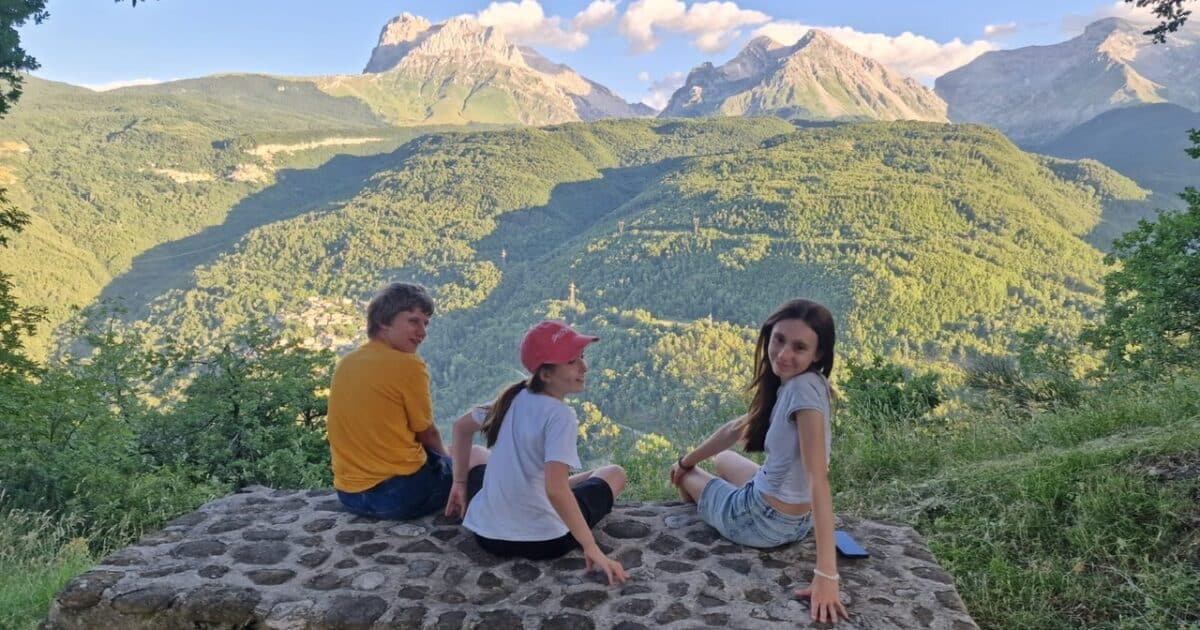
A new 130-kilometre trail in the Gran Sasso National Park linking seven mountain chapels, hidden brigand treasure, a chapel with a flying legend, a Roman magic square, and the last speakers of an almost forgotten shepherds’ dialect.
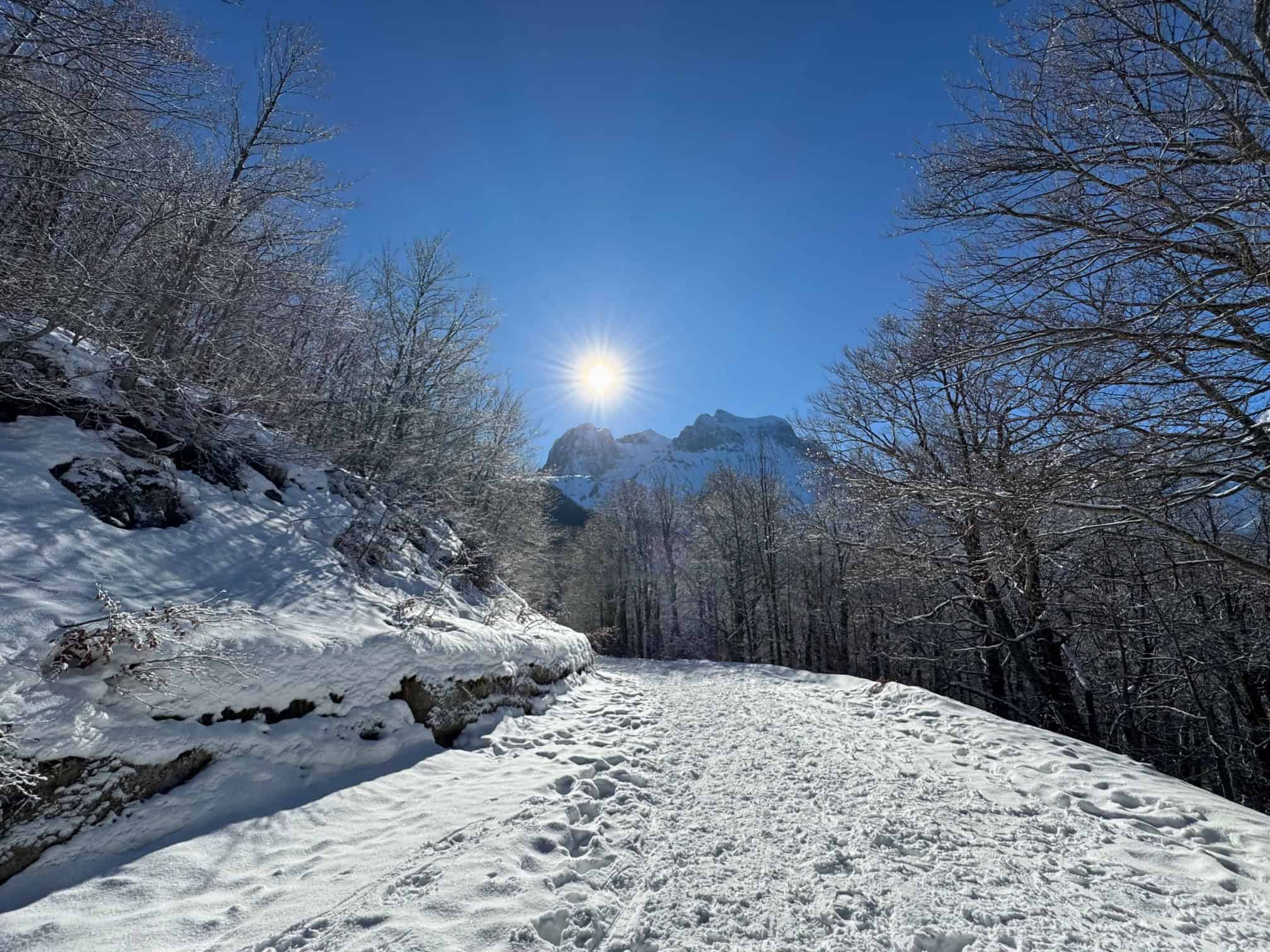
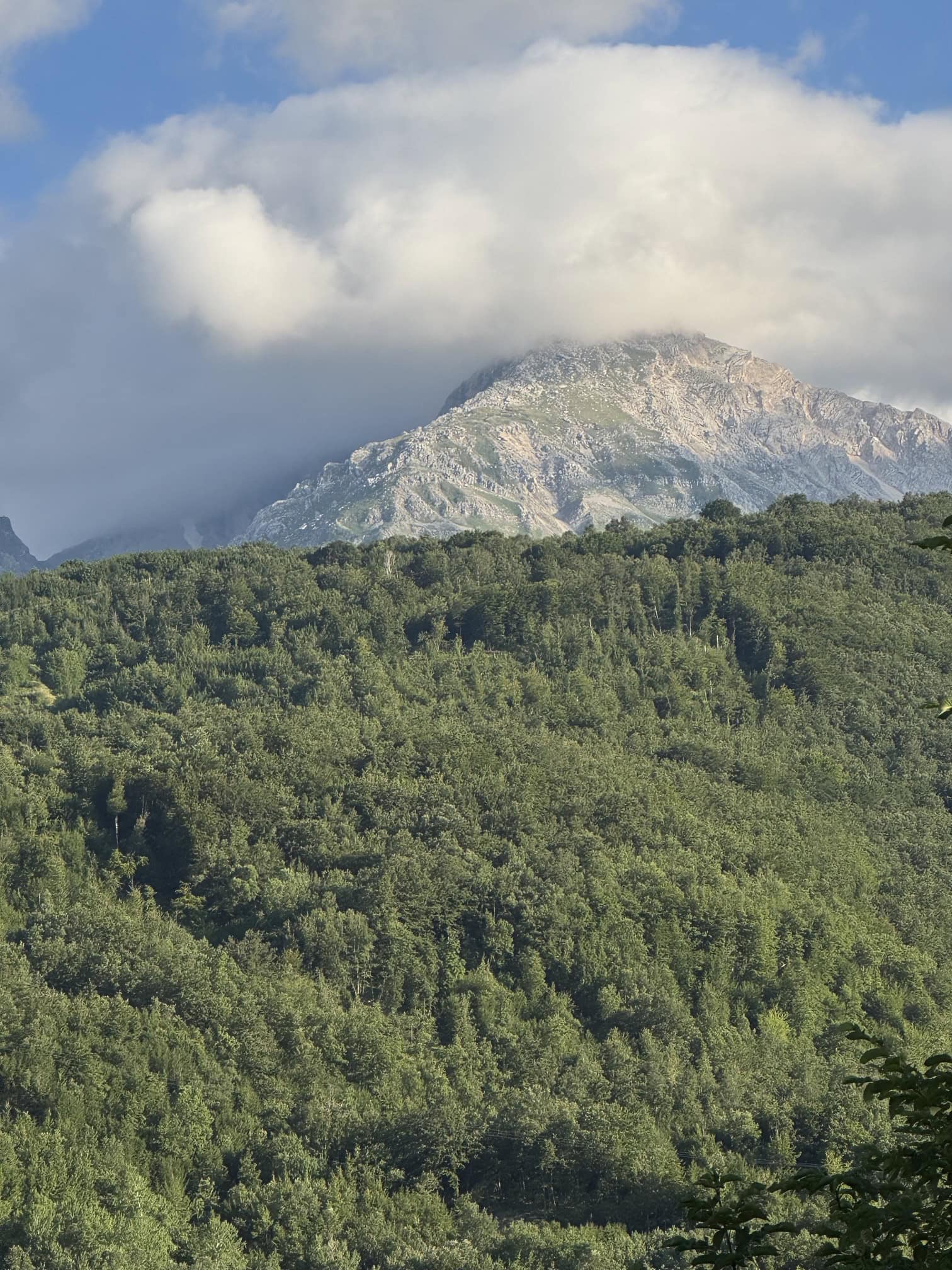
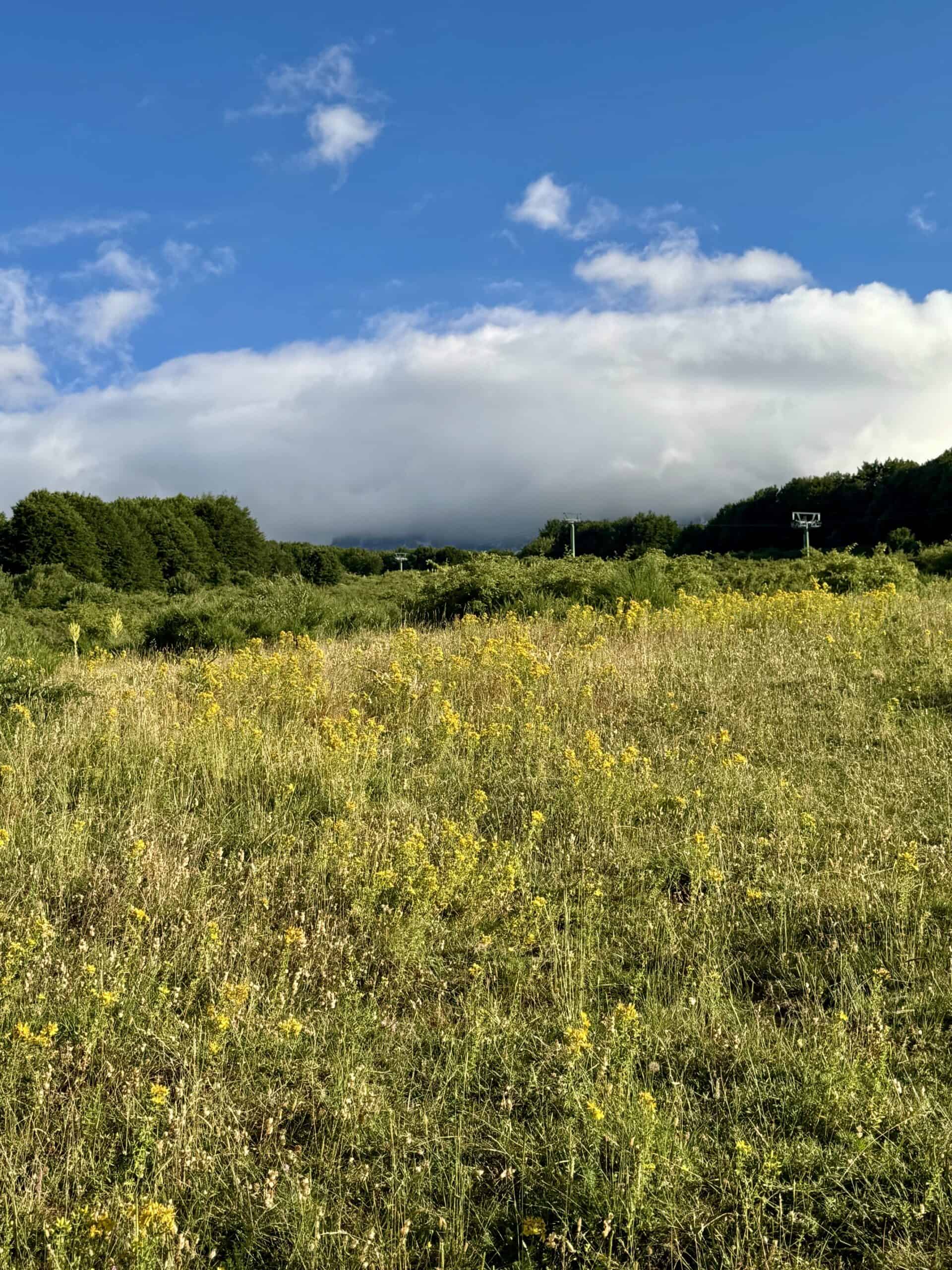
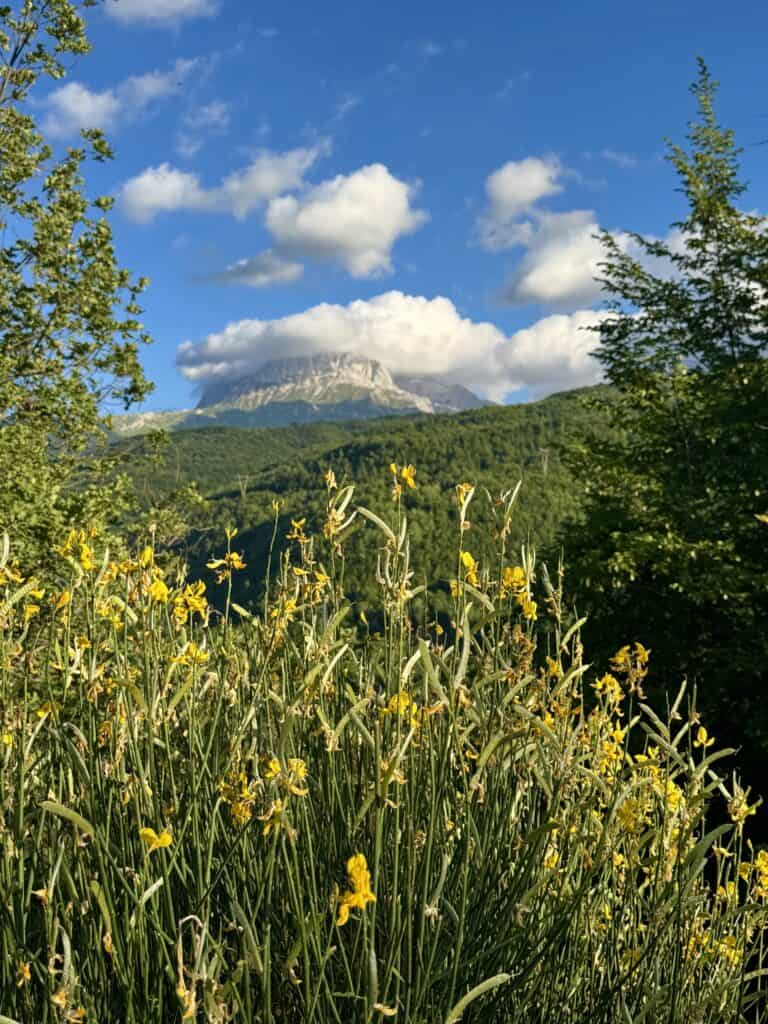
Last spring, our Life in Abruzzo community members and I hiked a part of the trail above Fano Adriano, not knowing it would soon become something bigger. The mountains felt immense, the path seemed old, and the silence was special in the high villages of Teramo. Later, I found out I was on the Cammino delle Sette Sorelle and the walk has been officially recognised by the Regione.
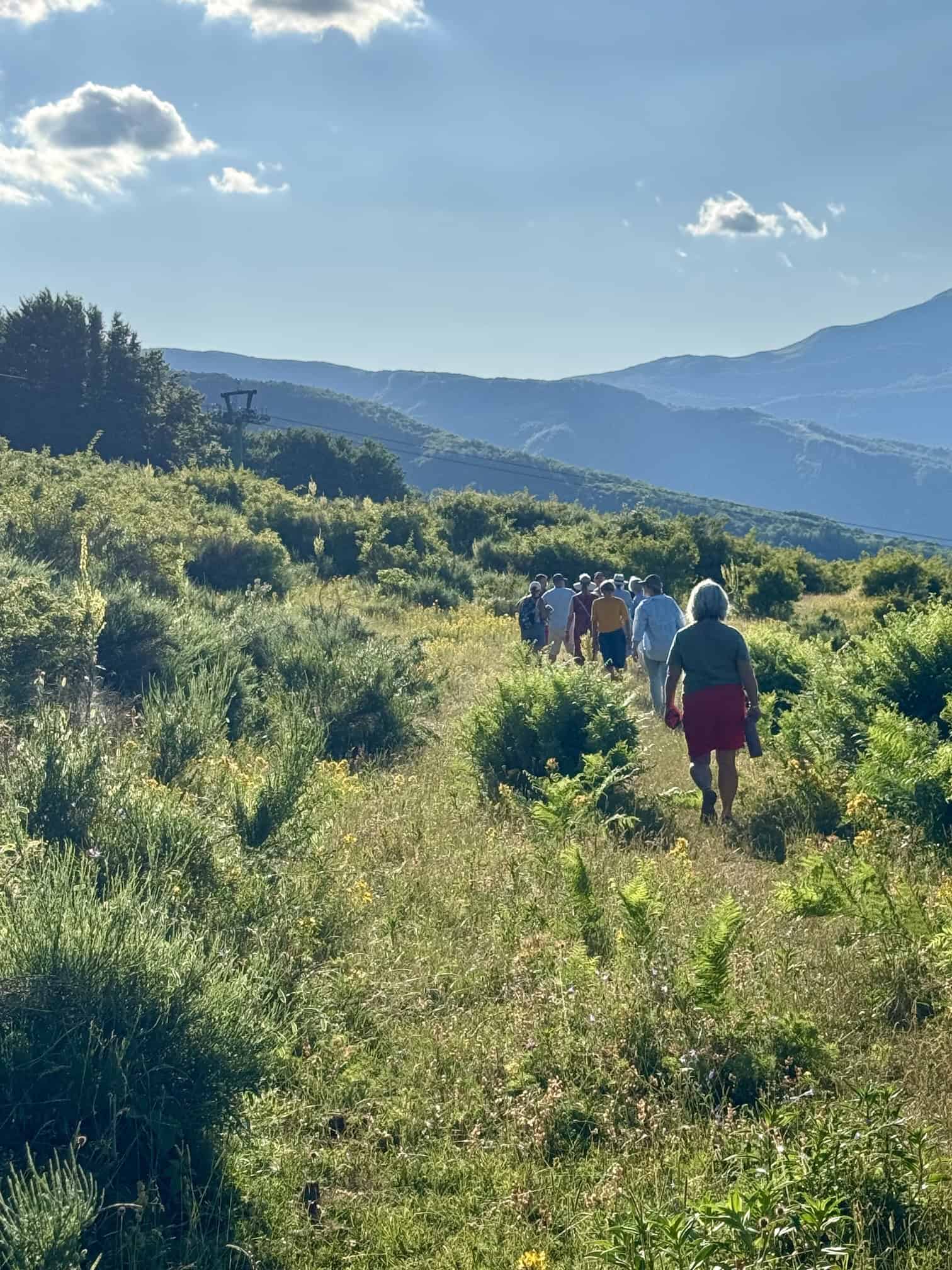
For those with ancestral ties to this part of Abruzzo, undertaking part of the walk could be a lovely way to reconnect and literally walk in your grandparents’ footsteps. The walk is split into seven stages and goes through 30 hamlets, villages, and small towns, including Fano Adriano, Pietracamela, Crognaleto, Cortino, Campotosto, and Montorio al Vomano. Fano Adriano is the start and end point, and Crognaleto has the longest stretch.
Seven Sightlines
The name comes from the Sette Madonne Sorelle, a folk tradition from the Alta Valle del Vomano. Locals believe that seven chapels dedicated to the Madonna were placed so each could be seen from the others. The idea of sightlines as prayer and geometry as devotion has shaped how people here see their mountains, even when they do not always align or agree!
The walk’s seven main stops are the Eremo dell’Annunziata, Madonna della Tibia, Santa Maria Apparente, Madonna della Sgrima, Madonna del Carmine, Santa Reparata, and Madonna del Calvario. Each chapel gives a glimpse into something older and more mysterious than the building itself.
The Brigand and the Pagan Temple
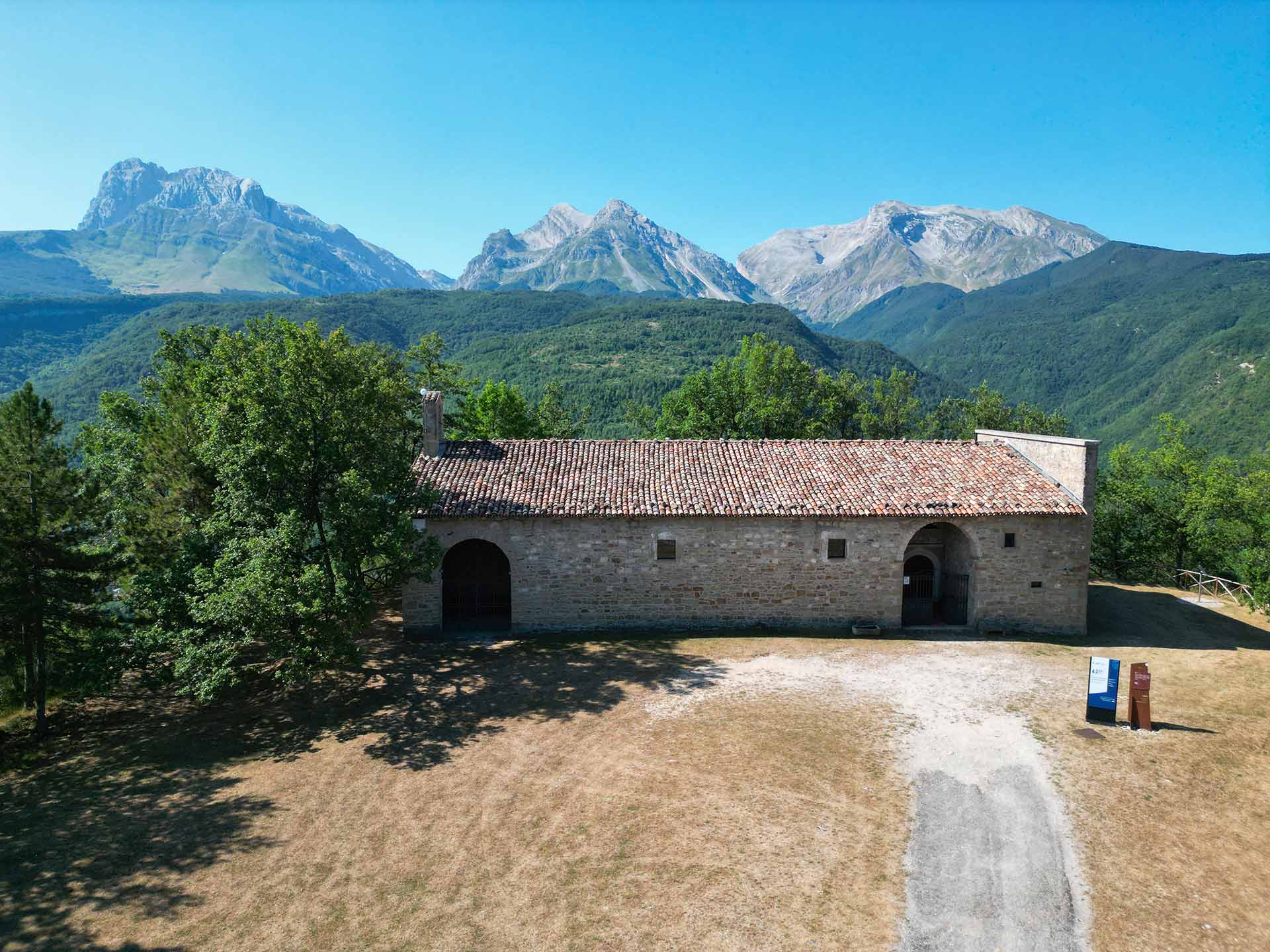
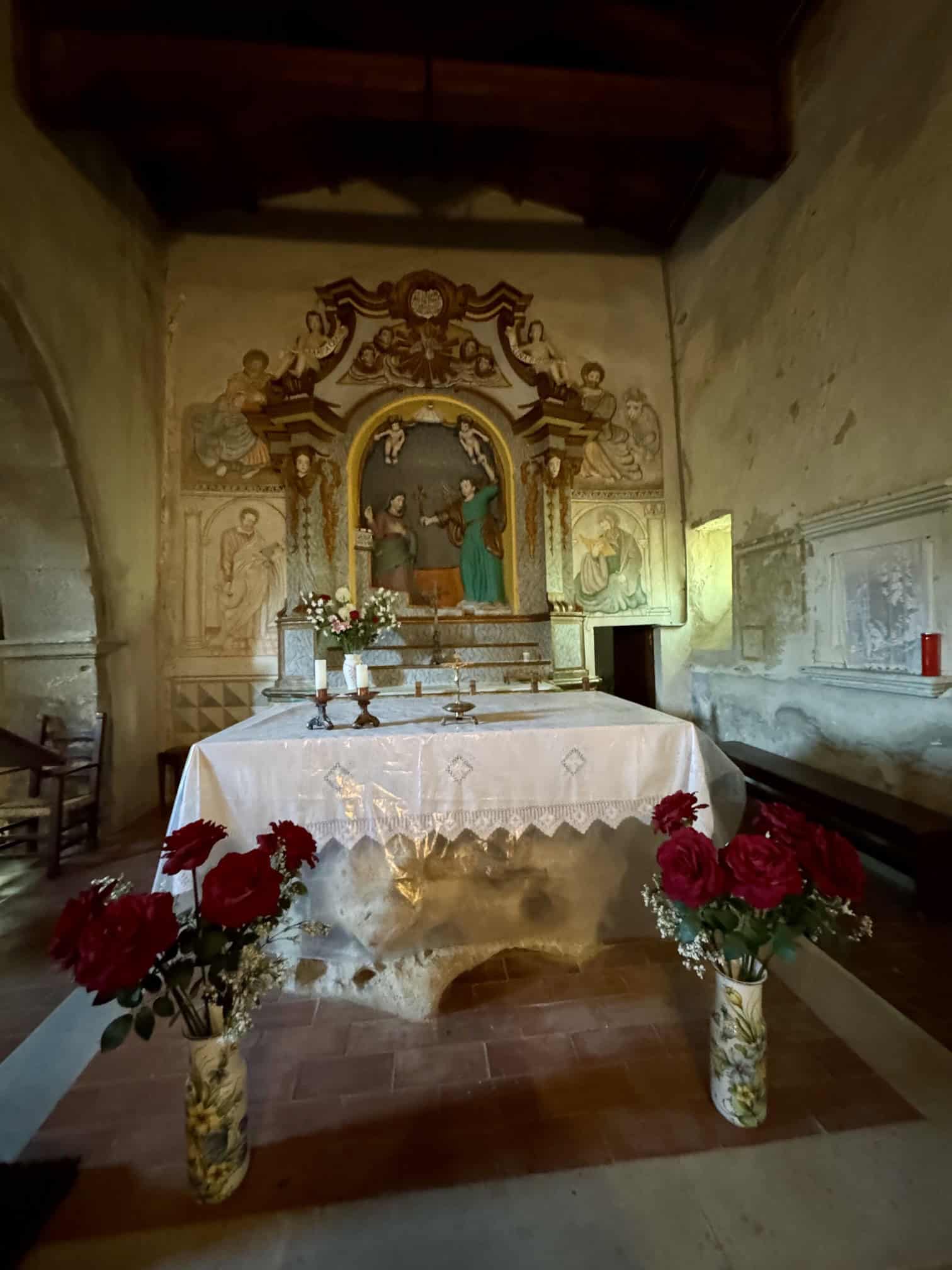
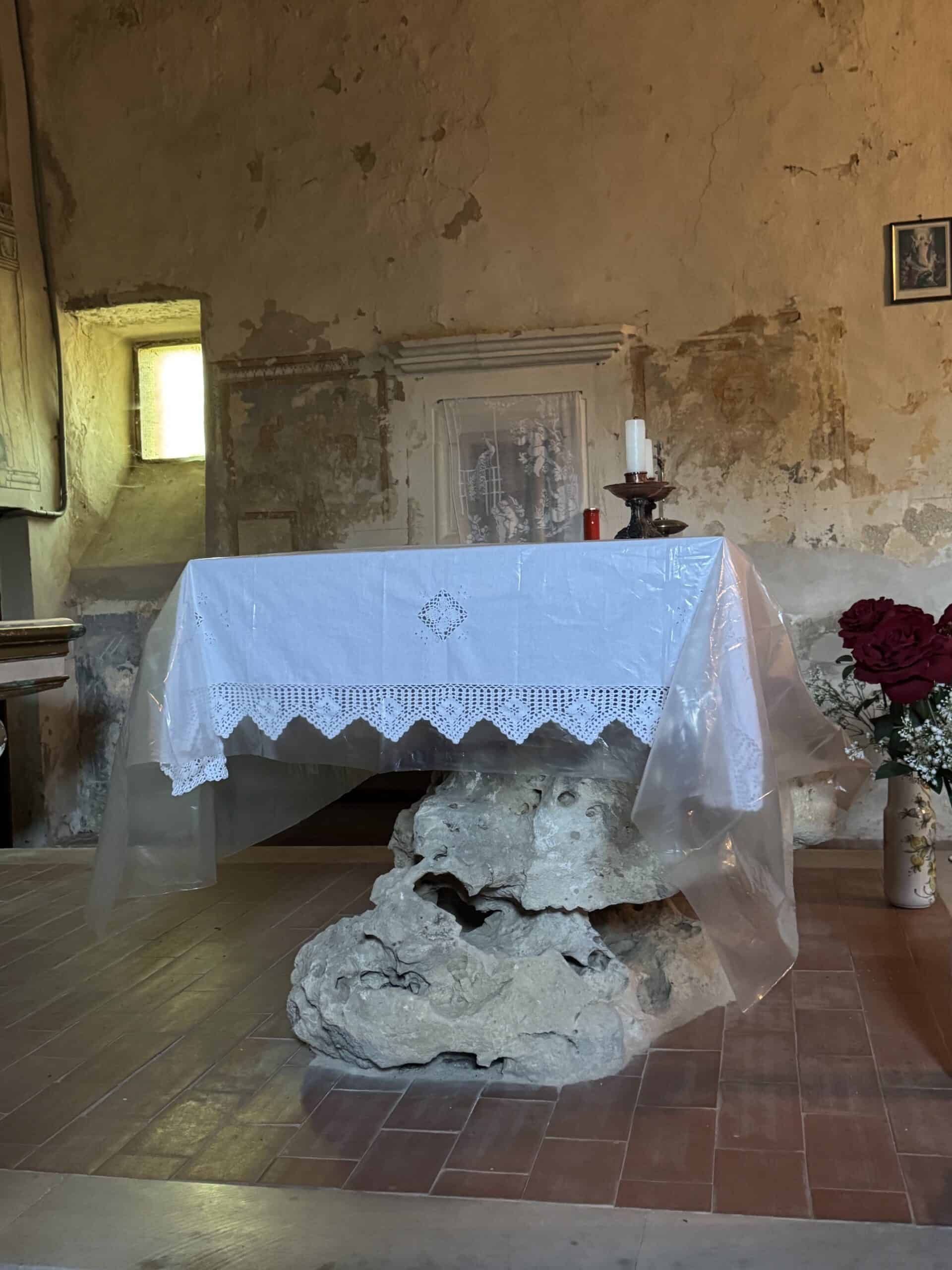
The Eremo dell’Annunziata stands at 965 metres high on Colle San Marcello above Fano Adriano. Its northern wall has large, squared sandstone blocks that look much older than the church itself. These came from a Roman or pre-Roman temple, called a fanum, which is where Fano Adriano gets its name. The eremo is also linked to a treasure legend: in the early 1800s, a group of brigands is said to have buried a hoard under a fir tree on the hill, killing one of their own so his ghost would guard it. Local historians believe the treasure was stolen from Baron Civico of Leognano in 1815. In the past, children led pilgrimages up the path to pray for sick villagers. The feast of the Annunziata is on 25 March. We highly recommend a sunset picnic here; it’s an incredible experience and view of the Gran Sasso mountains!
The Captain’s Mules
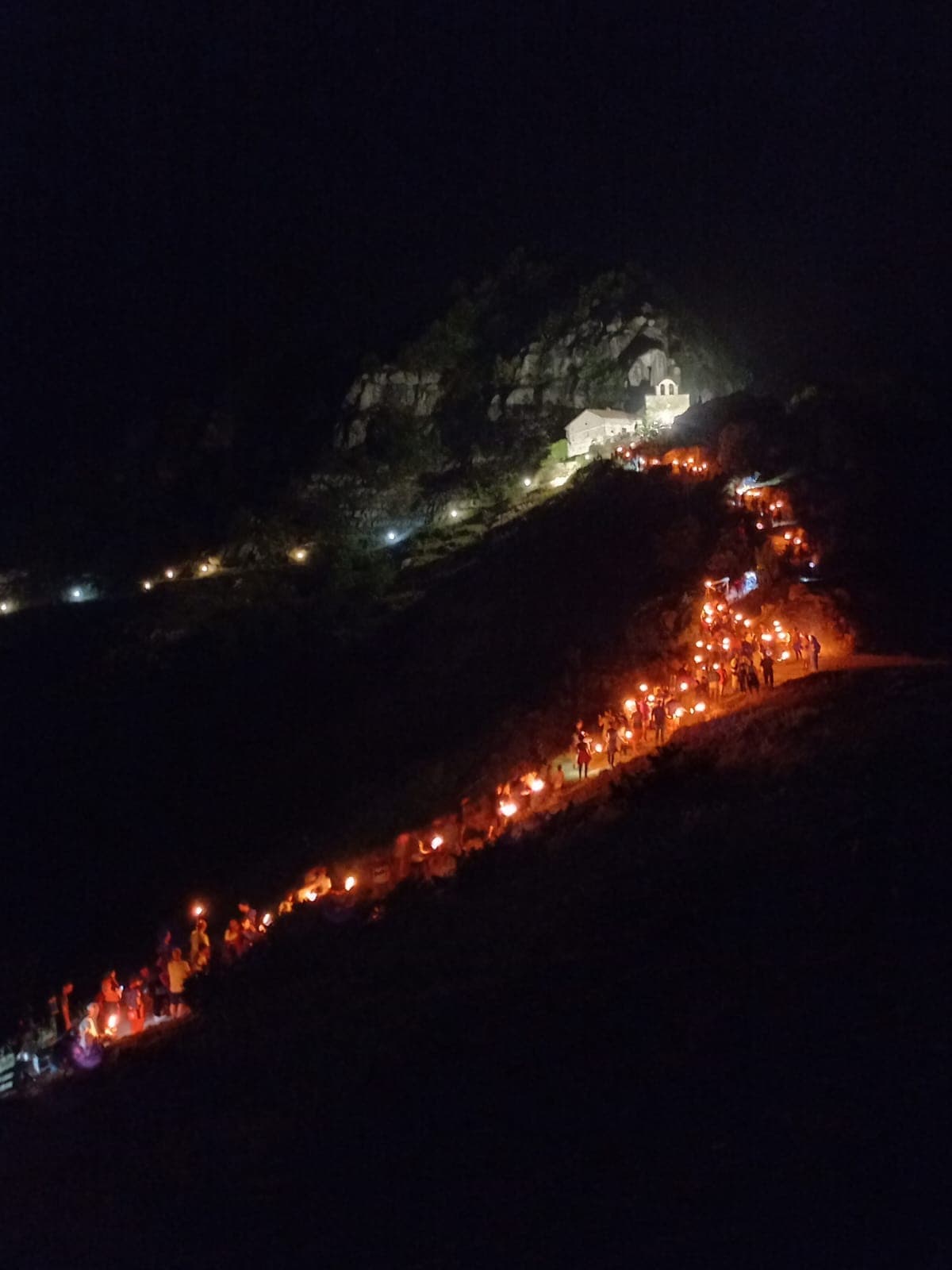
The Madonna della Tibia stands on a rocky outcrop above Crognaleto at 1,187 metres. Legend says a merchant from Amatrice broke his tibia after falling from his horse here and built the chapel to give thanks. The real story is even more interesting. The site was already called Tibbla in a document from 1130, long before the supposed accident. Church records show the chapel was built in 1617 by Berardino Paolini, the parish priest of Crognaleto, on the site of an older miracle. Capitano Angelo Montano’s mules, carrying a Madonna statue from L’Aquila to Teramo, reportedly fell off the cliff but were found safe and grazing below. The wooden Madonna inside is fondly called la paesana, or the village woman. The feast is on 9 August. On 17 August, villagers walk up to the chapel by torchlight and ring the bells at the top.
The Girl who Spoke
Santa Maria Apparente, just outside Campotosto, has the most touching origin story on the route. On 2 July 1604, a girl named Rosa Angelica Palombi, who had been deaf and mute since birth, was washing linen in the Rio Fucino when the Madonna appeared to her. She ran back to the village and spoke for the first time in her life. The crypt under the church holds something even stranger: a faint carving of the Sator square, the famous Roman palindrome ROTAS-OPERA-TENET-AREPO-SATOR, which reads the same in all four directions. Pre-Christian Romans used it as a charm. The feast is celebrated on 2 July and the first Sunday of August.
The Flying Chapel
The Madonna della Sgrima stands above Schiaviano, a hamlet of Montorio al Vomano, along an old herding route. The earliest records go back to 1324. Local tradition says the Virgin Mary herself brought the chapel here from Fano Adriano, in a miracle like the famous flight of the Holy House to Loreto. The hill is called Colle della Sgrima.
The Straw Saints, the Begging Girls and the Priest’s Village
In Frattoli, a high hamlet of Crognaleto known for having “more churches than houses,” the Madonna del Carmine chapel houses the conocchie, processional statues with plaster faces and hands. Their bodies are made of straw and dressed in brocade and silk to keep them light enough to carry. The feast of the Madonna del Carmine is on 16 July. It’s well worth coming here to eat and admire the dreamy views!
Santa Reparata stands in Cerqueto di Fano Adriano. Built in the early 1600s along the mountain road, it has a large narthex that once sheltered shepherds. The chapel was cared for by priole, unmarried girls who collected donations for its upkeep. Cerqueto and Pietracamela were once home to the cardatori di lana, or wool combers, who spoke a secret trade dialect called trignina, now almost forgotten. In 1964, the parish priest, Don Nicola Jobbi, established an ethnographic museum here to preserve what remained. Cerqueto’s main feast is Sant’Egidio, celebrated on 31 August and 1 September, with origins in a 1432 indulgence from Pope Eugenio IV.
The Madonna del Calvario chapel is in Crognaleto, in Piazza Aldo Moro. It is the simplest of the seven, a 16th-century parish chapel at the centre of the village.
A Folk Calendar to Walk by
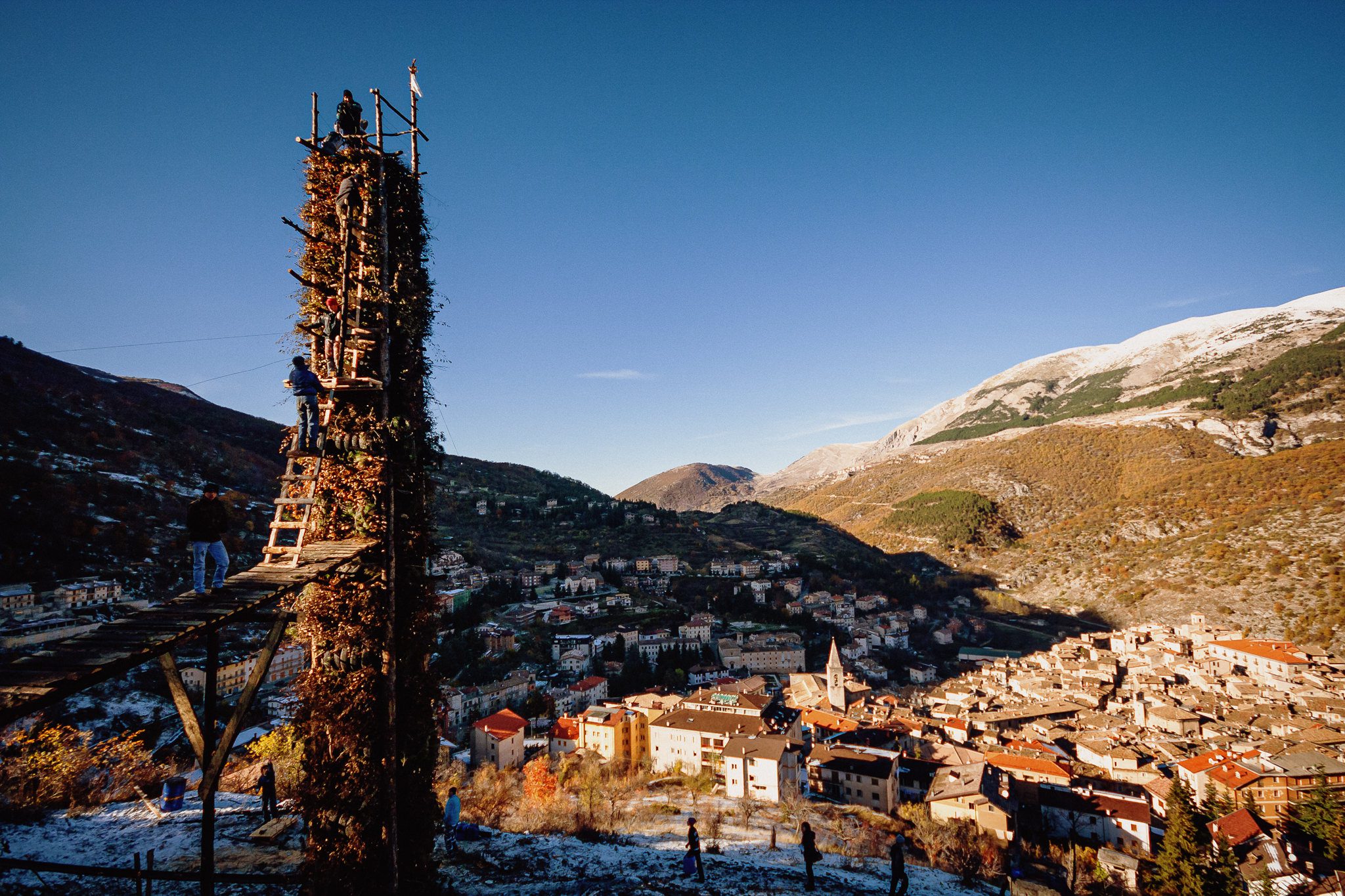
The trail passes through a year full of local festivals. On 16 January, Sant’Antonio Abate singers visit Cerqueto, wearing costumes and ringing cowbells. On Holy Thursday evening, the Canto del Perdono is sung in Fano Adriano, with men in the sacristy and women in the nave. May starts with the Festa dell’Albero at Piano Vomano. In July, Tottea hosts the Sagra della Ricotta. The first week of August brings the Sagra della Scurpella in Fano Adriano, celebrating the local version of the well-known Scrippelle found in timballo Teramana. That same Sunday, families from Pietracamela and Intermesoli climb to the Madonnina del Gran Sasso at 2,005 metres, a walk women once made while balancing baskets of food on their heads. On 15 August, Campotosto celebrates Santa Maria Assunta. On 8 September, Poggio Umbricchio holds the Madonna di Loreto festival. All year, Pietracamela’s U mstrariegl, a horned-man pastry famous for its ugliness, remains a local tradition.
Walking it
Livestock merchants, shepherds, soldiers, priests, and quiet girls built these chapels on land that already had a third-century BC megalithic wall at Colle del Vento above Nerito and from the buried stones of old temples. The trail has seven main stops and 34 family-run hostels. Five of these opened in the past year for this project. The best time to walk is from late spring to autumn, and Fano Adriano is the best place to start.
Stages
The 7 stages are:
- Fano Adriano to Cusciano, 21.1 km (passes through Intermesoli, Pietracamela and Cerqueto, with the Chiesa di Santa Reparata above the village)
- Cusciano to Cavennile, 18.14 km (the lowest point of the Cammino, near the ruins of the Tempio di Ercole)
- Cavennile to Pagliaroli, 14.33 km
- Pagliaroli to Cesacastina, 19.20 km
- Cesacastina to Case Isaia, 16.93 km
- Case Isaia to Nerito, 23.24 km (the longest stage, along Lago di Campotosto)
- Nerito to Fano Adriano, 15.75 km (closes the ring, past the Madonna del Calvario, the megalithic walls of Colle del Vento, and the Eremo dell’Annunziata)
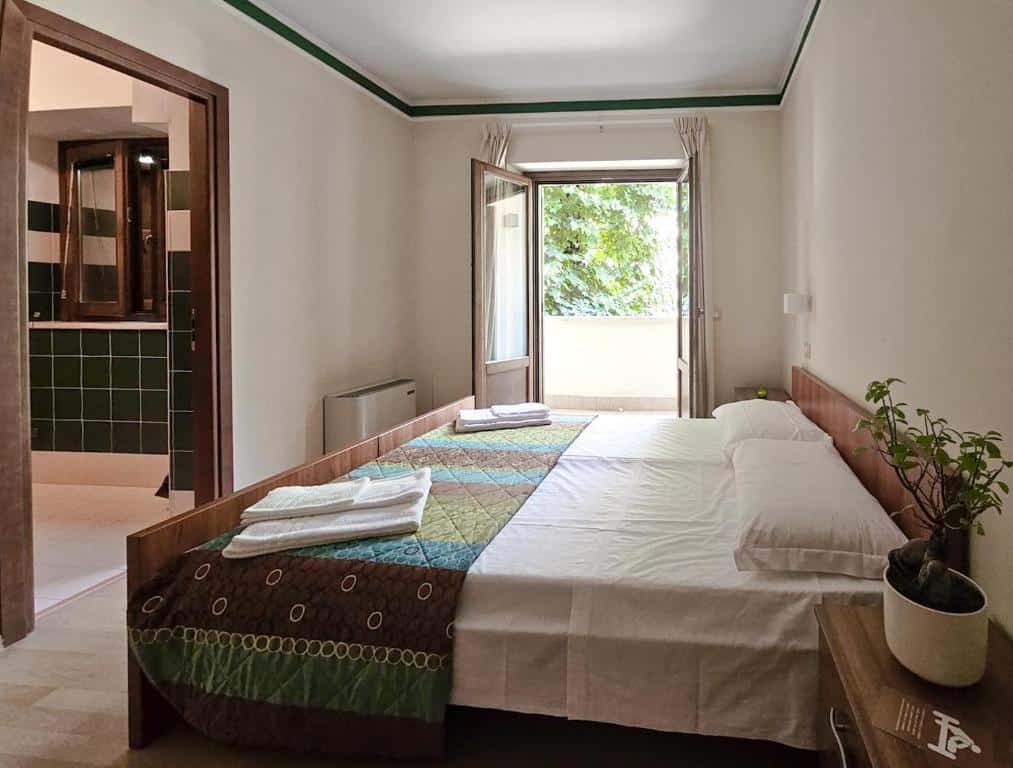
Casetta Lucciola
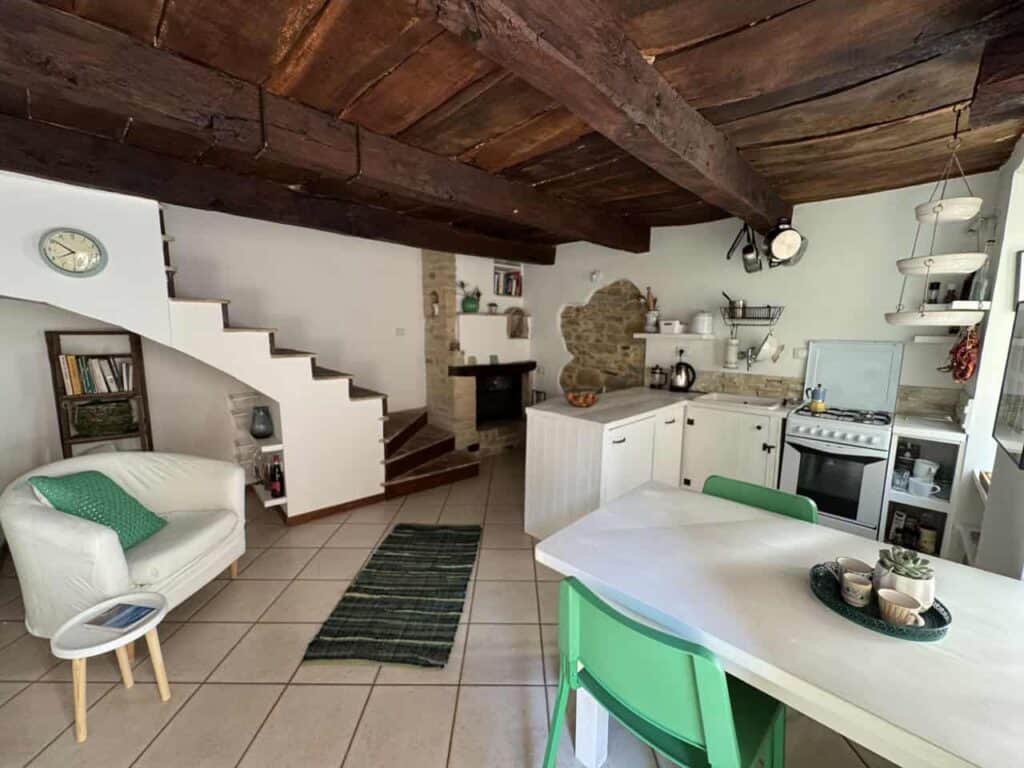

Alongside raising a teenager, Sam hosts guests at her family’s traditional home, the Little House of the Firefly in Abruzzo, offering a warm welcome and insider tips on local culture, food, and hidden gems.

Author: Sam Dunham
Sam is a freelance SEO content creator and IGCSE Geography and English teacher in Rome. She also runs the Life In Abruzzo Cultural Association, sharing stories and insights about this captivating region. Alongside raising a teenager, Sam hosts guests at her family’s traditional home, the Little House of the Firefly in Abruzzo, offering a warm welcome and insider tips on local culture, food, and hidden gems.