A Mirror Across Centuries: Abruzzo and the Bourbon Memory
0
I often dip into the book ‘In the Abruzzi’ (by Anne Macdonell & Amy Atkinson, published by Chatto and Windus in 1908), firstly because it’s a favourite of mine, but also because it’s beautifully written, well researched and full of fascinating information.
The global political climate in 2025 was disturbing to say the least, and reading a book from over a century ago I kept getting glimpses of a strangely parallel situation. The account of the troubles in the south leading up to the unification of Italy in 1861 has the very same elements as the situation we see today in the US and many other developed countries. The super-rich maintain control by favouring and then misleading the masses, discrediting the experts and the liberal minded, controlling the media and pointing the finger at the alien or the unconventional.
This is why old books are so good: they remind us that the battle is never over. The rich want to be much richer, and they do not play fair.
Before the unification of Italy in 1861, the south of the country, the Kingdom of the Two Sicilies, was ruled the Bourbons. Their style was essentially autocratic governance and the suppression of liberal ideals inspired by the French Revolution. Here are a few paragraphs written by Anne Macdonell in 1907 from the book ‘In the Abruzzi’, where she gives us a chilling history lesson from almost two hundred years ago that has many parallels with the current political mood today. Is this the kind of world you want to go back to?
“Their policy, and especially that of Ferdinand II, was to harry and torment the middle-classes and such of the aristocracy as displayed any independence, and to favour the people. This favour did not extend very far, no farther, indeed, than in levying few or no taxes on them, and ensuring that in any dispute between them and their social superiors they should have the preference. The governors’ instructions were clear on that point; and it was their business, as well as that of the priests, to teach the doctrine that there was none above the people but the king. Not that the priests were invariably sub- servient to the Bourbons. There were patriots among them, and many a Franciscan friar was a missionary of liberty. Nothing was done for the development of the country; but if a peasant went to church he was not meddled with, and what he made was his own. A brigand who wore an amulet and cast up his eyes at the name of the Virgin was counted a better citizen than any middle- class man not enrolled definitely among the defenders of Church and Throne. There was a time when a citizen of standing and repute might not leave his home without the consent of his wife and parish priest. Had he not been regular at mass, as likely as not the priest would refuse it. He might not send his sons from home to be educated; and the local education was just what the clergy allowed it to be. He might receive no journals save the official gazette, which the police had edited. He might not dress as he liked, nor wear his hair as he liked. A little busybody of Chieti, Don Placido Picerone, a ridiculous personage, but well seen of the authorities, used to watch for citizens with an unorthodox cut of beard, and drag them to the barber forthwith! Spies were everywhere. Spying was the only industry, besides brigandage, that the later Bourbons encouraged and paid for in these provinces. According to Queen Caroline, the Austrian wife of Ferdinand I, it was incumbent on priests “to honour spies; they should make use both of the pulpit and the confessional to keep the people in check.” But spies were by no means all clerical; and lay informers grew so dangerous to the liberty of reputable citizens, that neighbours practically gave up all social intercourse, and shut themselves fast in the little circle of their families. And the father might not even read the newspaper in the cafe!”
“Notwithstanding all this, in the poor, almost roadless Abruzzi, where difficulties of education were greater than elsewhere, where books were difficult to procure, even apart from the censorship, they read and thought and printed. Chieti was a fiery centre of propaganda. When one newspaper was suppressed, two sprang up in its place with lightning speed, though editors, writers, and readers went to prison. The peasants who could not read were for the Bourbons; so far was the Abruzzi the La Vendee of new Italy. But outside the circle of officials — and the Government multiplied offices great and little — nearly all the educated persons were liberals. There was the tragedy: the long-drawn struggle, the want of cohesion that made it so fruitless, and gave them so poor a share in the triumph of the end.”
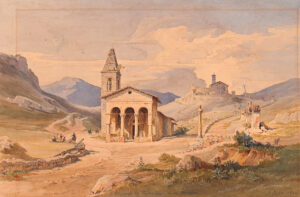
“The French occupation caused much excitement and roused ill blood. The cleavage between the educated population and the lower classes was complete; and the Bourbon conspiracies which stirred and bribed the populace to reaction, bore unhappy fruit here. The see-saw of tyranny demoralized a fiery population, and made Tagliacozzo a troublous place during the Risorgimento. It is just up here by the Calvario and the Soccorso, both battered in the skirmishes, on the road from Rome into the Marsica, that we can best recall the stormy time. Throughout the town, among the substantial citizens and the artisans, liberal ideas were rife. The liberals were, in the main, persons of standing, and their houses well worth sacking, which gave a peculiar zest to the task of persuading them to correct opinions. Mazzinians had suffered much and heroically; but among all the cultivated gentlemen and intelligent artisans who made private sacrifices for the sake of a free and united Italy, there was a lamentable lack of leadership. And the people of the high town and the shepherds from the mountain villages were flattered into thinking they were divinely appointed avengers of Church and throne and morality. Likewise, there were good pickings to be had in reward of zeal. Even when the rest of the world knew that the cause of united Italy was won, they did not know it here. The lying rumours were louder than the truth.”
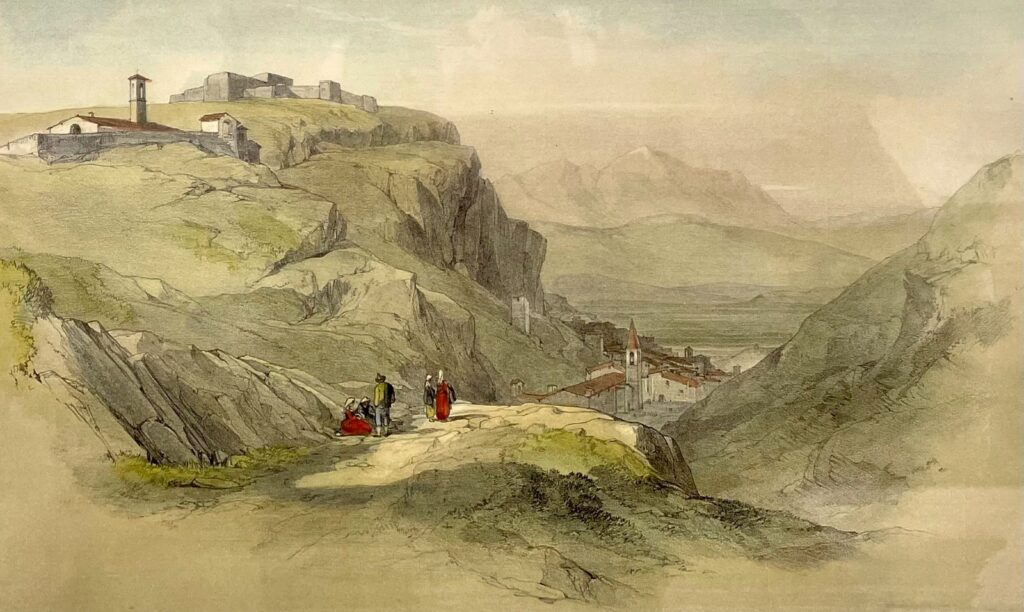
Edward Lear, Tagliacozzo, 1843 ( in the troubled Bourbon times) Looking down from the 'poor' high town'
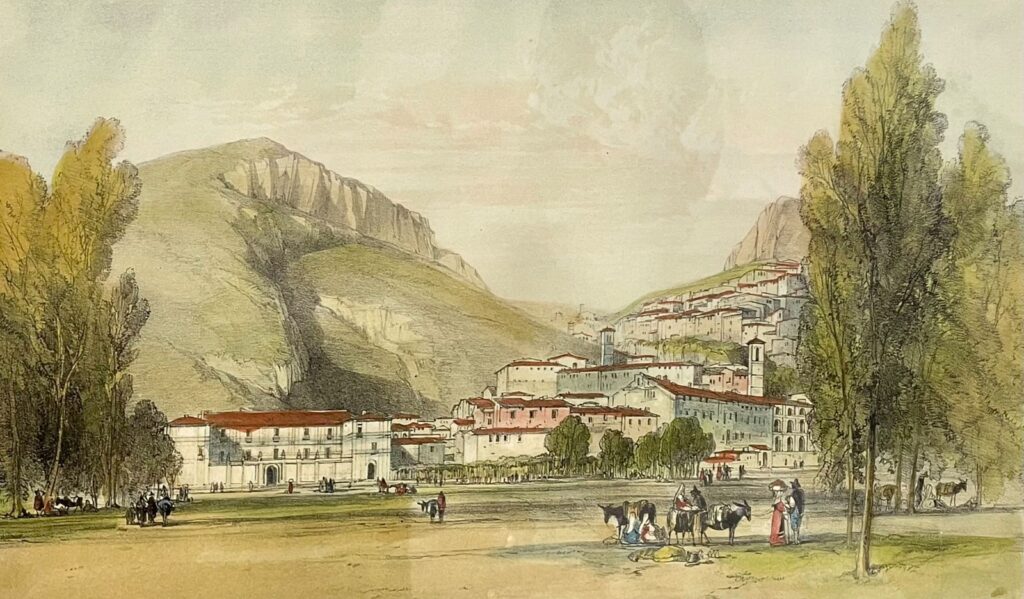
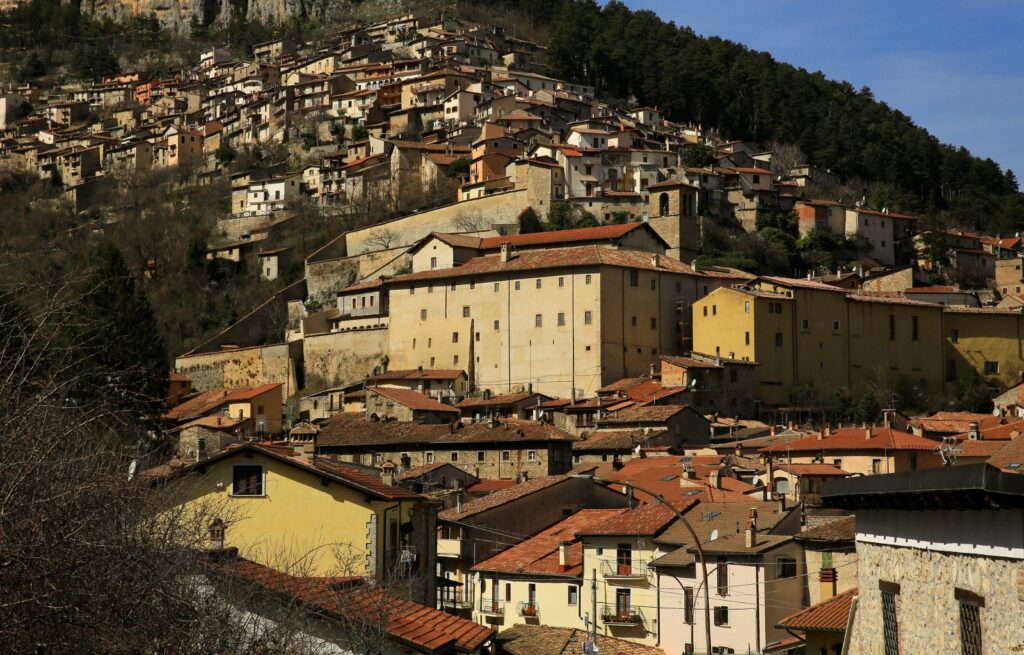
Edward Lear, Tagliacozzo, 1843 ( in the troubled Bourbon times) Looking up from the wealthy downtown
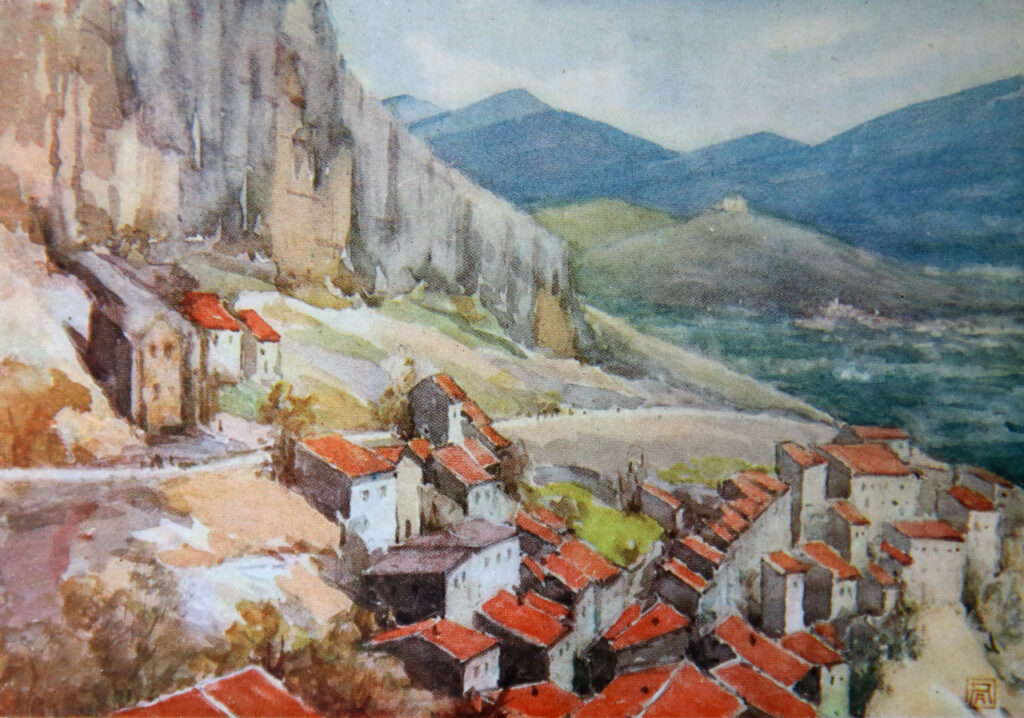
The poor Altolaterra - Amy Atkinson - 1907
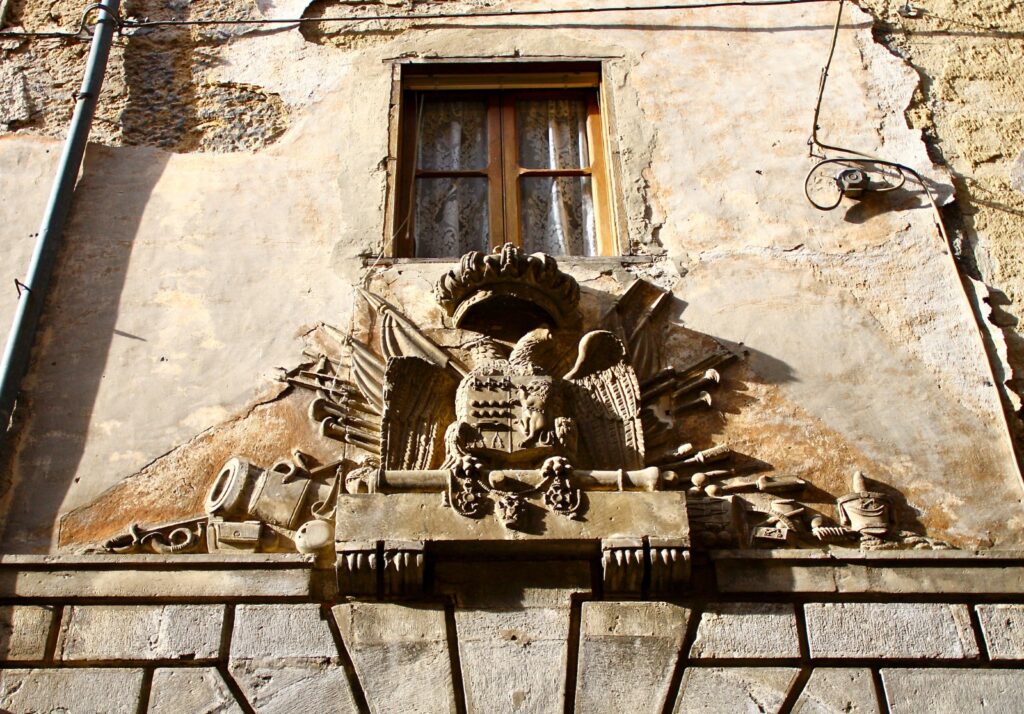
The Posh Houses!
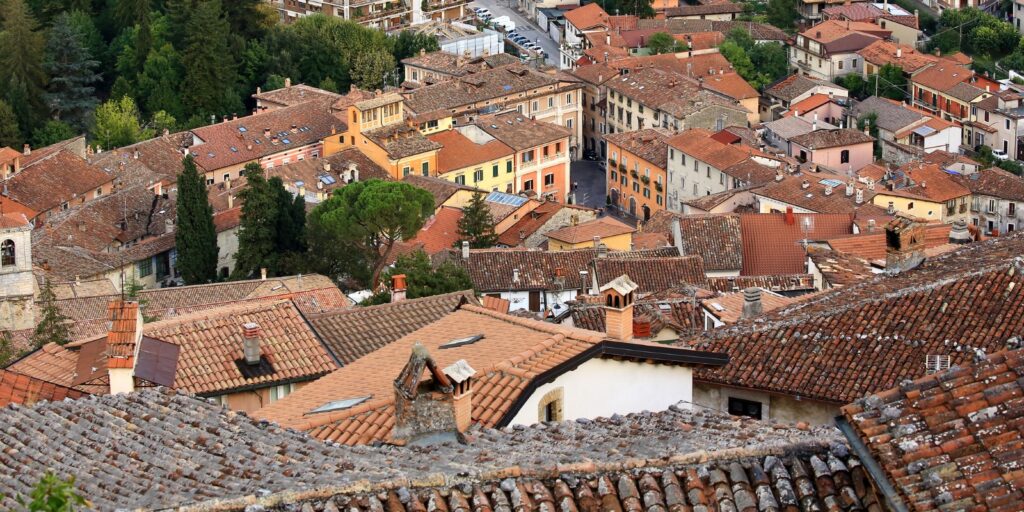
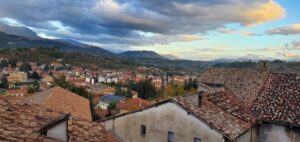
Looking down on the Piazza dell'Obelisco and it's wealthy palazzo style living from the cramped high town