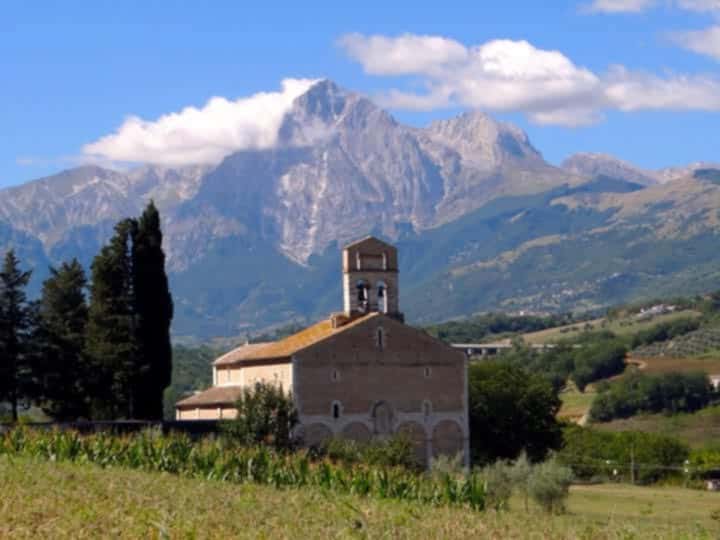
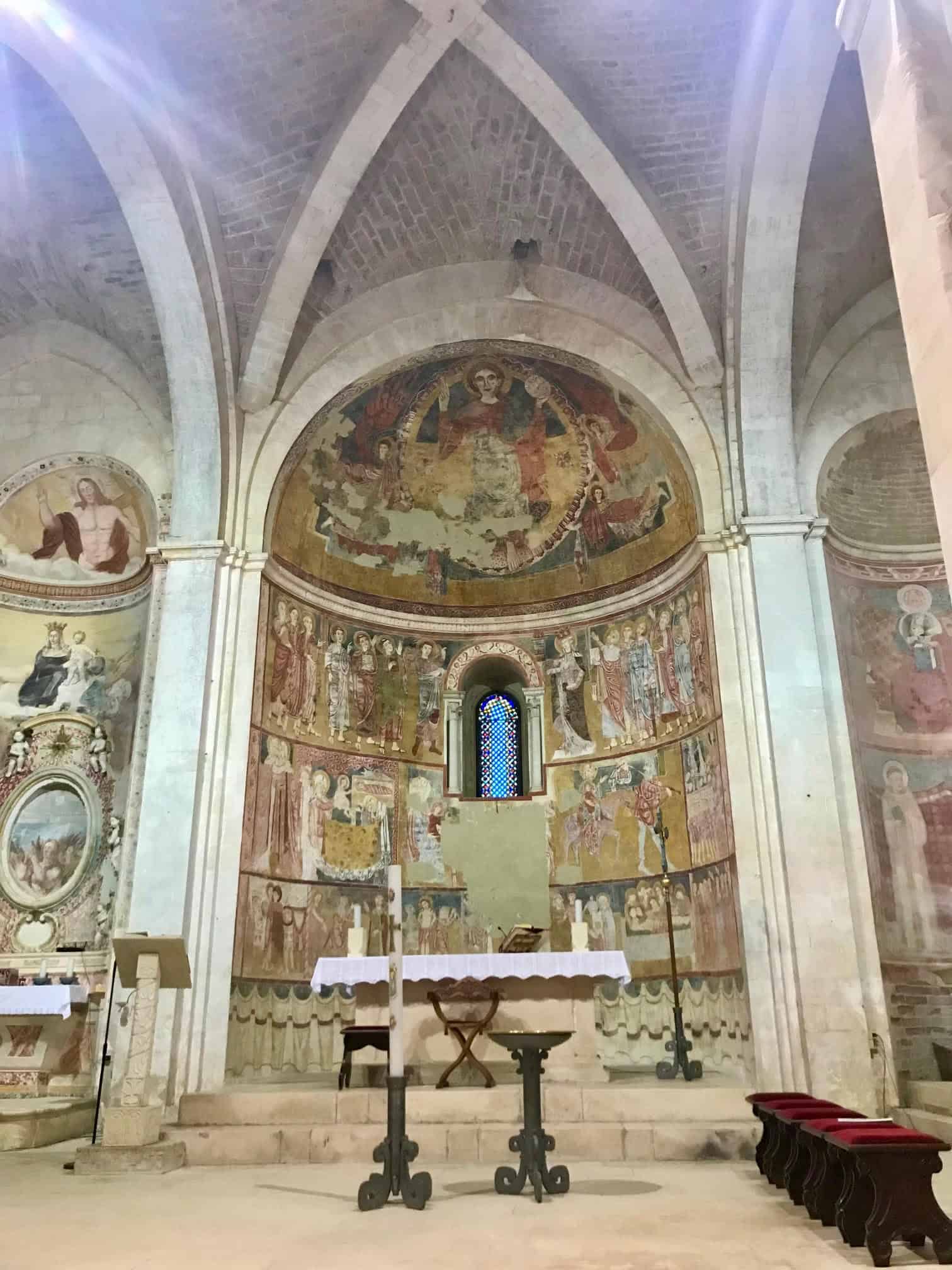
The former Abbey of Santa Maria di Ronzano, located in Castel Castagna, Teramo province, is a 12th-century Romanesque-Apulian structure renowned for its exquisite frescoes. It’s venerated in Abruzzo because its architecture and art display how significant the movement of people was during the Transumanza, the seasonal migration of men and sheep down to Puglia to enjoy a warm winter. Many brought back recipes and food types from their time away but admiration also led to recreating art and styles in the foothills of Teramo via the building of this former Benedictine Abbey that was a little different to the rest in the locality.
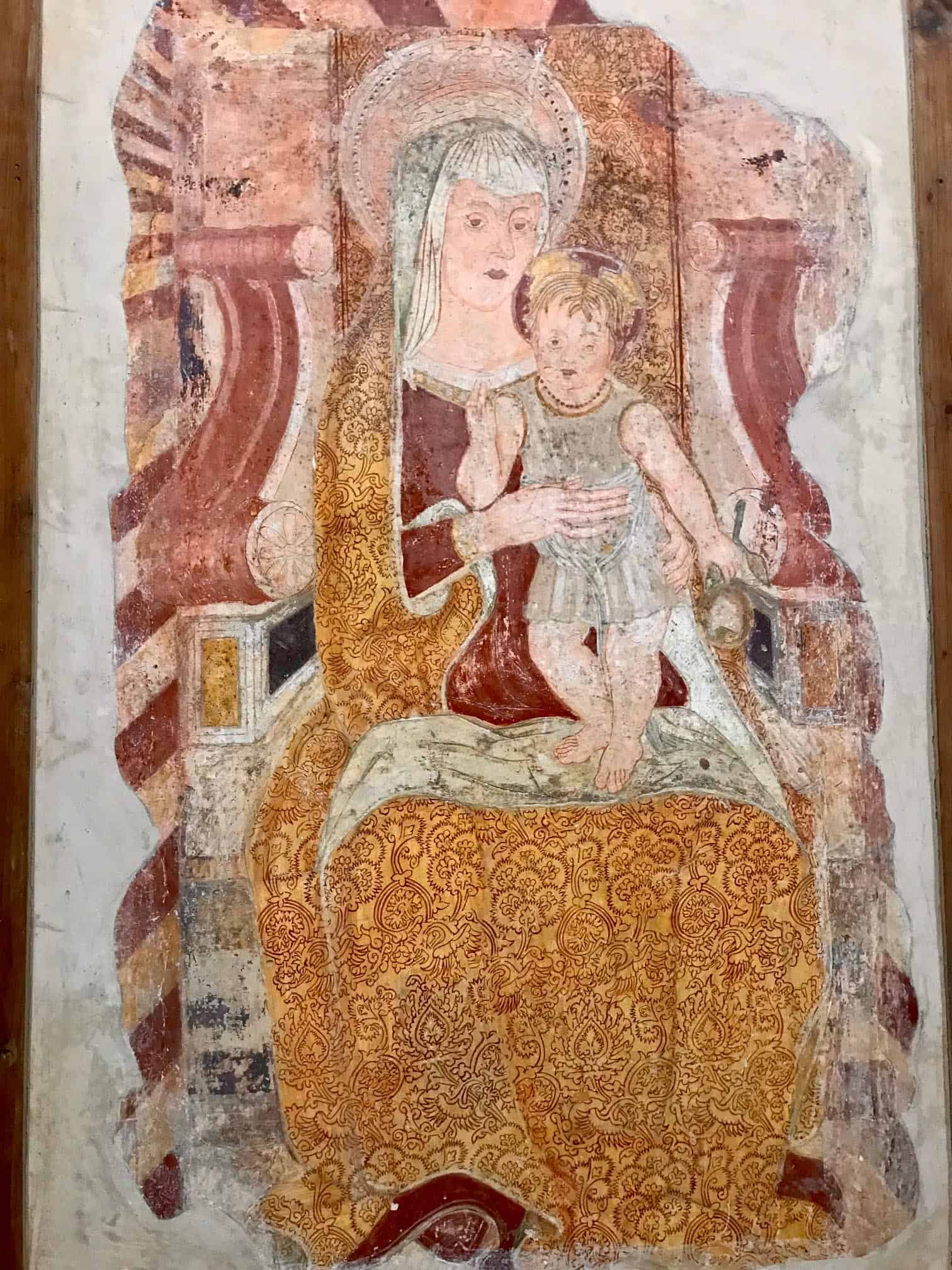
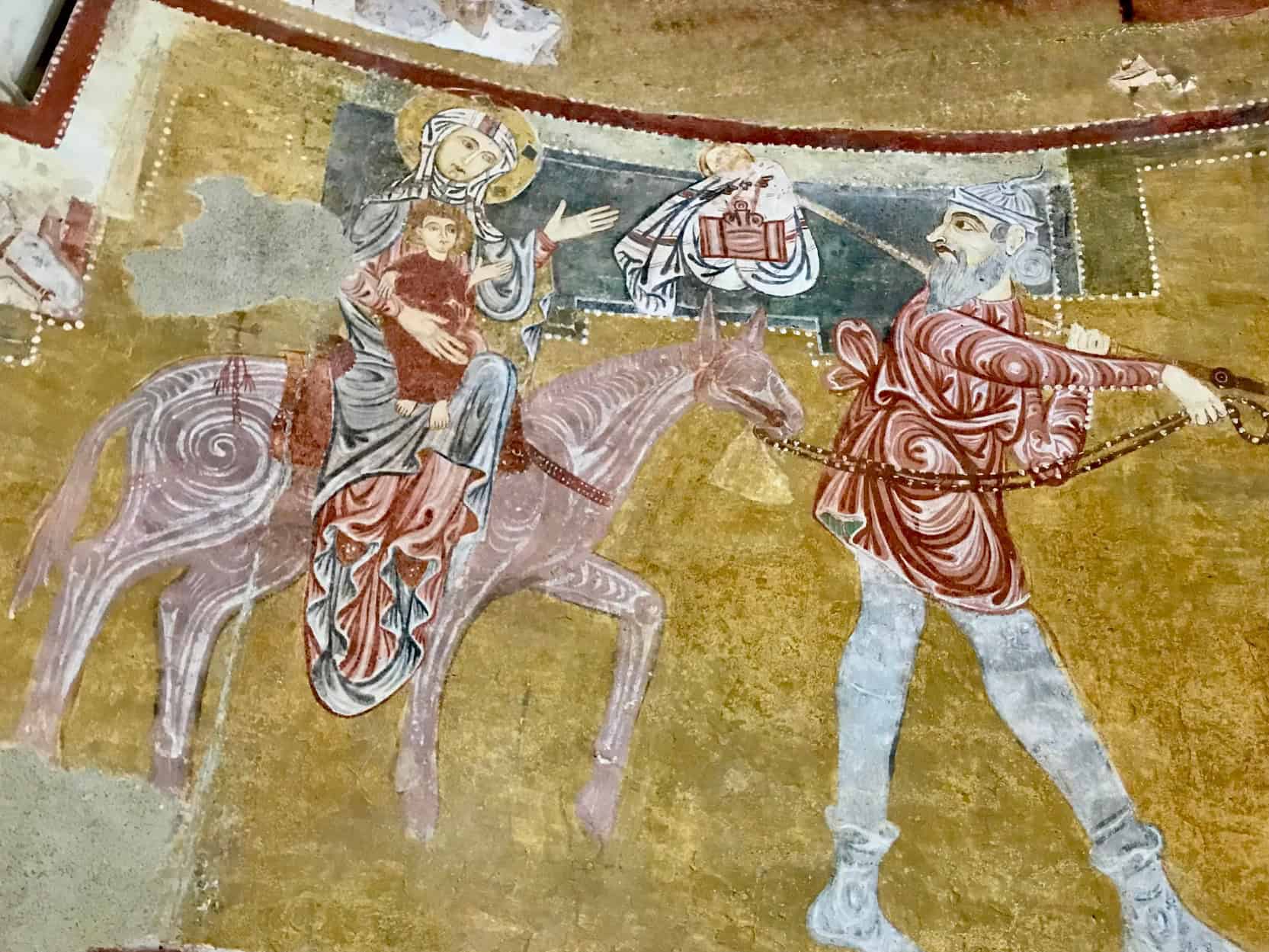
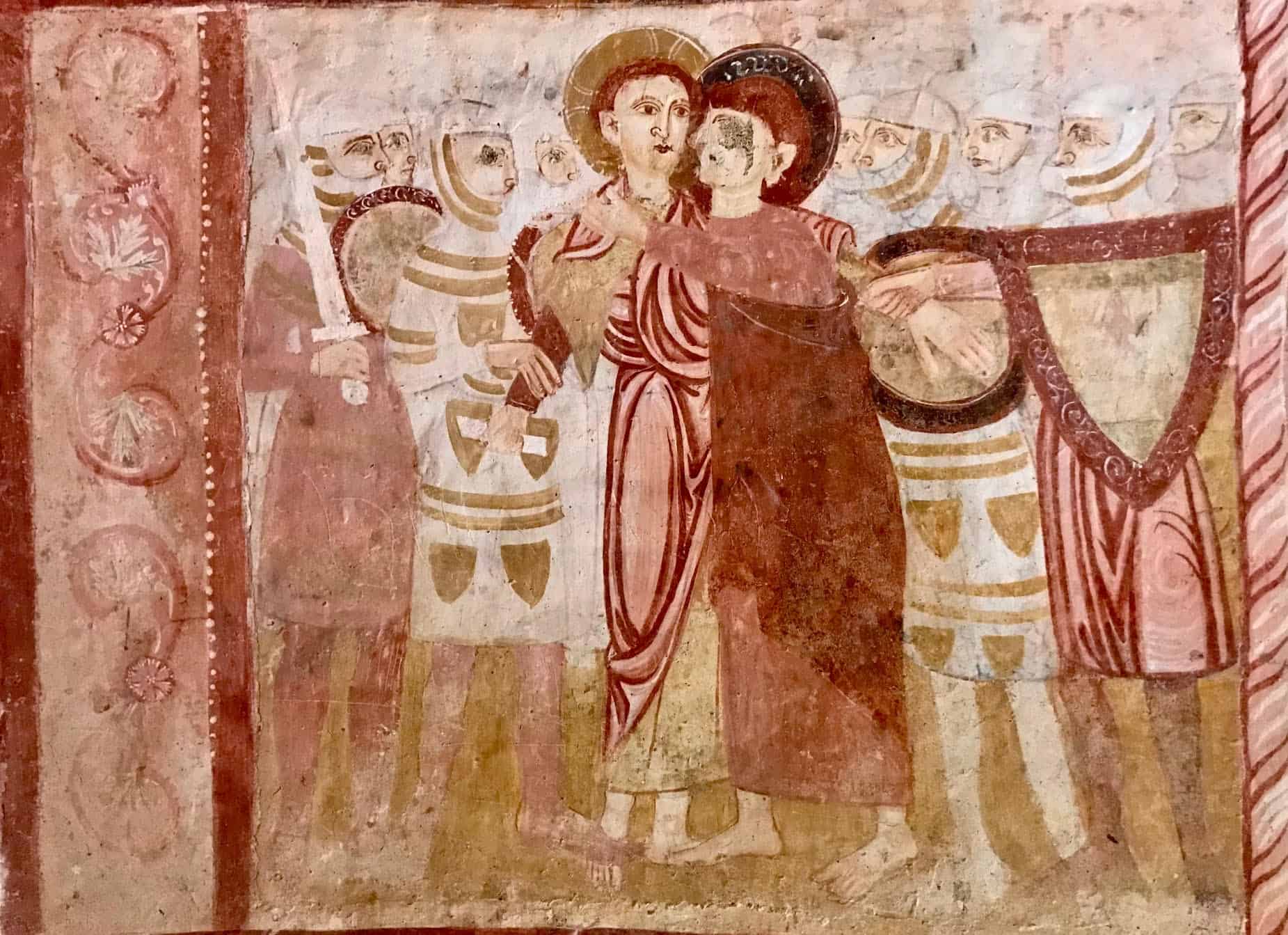
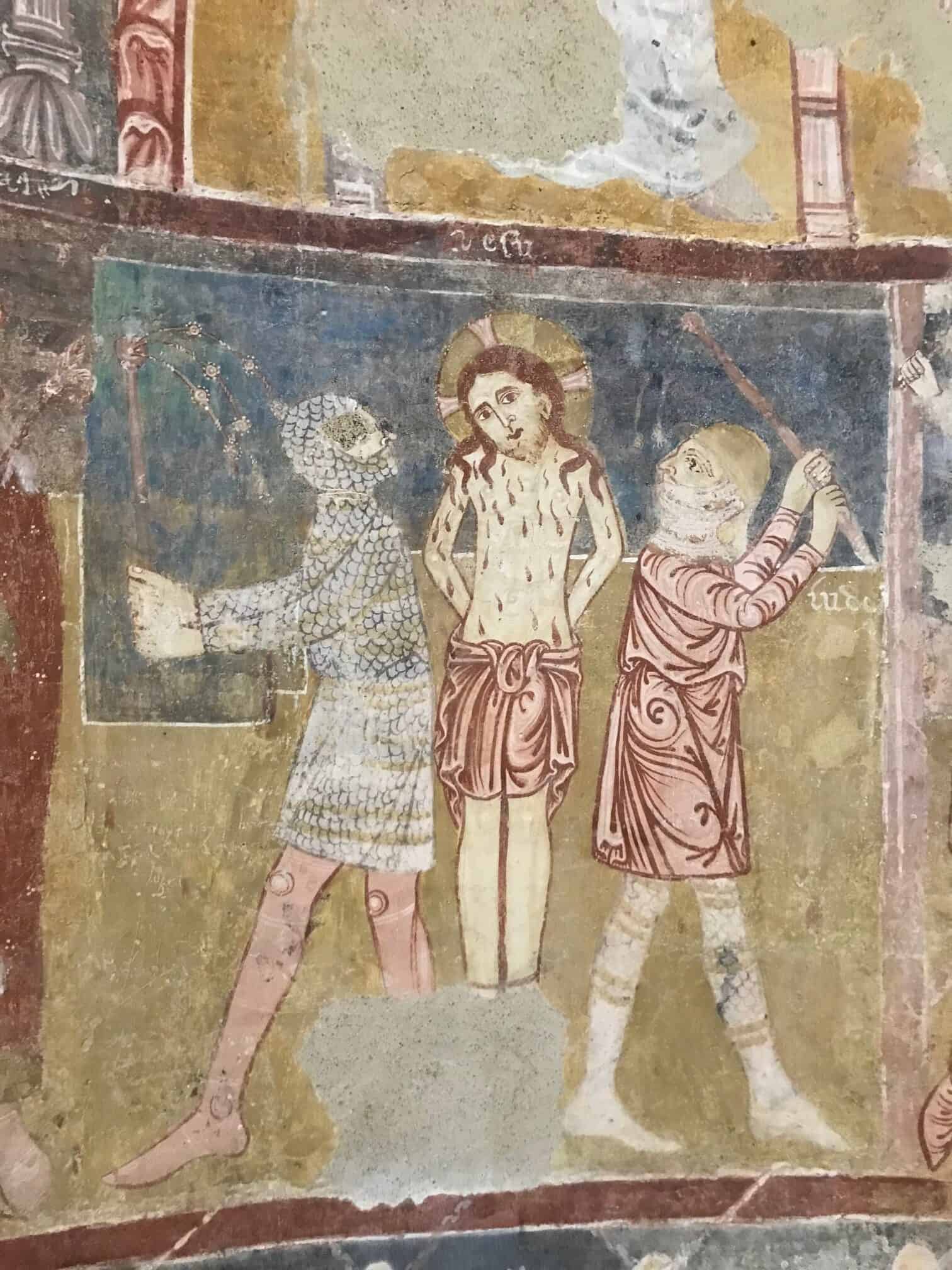
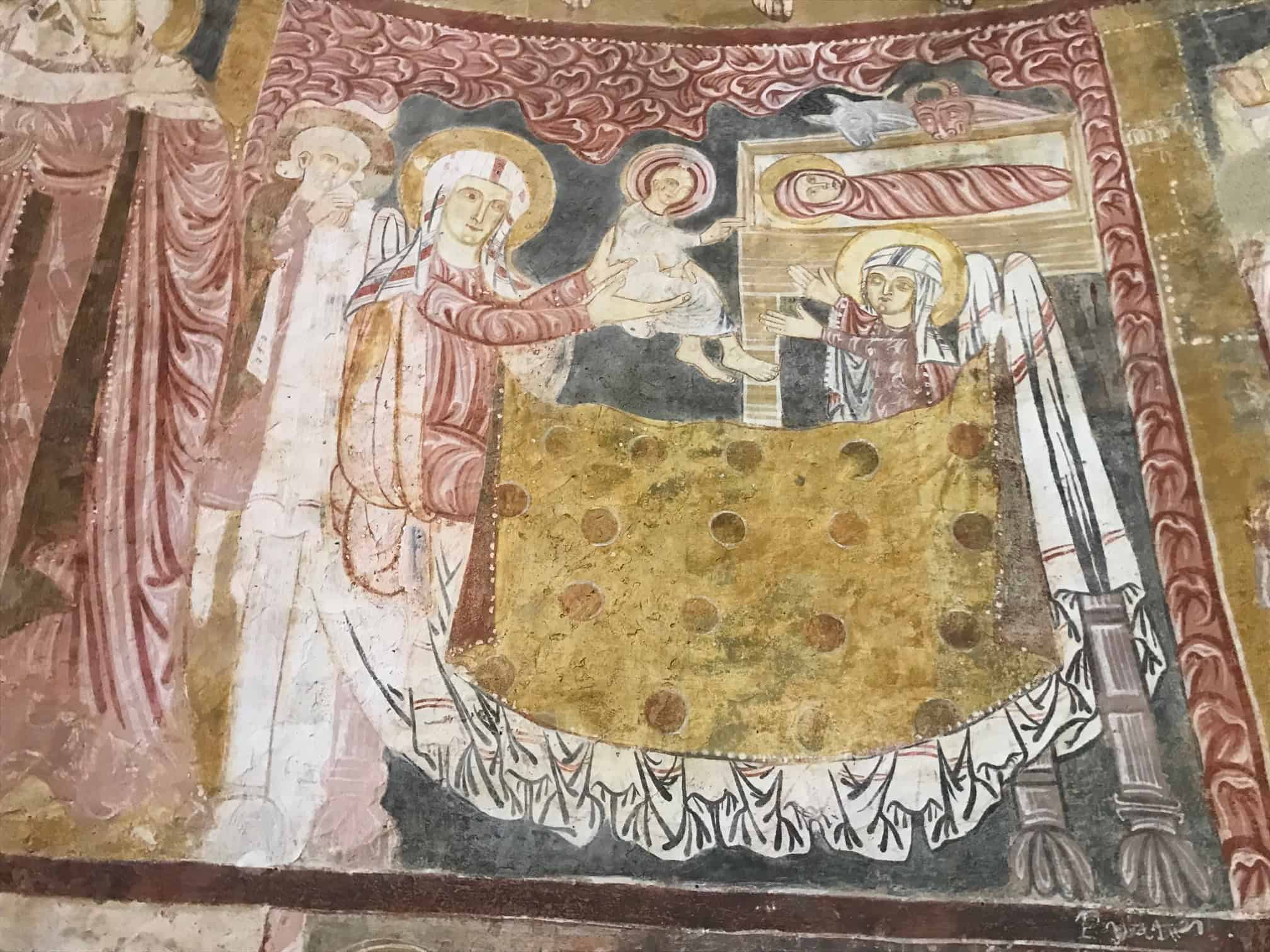
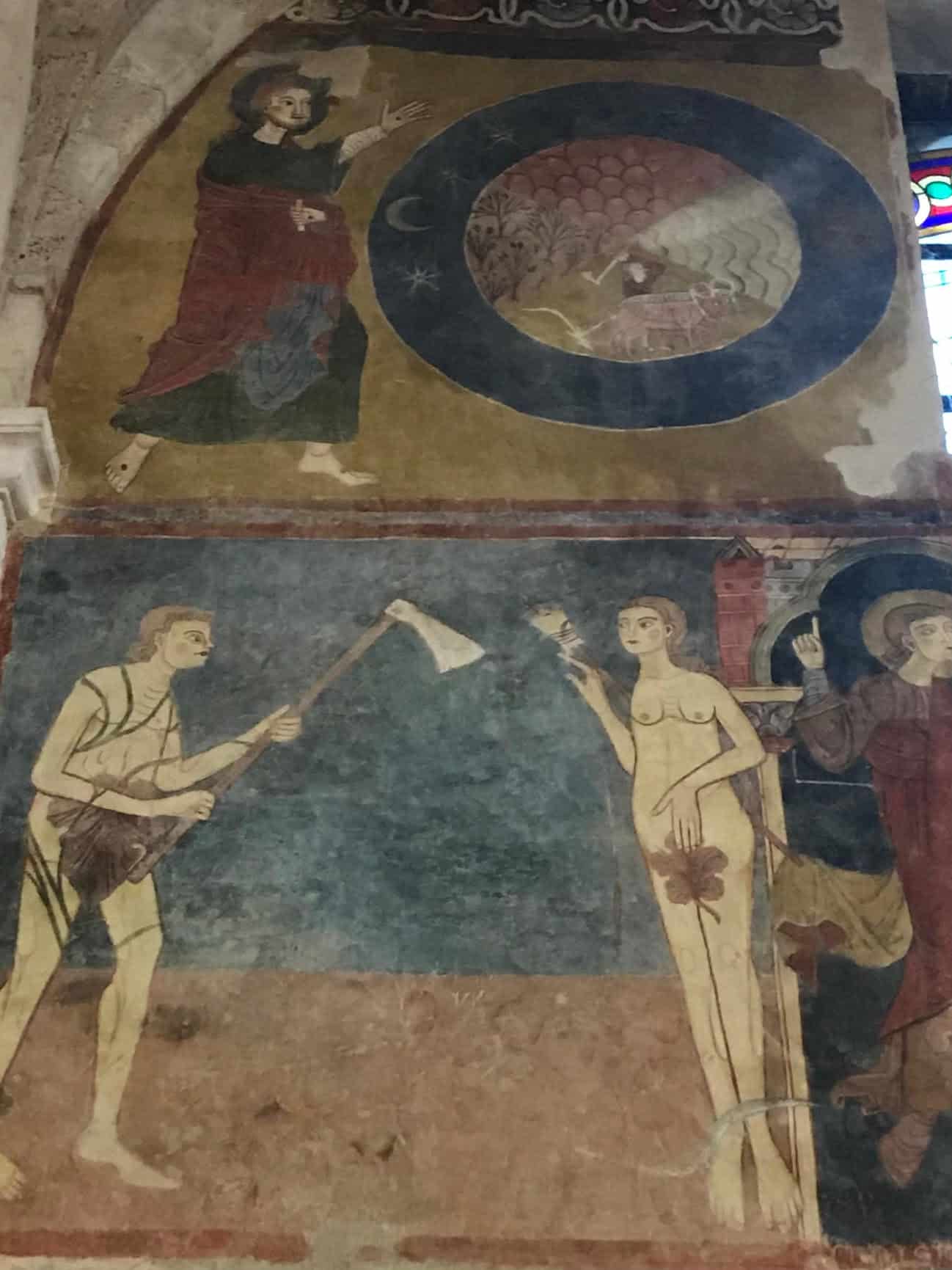
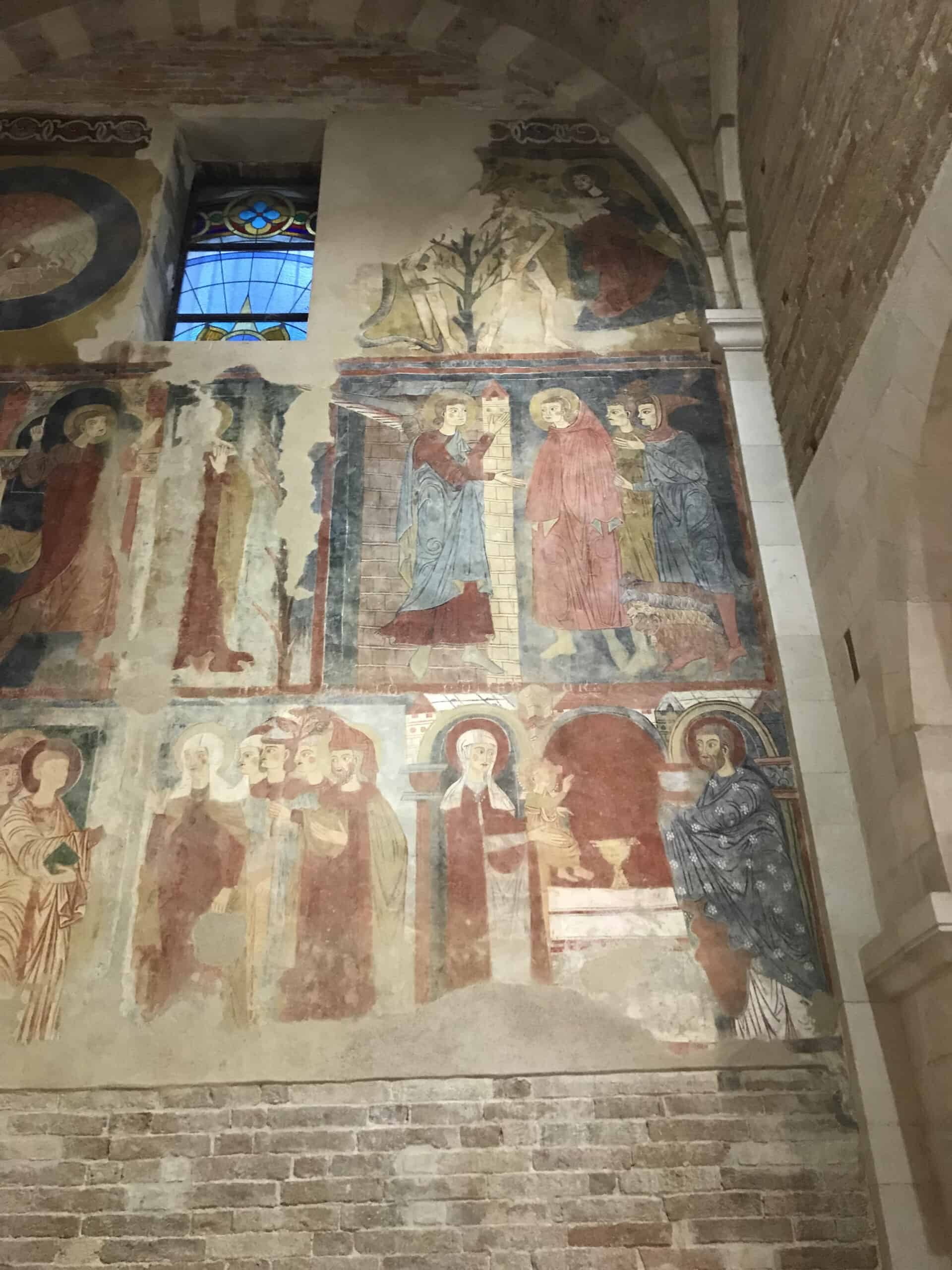
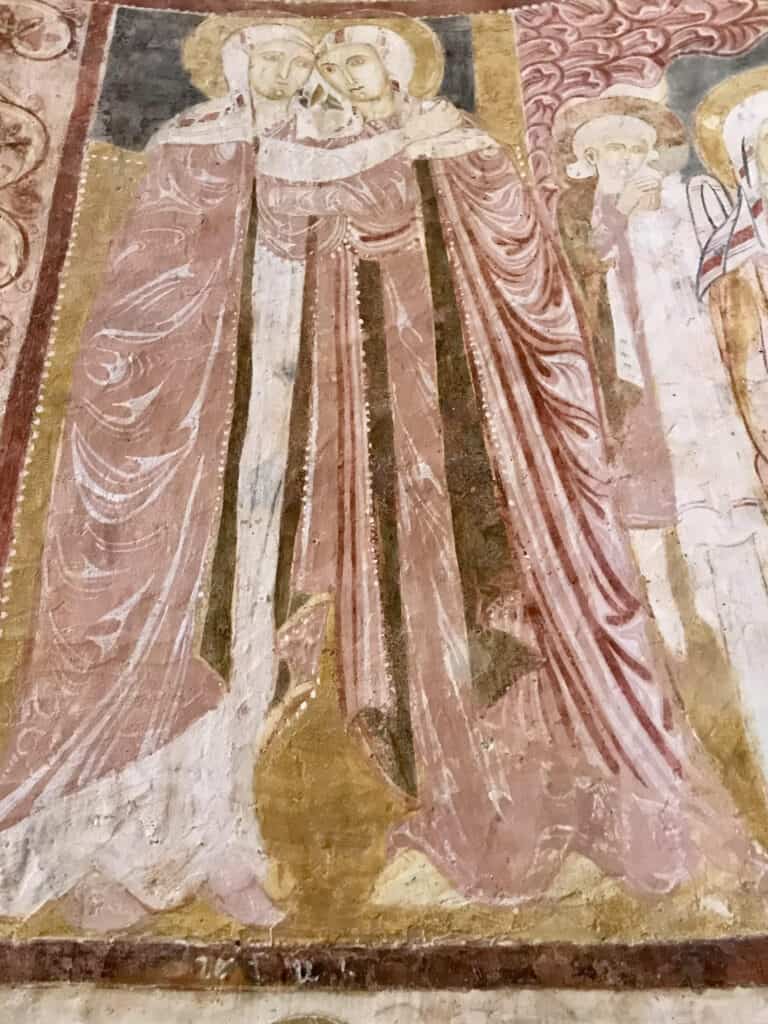
Tragically a fire destroyed some of the frescoes, but there are still many of the original medieval artworks left. They are attributed to anonymous artists, depicting various religious scenes, including the Madonna and Child, saints, and biblical narratives from the Passion of Christ. I love how the frescoes convey the feeling and movement of fabric, its textures and rich brocade patterns that stand out against the white columns.
Viewing Details
It’s possible to view the frescoes and the church daily outside 14.00-16.00 by phoning the priest on 0039 3388116197. On Sundays, available times are outside morning and evening mass.
To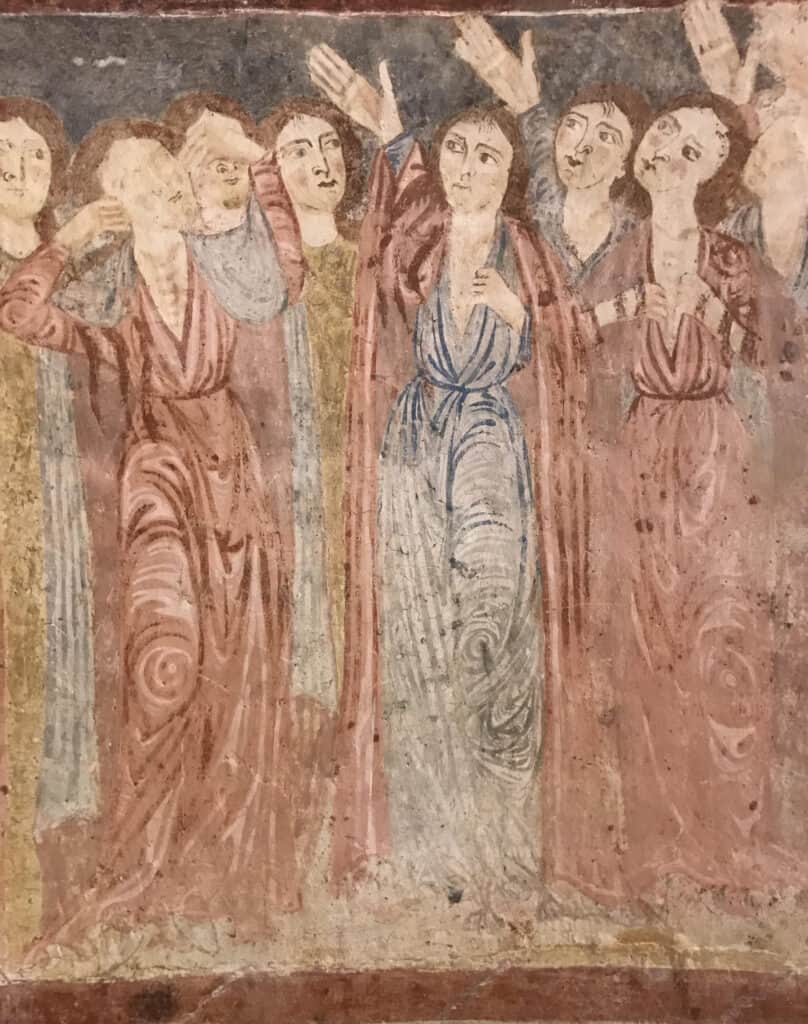
Address
Contrada Santa Maria, 64030 Castel Castagna TE

Alongside raising a teenager, Sam hosts guests at her family’s traditional home, the Little House of the Firefly in Abruzzo, offering a warm welcome and insider tips on local culture, food, and hidden gems.

Author: Sam Dunham
Sam is a freelance SEO content creator and IGCSE Geography and English teacher in Rome. She also runs the Life In Abruzzo Cultural Association, sharing stories and insights about this captivating region. Alongside raising a teenager, Sam hosts guests at her family’s traditional home, the Little House of the Firefly in Abruzzo, offering a warm welcome and insider tips on local culture, food, and hidden gems.