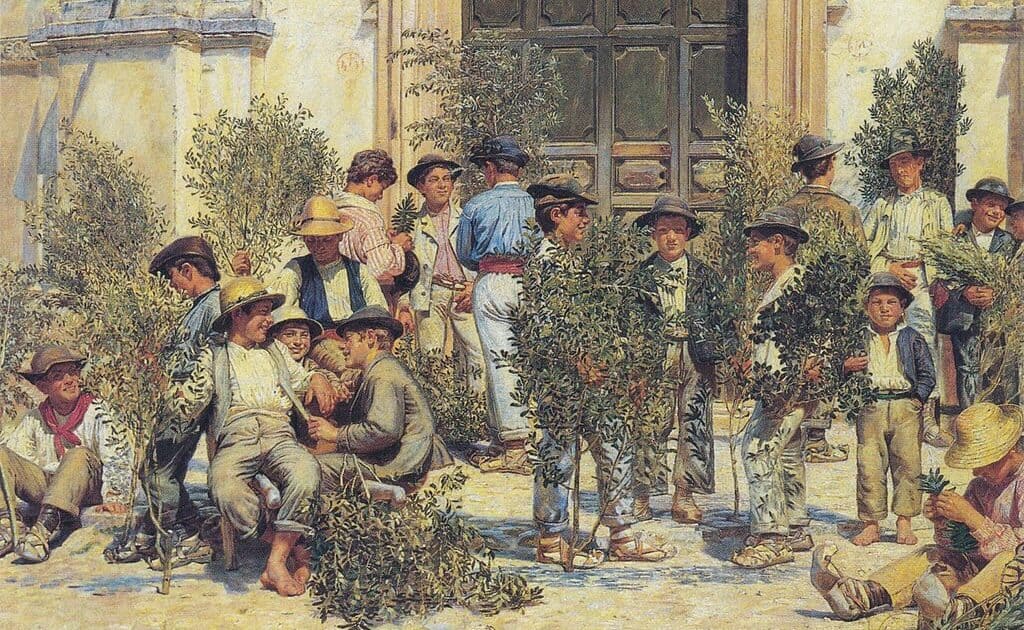
In 1883, Danish painter Kristian Zahrtmann first arrived in Civita d’Antino. Already a leading figure in Copenhagen’s art world, he would found one of Italy’s most remarkable artist colonies, attracting eighty Scandinavian painters to this small mountain village over the next decades. That visit inspired one of his most charming works: boys gathered outside a church on Palm Sunday, waiting to collect blessed branches. It was a scene he first saw at Tivoli, near Rome, and chose to recreate before the church of Santo Stefano, hiring eighteen local boys to pose.
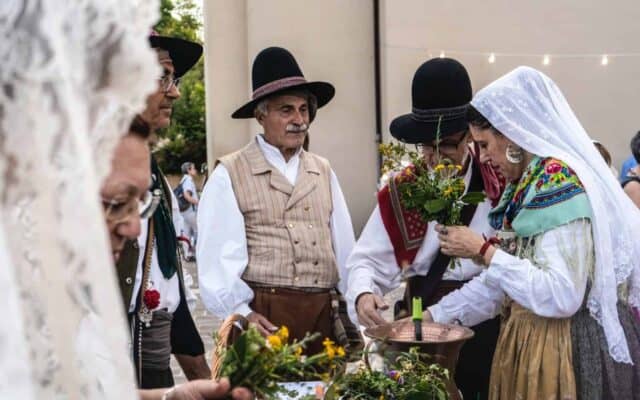
This depiction captures an Abruzzese tradition. Across the region today, churchgoers carry not palm fronds but olive prunings, cut in winter and saved for this moment, to be blessed and taken home.
In rural southern Italy, Palm Sunday marked the renewal of land protection. Historically, a blessed olive twig would rest over the door, to be later burnt in the fields, orchards, and vineyards, whilst a new blessed sprig would be installed to watch over the coming harvests.
Many of Zahrtmann’s paintings of Civita d’Antino and the surrounding areas, reflecting local traditions, are now exhibited at the Imago Museum in Pescara, which opened in 2021. Click here for its opening hours.

Author: Sam Dunham
Sam is a freelance SEO content creator and IGCSE Geography and English teacher in Rome. She also runs the Life In Abruzzo Cultural Association, sharing stories and insights about this captivating region. Alongside raising a teenager, Sam hosts guests at her family’s traditional home, the Little House of the Firefly in Abruzzo, offering a warm welcome and insider tips on local culture, food, and hidden gems.