In small towns like Tossicia (TE), a single artwork can be as important as food, language, or the local landscape. People see it over generations, take it in almost without thinking, and pass it along through time. Like a recipe handed down and made again and again, it becomes part of shared memory and a quiet heritage that brings people together.
This was clear when a normally quiet local museum was filled with visitors who came to see the return of a single sculpture. At a time when the arts are getting less funding and are often seen as less important, this moment was a simple reminder that art still brings people together, offering joy, connection, and a sense of belonging that nothing else can replace.
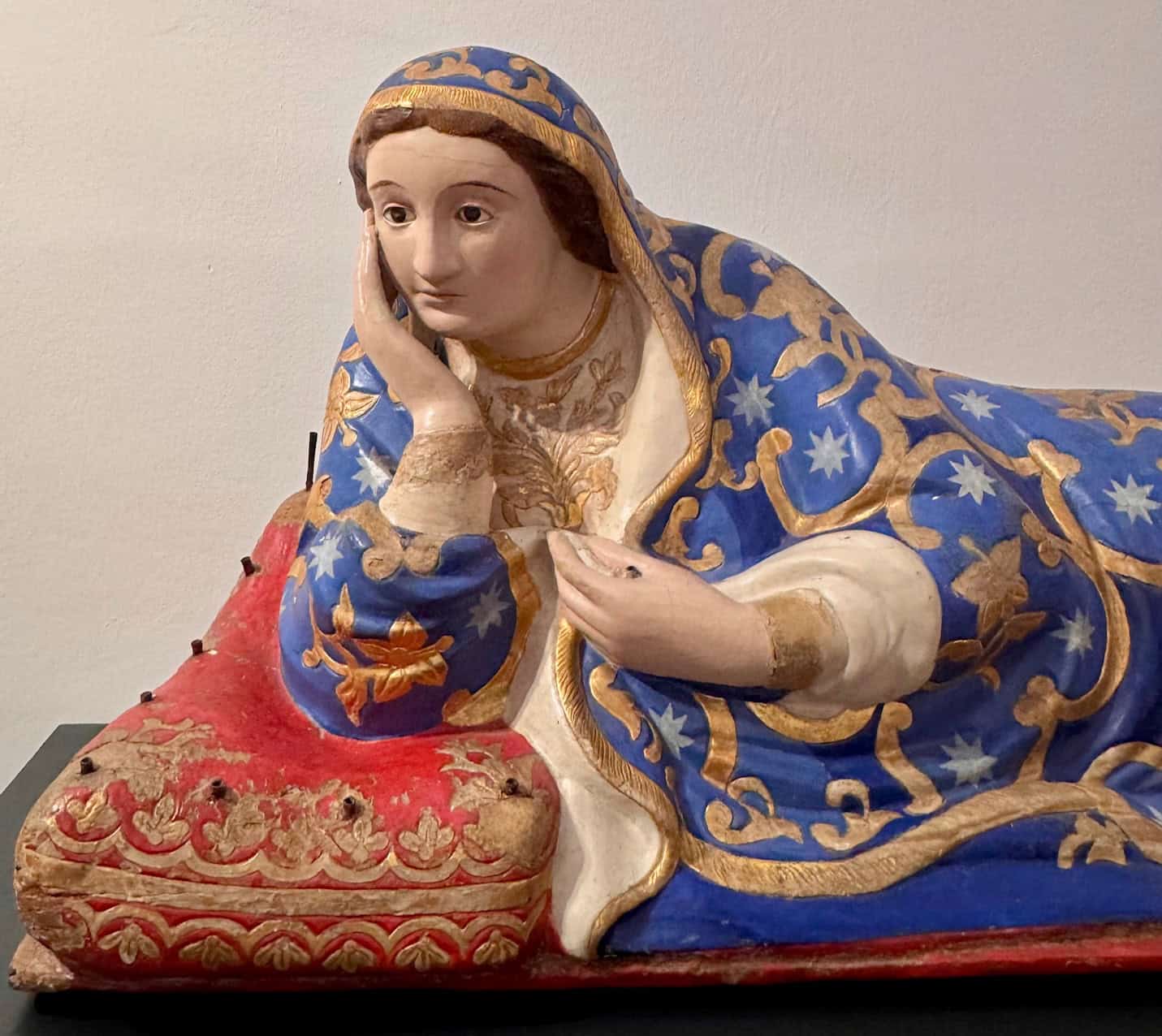
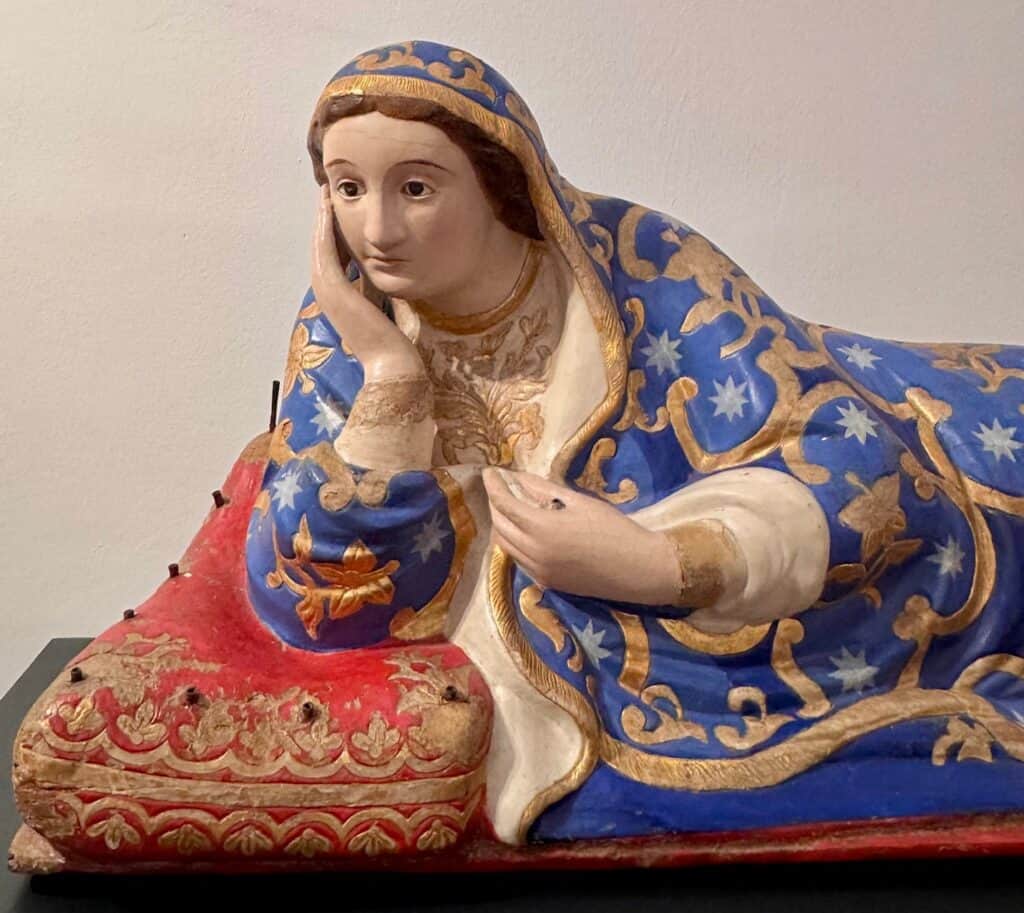
The Madonna della Provvidenza, also known as the Reclining Madonna of Tossicia, is a rare and personal example of late medieval sculpture. She is carved from wood and was once brightly painted, shown lying down, an unusual pose in Italian art.
In October 1978, the statue was stolen from Tossicia and vanished into the international art market. For years, its location was unknown. In 1993, a resident named Anna Largo saw it on television and reported it to the authorities. The statue was later found at an antiques market in London, purchased with help from Banca TERCAS, and brought back to Italy in 1995 by the Carabinieri’s Cultural Heritage Protection Unit. It was restored in the late 1990s.
After an earthquake damaged the parish church, the statue could not go back to its original place right away. Now, the iconic Madonna is finally back in Tossicia, temporarily displayed at the Museo delle Genti del Gran Sasso. This lets the community see a work that had been missing from their lives for a long time.
A Reclining figure and its Meaning
The Madonna matters not only because of her history, but also because of how she is shown. Instead of sitting up or on a throne, she is lying on cushions. Art historians connect this pose to images of the Virgin puerpera, which means a woman resting after giving birth. This idea comes from her posture and the way the scene is set up, not from clear symbols.
The sculptor creates a calm, private mood with gentle, natural details. The Madonna rests her face on her hand, and the curve of her mouth fits where it meets her palm. Her thoughtful gaze is directed toward what was likely the centre of a larger scene that no longer exists.
The Madonna’s cloak is decorated with lilies, a common symbol in medieval and early Renaissance art. In art history, lilies often symbolise purity and renewal, and they were frequently paired with female figures to convey moral integrity and idealised femininity. Besides their religious meaning, lilies also symbolised new life and change, so they often appeared in images about birth and new beginnings.
For the Reclining Madonna, the lilies add meaning that contrasts with her still pose. While her body is at rest, the lilies suggest ideas of birth, continuity, and renewal, supporting the view that the sculpture is linked to images of life after childbirth.
Similar sculptures are rare, but there is a 14th-century Sleeping Madonna near Assergi and a few others from Naples and Tolentino. The Madonna of Tossicia appears softer and gentler than these, suggesting it was made late in the 14th century or at the beginning of the 15th century.
Seen this way, the sculpture reflects a time when artists wanted to show rest, real bodies, and daily life. The Madonna is not distant or flawless; instead, she looks like a real, human woman.
Why Her Return is Important Now
Bringing the statue back to Tossicia just before Christmas is quietly meaningful. She shows that art, place, and community memory stay connected, even after many years apart. Her return quietly reminds us of the importance of art to community life, especially now, when the arts are losing support but still bring joy.
How to Visit Museo delle Genti del Gran Sasso

Author: Sam Dunham
Sam is a freelance SEO content creator and IGCSE Geography and English teacher in Rome. She also runs the Life In Abruzzo Cultural Association, sharing stories and insights about this captivating region. Alongside raising a teenager, Sam hosts guests at her family’s traditional home, the Little House of the Firefly in Abruzzo, offering a warm welcome and insider tips on local culture, food, and hidden gems.