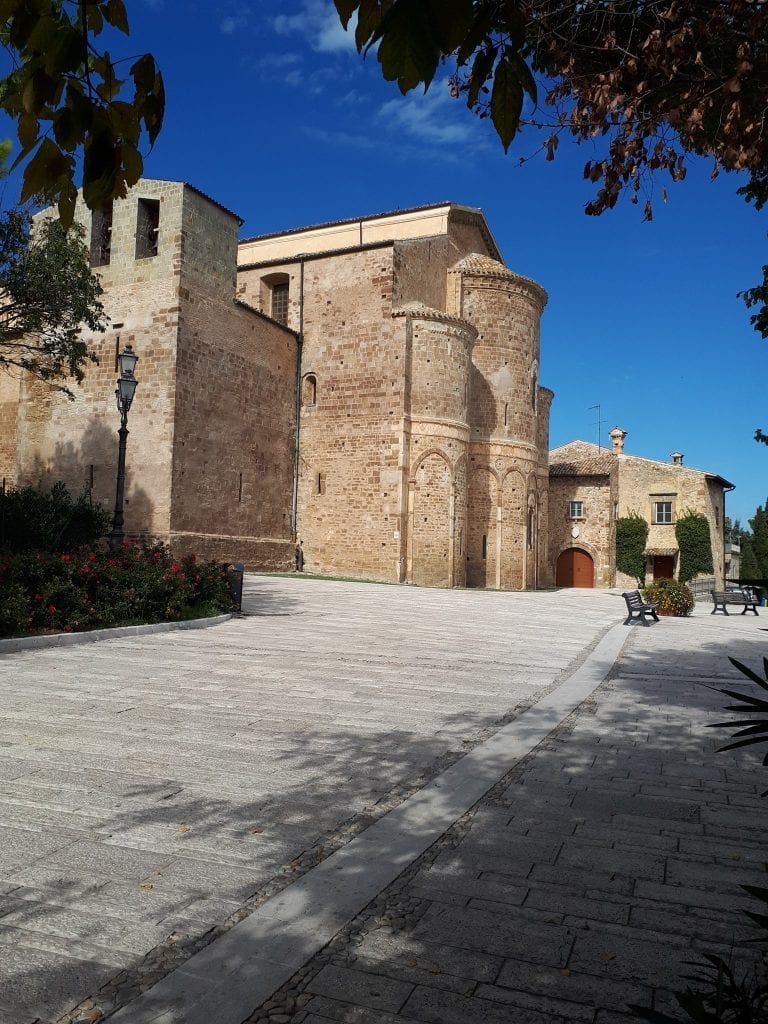
Abruzzo provides an abundance of magnificent scenery, but one of the best for sunsets has to be Fossacesia’s San Giovanni in Venere Abbey in the province of Chieti.
A beautiful blend of culture & history, San Giovanni in Venere’s Christian incarnation began back in the 6th century, the location no doubt chosen for its excellent combined views at dusk. In short, a panorama with a celestial motif that niftily combines all of Abruzzo’s diverse terrains!
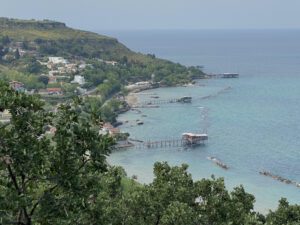
Offset are the reflections of Fossacesia’s white-pebbled beach below, against the calm green Adriatic waters in which you can watch an aquatic ascension of the moon, or alternatively turn 180 degrees to view the sun bedding down for the night in the heady peaks of the Maiella Mountains.
Add to this the heady cleansing scent of the firs & conifers that embrace the promontory and it’s no surprise that the translation from Italian into English is the Abbey of St John in Venus; this spot was clearly recognised as a place of romantic significance long ago.



In ancient times the location was used as a temple dedicated to the admirable worship of Venus; this site was built over in the C6th with a small chapel dedicated to John the Baptist; following an earthquake in the C11th, the building was rebuilt and added the monastery, cloisters, library and school.
It was in the C12/13th century that San Giovanni in Venere, under the ambitious auspices of Abbot Oderisius II, became the foundation for what is seen today. He wanted to introduce such elements of Cistercian ecclesiastical architecture & embellishment which had gained a strong following in northern Europe. As a result, San Giovanni in Venere was one of the very first buildings in Abruzzo to be of the Bourgogne style. Further restoration and supplemental works were carried on over the centuries, the most recent commencing in the 1950s.
The main entrance to the church of San Giovanni in Venere takes you into the front of the raised apse, the interior area is large and spacious; a high, wooden ceiling, with mullioned windows that indicate a harmonious Arabic influence, and which prevents it becoming too dark inside.
The double-naved crypt was not open when we went there, but the cloisters, in part at least still dating back to the C13th were and yes as to be expected serenely tranquil. They contain a wide selection of trees and plants, obviously with some orange trees and lavender there for good measure that presumably thrive in the balmy breezes from the Adriatic; the cloisters themselves contained depictions of the stations of the cross, alongside a slightly macabre metal rendering of the actual crucifixion located in the centre of the gardens.

For many the most intriguing feature must be the highly symbolic relief marble work surrounding the C13th doorways, Portale della Luna (door of the moon) and Portale della Donne (door of the women). These which represent scenes from the Life of John the Baptist including the meeting of the heavily pregnant Mary & Elizabeth, great bump depiction! The detail to this sculpture, in as much as the realism conveyed and depth of the character & personality by the individuals and crowd, seems quite remarkable, I would love to know the stories of the men of the area, at that time under the rule of the Kingdom of the 2 Sicilies who they were modelled on.
For Drivers
The site is incredibly well sign-posted so there will be no problems finding it from Fossacesia.
Further Reading:
The Abbey’s official website, Abbazia di San Giovanni in Venere.

Author: Sam Dunham
Sam is a freelance SEO content creator and IGCSE Geography and English teacher at Istituto Cristo Re in Rome. She also runs the Life In Abruzzo Cultural Association, sharing stories and insights about this captivating region.
Alongside raising a teenager, Sam hosts guests at her family’s traditional home, the Little House of the Firefly in Abruzzo, offering a warm welcome and insider tips on local culture, food, and hidden gems.