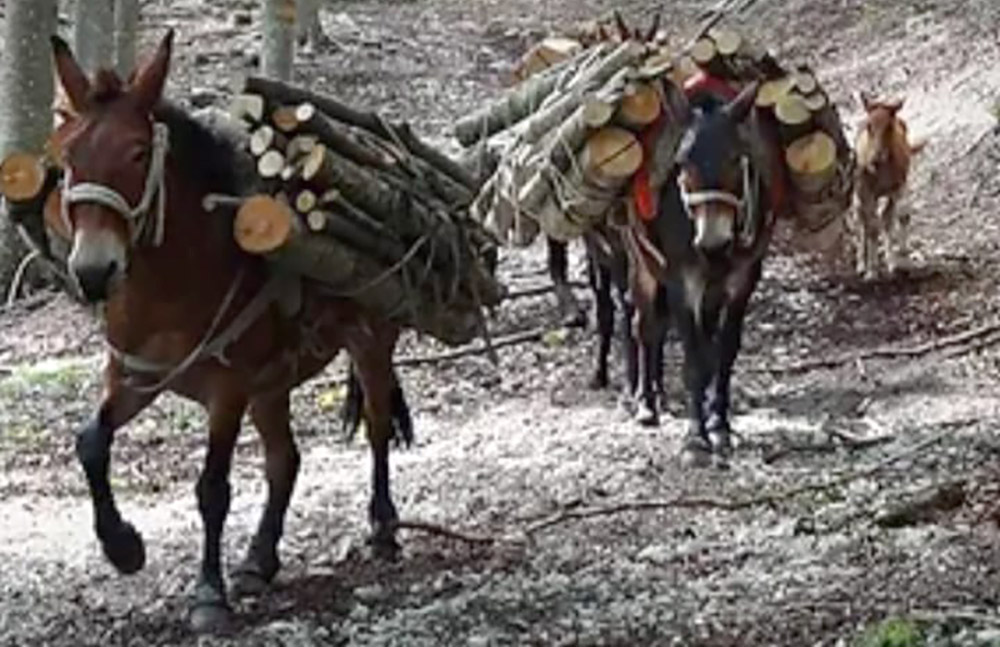
Here’s a lovely memory from Gino Di Giacomo is about his father the Sante Marie (AQ) maker of ‘Jo mmasto’. This is dialect for the pack saddles that donkeys, horses and mules use to transport heavy loads down and up mountains. Life in Abruzzo would have been very different without a trusty steed, a pack saddle that allowed free movement and a sympathetic saddlemaker who truly believed that animals were sentient. Each was created uniquely for each animal, to provide as much comfort as possible, using beech, chestnut and maple that grew naturally curved and crooked in ravines. A donkey’s lifespan can be up to 40 years, a horse up to 30 years a good pack saddle requires high quality and longevity.
A small, very small ‘pebble’ tossed and hopefully caught by those with the sensitivity to appreciate the emotions and reflections that can arise from the vision of humble ancient crafts and trades.
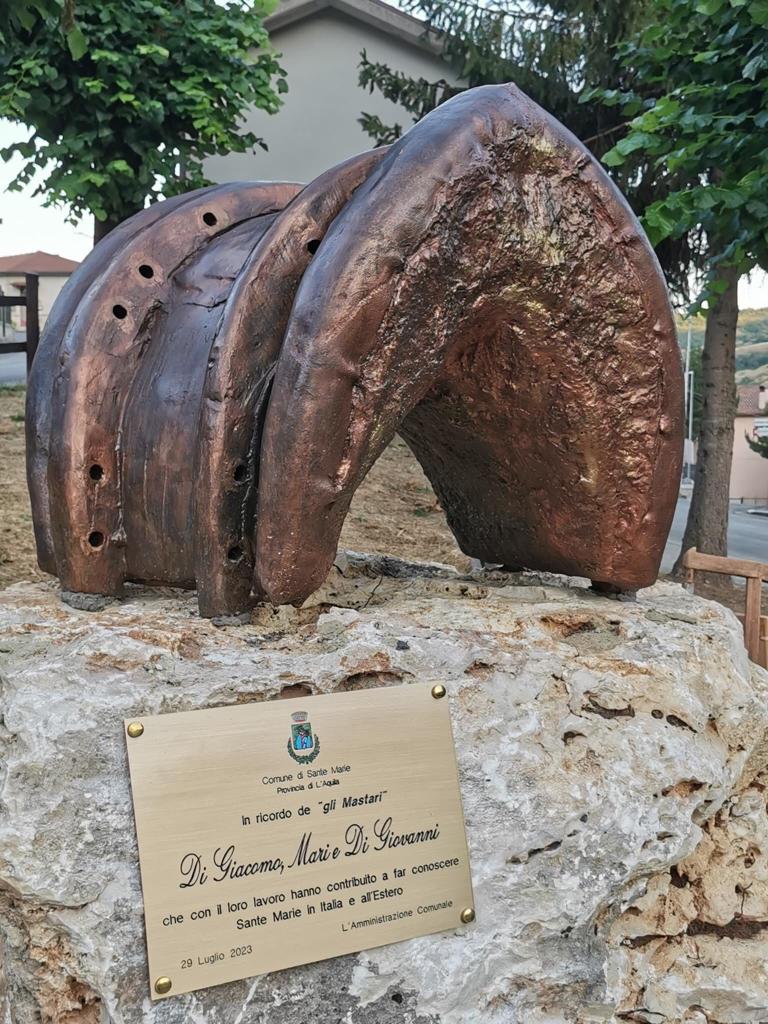
The Jo mmasto sculpture in gilded bronze in Sante Marie, is a monument that ‘wants to talk’, trying to immortalise, crystallise, and draw attention to the work saddles used by the donkey, ass and horses. It was a craft that was passed down through three generations of our family that I humbly consider being a harbinger and bearer of certain values and reflections that I finished with my father to leave as a memory and gift for future generations, hoping that it will spark memories and emotions in today’s Gen Z and Y. With the comfort and immediacy of smartphones, it can be hard to perceive today the toil of the past, to narrate a corner of a life lived from the past that is mostly forgotten with the hope of leaving a small and humble and positive trace.
One thing is certain, whatever happens, we are happy, proud and satisfied to be able to show the ‘passers-by’ of today and tomorrow the ‘jo masto’, the significant gilded bronze monument that will remain in plain sight, in Sante Marie, bearing witness to a work and an era that is no longer with us. They say that putting your finger in those holes in the ‘dejo mmasto’ pillars, made with great sweat and effort on hardwood, brings good luck, brings good luck but only if you ‘feel and perceive’ the effort of our entire past world.
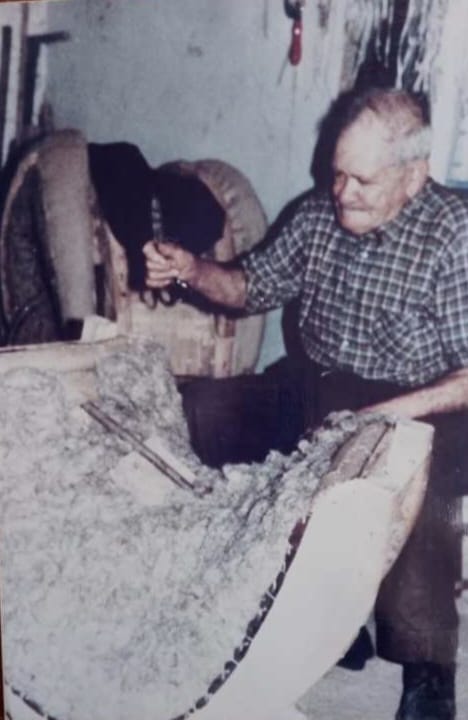 My father, Domenico Di Giacomo Domenico, was a basti master, known locally as Jo mmasto in Sante Marie. He was the third generation, following in the footsteps of his father Giulio and his grandfather Domenicantonio. His ‘basti’ were sold as far away as Switzerland, France, Austria, Friuli, Piedmont, Veneto, Tuscany, Marche, Lazio, Calabria, etc. This wasn’t because my father had a vision of import-export trade beyond the region and internationally, but because the muleteers of Cappadocia and neighbouring Abruzzo villages had gone to live in these places.
His were ‘basti’ (pack saddles) were made to measure, according to the size of the mule or donkey, to use a term unknown to him, they were ergonomically designed, created with love and passion. The same ones that are still used today by the few remaining muleteers. ‘Basti’ were created without sparing anything so that they would last over time and could protect the animal’s health as much as possible. Whereas it is difficult for me to find or draw upon a personal memory… a special memory of my father is always around, helped because his basti are still used by some muleteers.

Curved trunks from trees that grew in ravines
Whereas a saddle can be mass-produced, a pack saddle can’t, it has to be made to measure because the animal has to ‘feel wrapped up’ so that the weight it carries for hours on end doesn’t bother it or cause it any harm. The pack saddles were made with excellent materials: the ‘trees’ (two for each pack saddle) of naturally curved wood. He selected the wood, discarding the unreliable ones; particular and very personal choices were made regarding the ‘canvas’, the ‘straw’, and the boards (two for each pack saddle), all strictly one piece, which he bent with fire and wetting them with water.
Further, rigorous selection was reserved for the animal hair he had delivered in large bales from Genoa. He worked hard to make it soft and velvety, freeing it from impurities and residues with a special, original and ingenious machine with rollers that had to be turned laboriously by hand (it’s a shame this has been lost!!!). The same goes for the careful selection of string and ‘capperoni’, large, top quality disused fire hoses that he cut and heated in the sun or on the stove pipe to make them softer; he got them from ‘Claudio di Celano’. He paid the same attention to the choice of a particular black leather and even to the most humble nails… yes, even these were of great importance to him.
The ‘measurements’ were taken by the mule and the donkey themselves, at his workshop or sent by post by the most distant muleteers. What emerged from this magical, hand-crafted assemblage, after painstakingly using an axe, after painstakingly making holes in the hardwood ‘by hand’ (the electric drill was invented later and, therefore, only used in recent years) and using large needles … what came out, was his ‘master’ lovingly caressed by his big, calloused and hardened hands. His ‘master’ was a mix of scents, magical smells of sweat, wood, string, straw, canvas, horsehair, animal fur and leather… it seemed that even the nails themselves smelt. For muleteers, Domenico Jo Mastaro was reliable, because his packsaddles never broke, they seemed to be made of steel. He set an example, he taught many.
He would spend six months in Sante Marie and six months away in Cappadocia, the town of the muleteers. Years later, a symbol of a changing world in the summer, the square in Cappadocia would turn yellow, filled with the then brightly coloured yellow taxis because many muleteers had sold their mules and bought taxi licences in Rome.

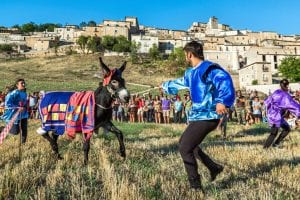
Sante Marie, Photo by Pete Austin

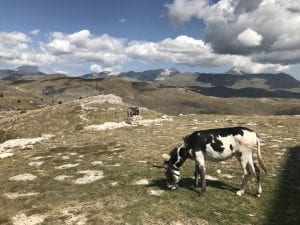
Cappodocia, Photo by Pete Austin
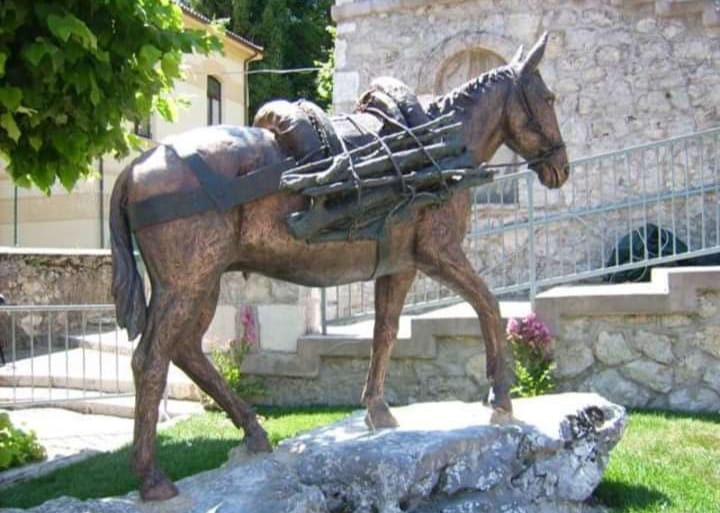
In memory of times gone by, there is now a bronze statue of a mule with its ‘jo mmasto’ and logs in the square in Cappadocia, and in Sante Marie there is a gilded bronze statue of the pack-saddle (mmasto”). I would like to thank my father, to whom I dedicate these lines, for all that he taught me, through lessons, looks and a simple silence. He left me with magical memories of scents that I no longer smell.

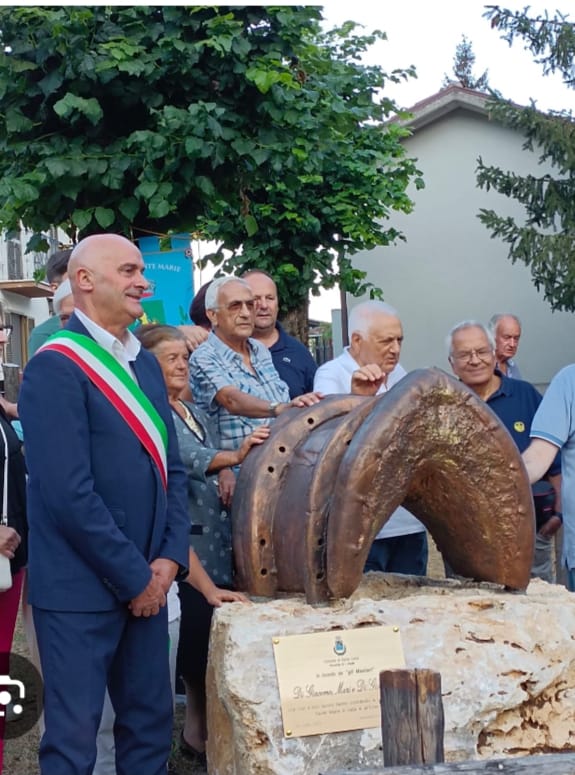
I hope today’s young people can ‘recognise themselves’ in these small emotions.

Photo Pete Austin
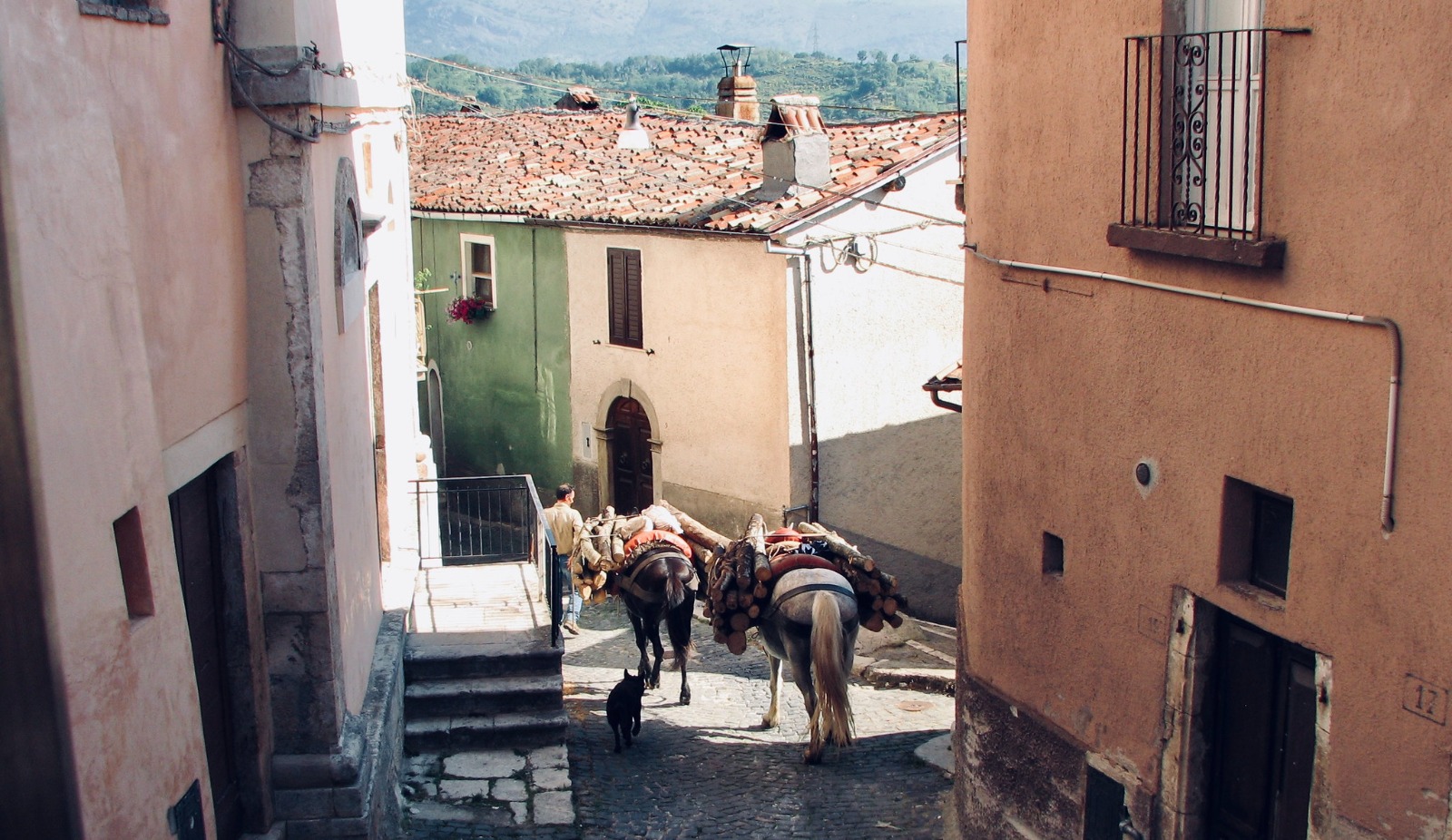
Photo Pete Austin

Author: Sam Dunham
Sam is a freelance SEO content creator and IGCSE Geography and English teacher at Istituto Cristo Re in Rome. She also runs the Life In Abruzzo Cultural Association, sharing stories and insights about this captivating region.
Alongside raising a teenager, Sam hosts guests at her family’s traditional home, the Little House of the Firefly in Abruzzo, offering a warm welcome and insider tips on local culture, food, and hidden gems.