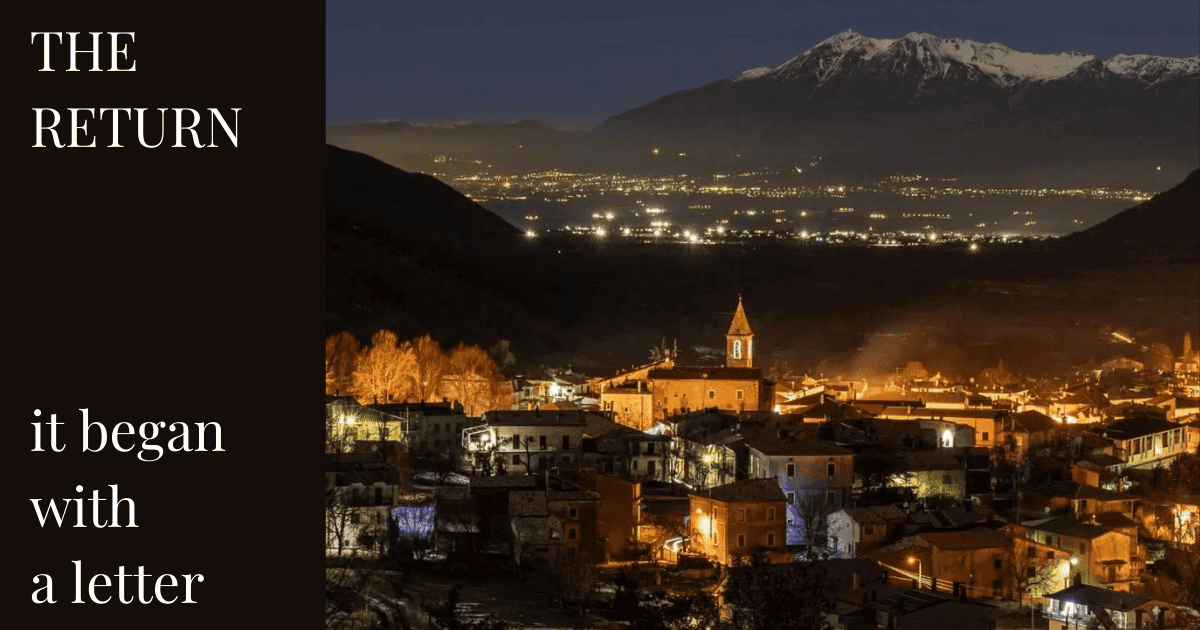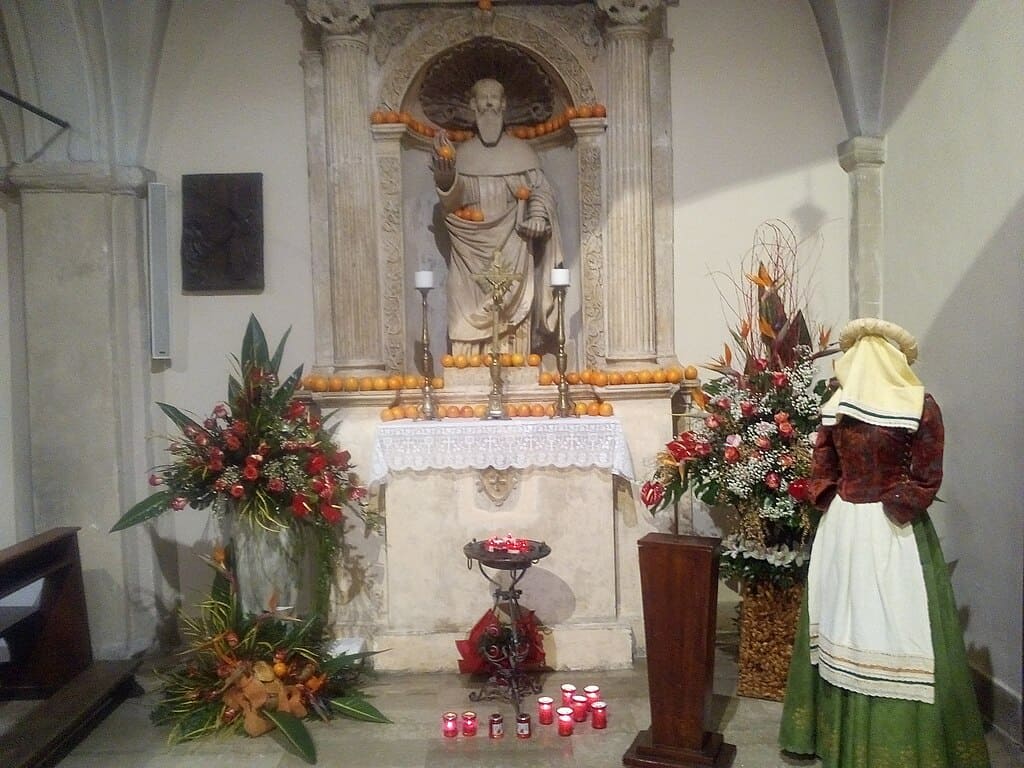
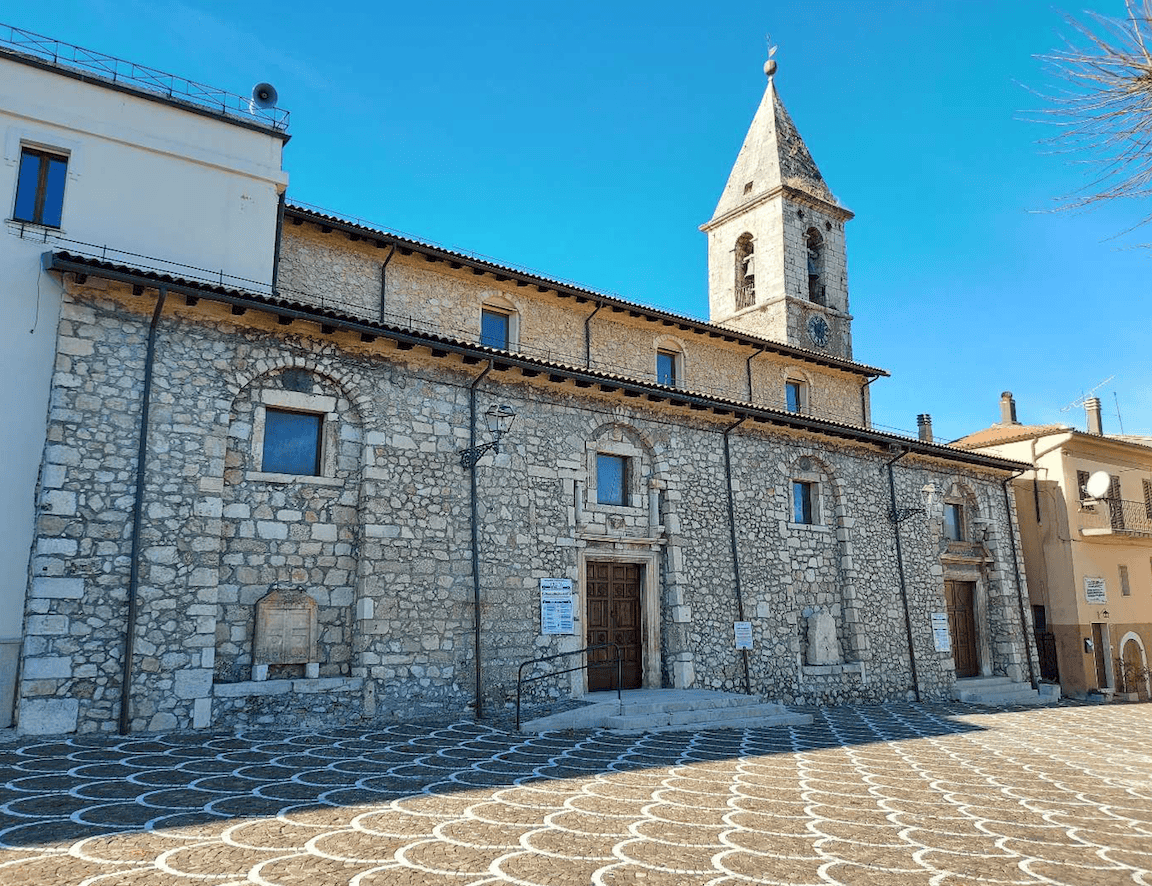
 Located in the centre of Collelongo, La Chiesa Santa Maria Nuova is the parish church. It dates back to the 13th Century and houses statues of the patron saints, of Sant’Antonio Abate, and the Via Crucis. It’s no surprise that a church of this age is in need of repairs, but climate change is exacerbating the damage.
The value of the church is not only historical and architectural. It is a place for prayer, for gathering together as a community, and a symbol of village life in Abruzzo. My grandfather, Carmine Luigi Guanciale, was born here in 1886 and emigrated to the US in 1903. My grandfather told us stories of life in Collelongo, where I have visited many times and have seen the sites of his youthful escapades. But one story sticks out in my mind—if he and his brothers were out late at night, sometimes walking back from a dance in Villa Vallelonga, they didn’t want to disturb their parents so they would sleep on the steps of the church! My grandfather told me they felt safe and secure there and enjoyed sleeping under the stars.
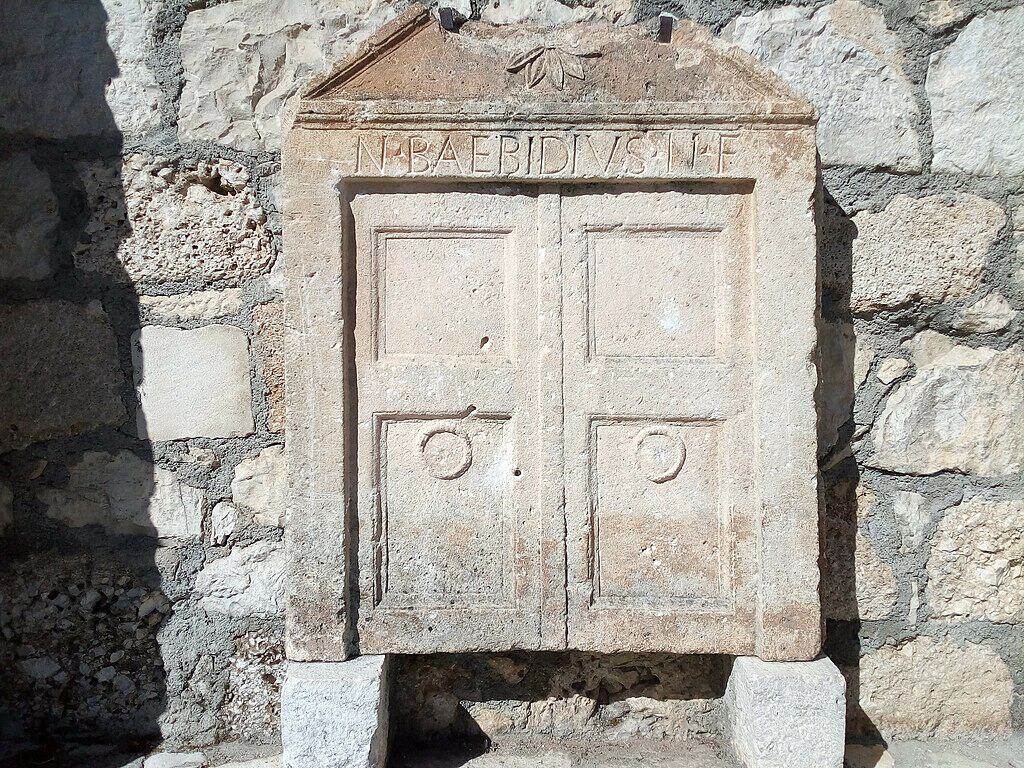
The three-nave church has entrances on the longitudinal side: a portal is dated 1746, while on the sides there are two door-stems from the Roman necropolis of Vallelonga. On the façade you can see the wall attachments of the primitive and small 14th-century church dedicated to San Giovanni with a single nave and entrance towards the east.
On the left side aisle are the remains of a late 16th-century fresco with San Bernardino da Siena in the act of adoring the Madonna. On the right side aisle is an altar from 1790 with a stone statue of Sant’Antonio dated 1642, an altarpiece of Sant’Antonio by Riccardo Tommasi Ferroni and a wooden statue of San Rocco from 1850, the work of Pietro Guccicone. The panels of the Via Crucis are by Francesco Sansone, of Collelongo.
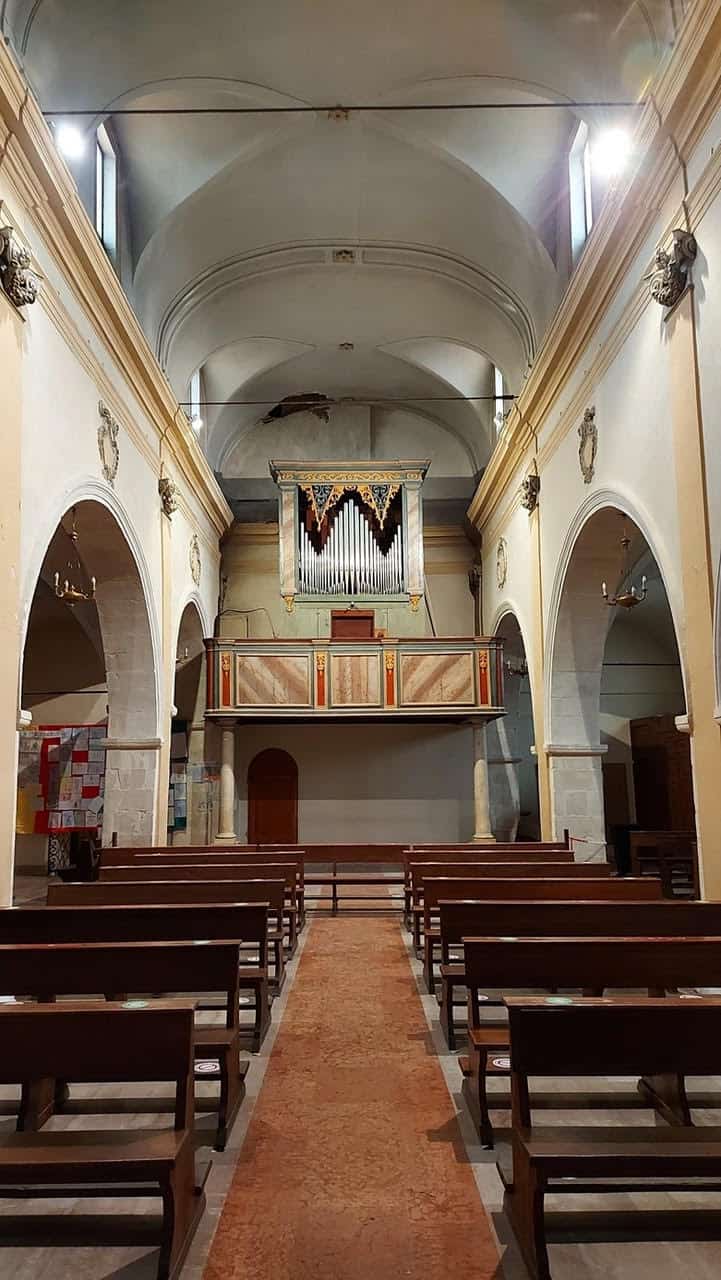
The last phase of expansion of the church dates back to the mid-19th Century, while its contemporary appearance is due to the restoration following the damage caused by the 1915 earthquake. Inside, in addition to an organ from 1745, which was restored and embellished in 1883 by the Roman organ builder Tommaso Vayola, there are numerous works of art.
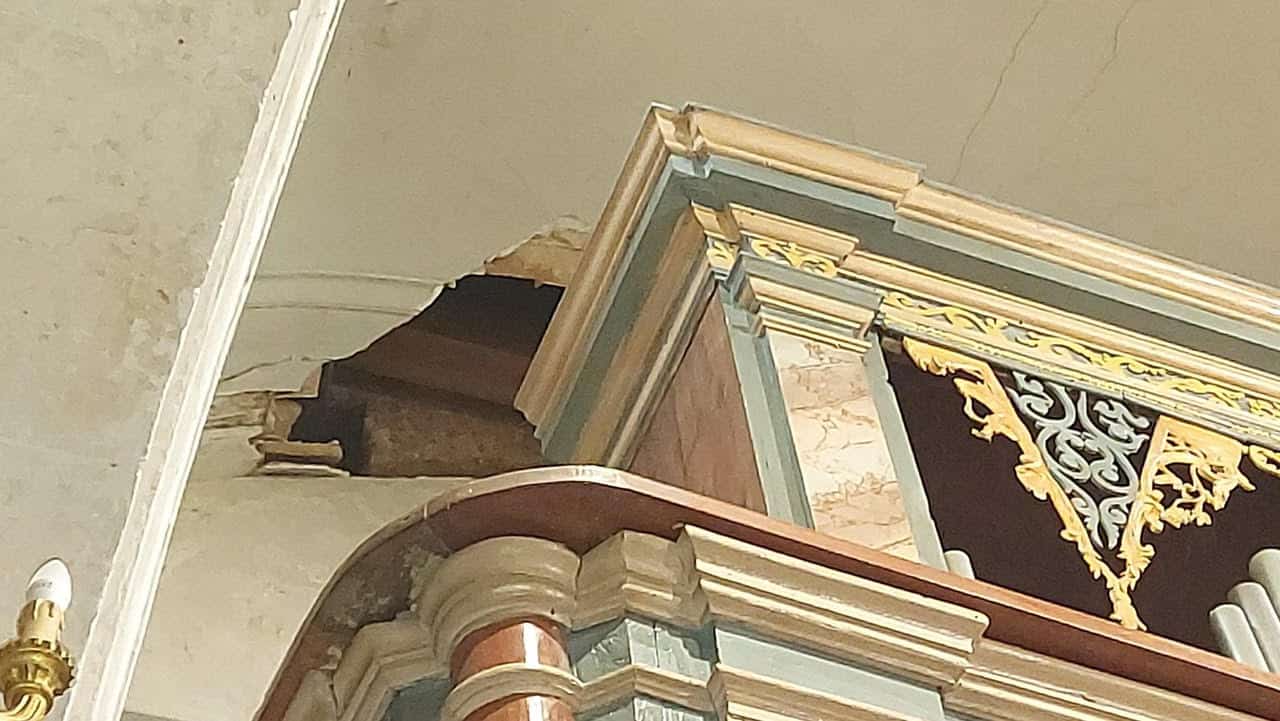
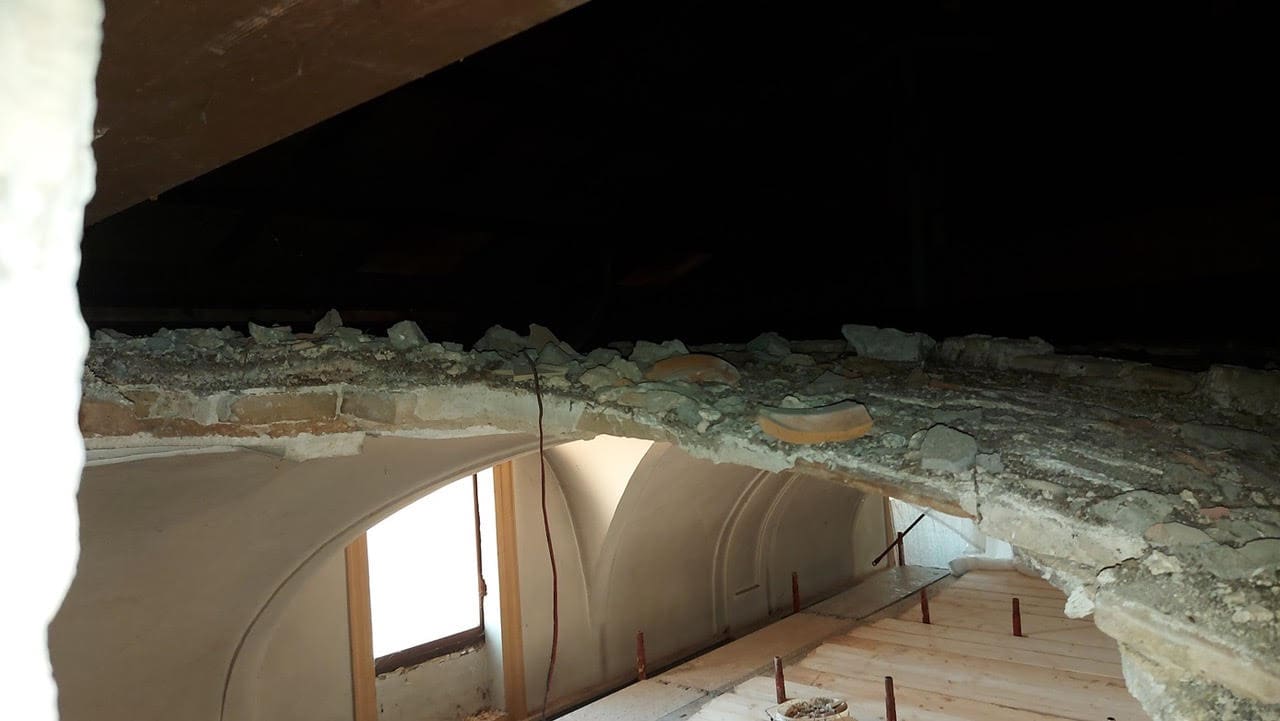
The structural decline of La Chiesa Santa Maria Nuova is of great concern to the community. Extreme weather, downpours rather than drizzle brought on by climate change, has caused significant damage to the bell tower and vault, with rainwater seeping in and rendering that part of the church unsafe and in urgent need of repair.
GoFundMe
A GoFundMe account has been set up to help support restoration efforts. Any size donation would be welcome, and please, if you’re in the area, make a visit to Collelongo and explore what this beautiful town has to offer.

Author: Annette Rose-Shapiro
Annette lives in Brooklyn, NYC and is the former Managing Editor of several interior design magazines and now happily retired. Her maternal grandfather came from Collelongo (AQ) Abruzzo.