Update
25th April
The number of wolves poisoned stands at 21 today.
22nd April
The toll has grown. Three more wolves in Pescasseroli, in a different area from the first. Four wolves, three foxes, and a stork in Bisegna. One more wolf in Barrea. That brings the count to around eighteen wolves, and those are only the bodies that have been found.
This is denning season. Nursing mothers are almost certainly among them, and every poisoned female leaves pups underground who will not survive without her. The real tally will be counted in empty dens this summer.
Every argument made in this post still stands, and now stands harder. The poison is spreading: Pescasseroli, Civitella Alfedena, Bisegna, Barrea. Village after village, inside one of the most protected landscapes in Europe.
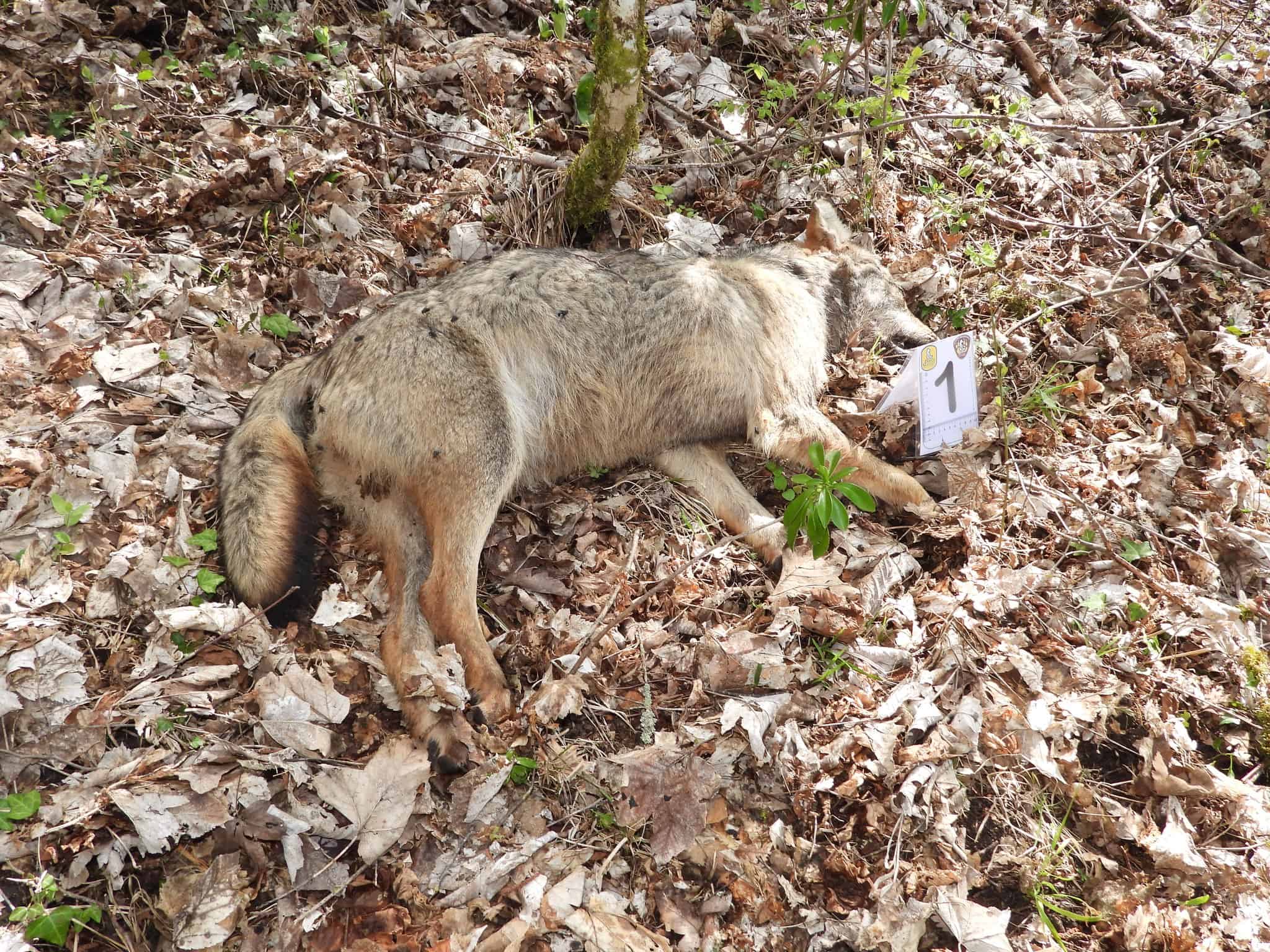
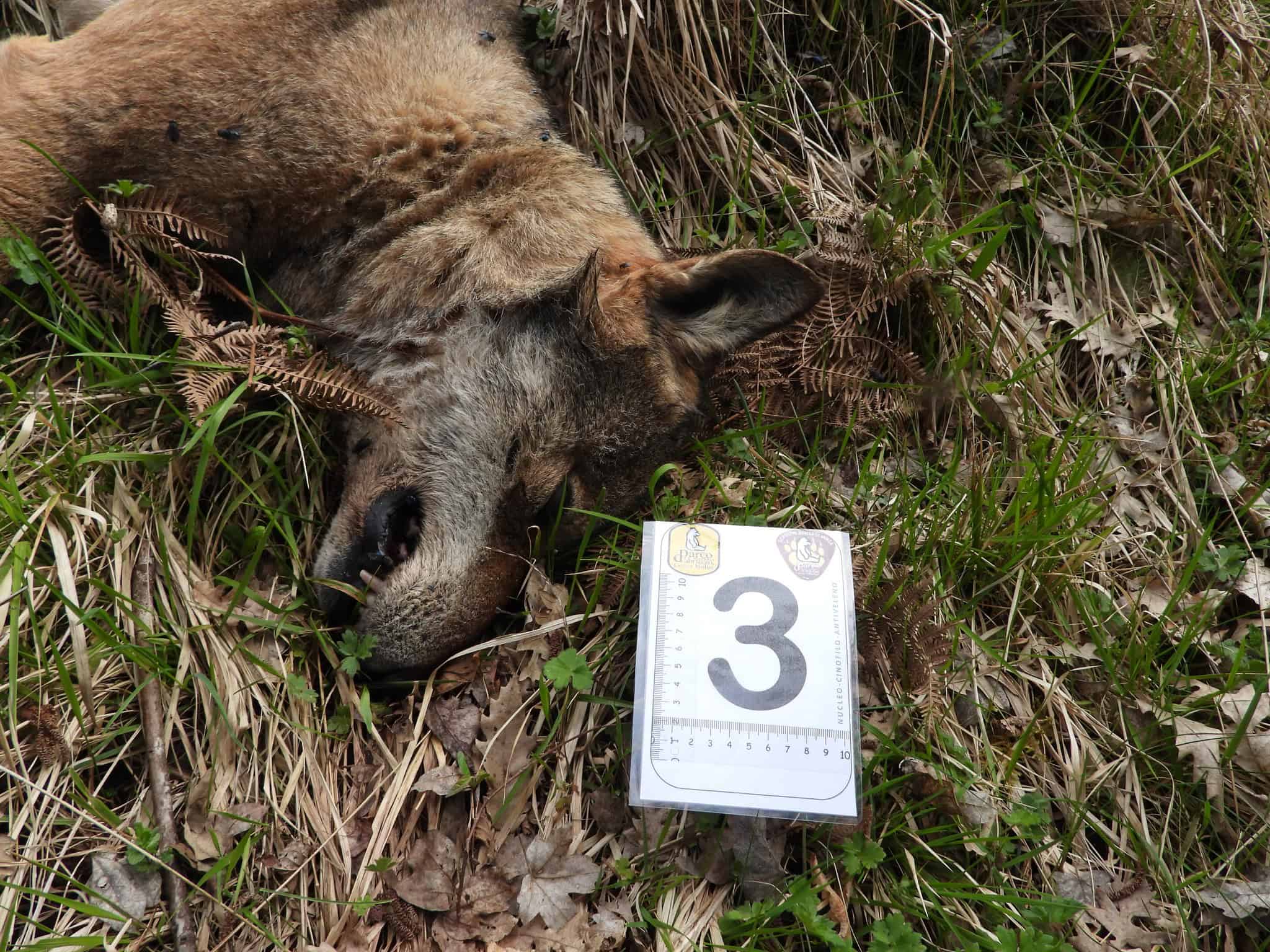
Ten dead wolves have been found in two woods within just a few days in the home of the Marsican Bear. On the afternoon of 15 April, a Guardiaparco patrol found five of them in San Francesco, in the commune of Alfedena, inside the Contigua del Parco area of the Parco Nazionale d’Abruzzo, Lazio e Molise. Only days before, five more wolves were found dead in Pescasseroli. In both cases, park authorities and the Procura della Repubblica di Sulmona believe poisoned bait is to blame.¹
The carcasses and suspected baits have been sent to the Istituto Zooprofilattico Sperimentale di Abruzzo e Molise in Avezzano. The park’s Nucleo Cani Antiveleno is investigating on site. Two similar incidents happened within days, in different communes, using the same method. The park has called this an alarming sign that should not be seen as an isolated event. They are right.
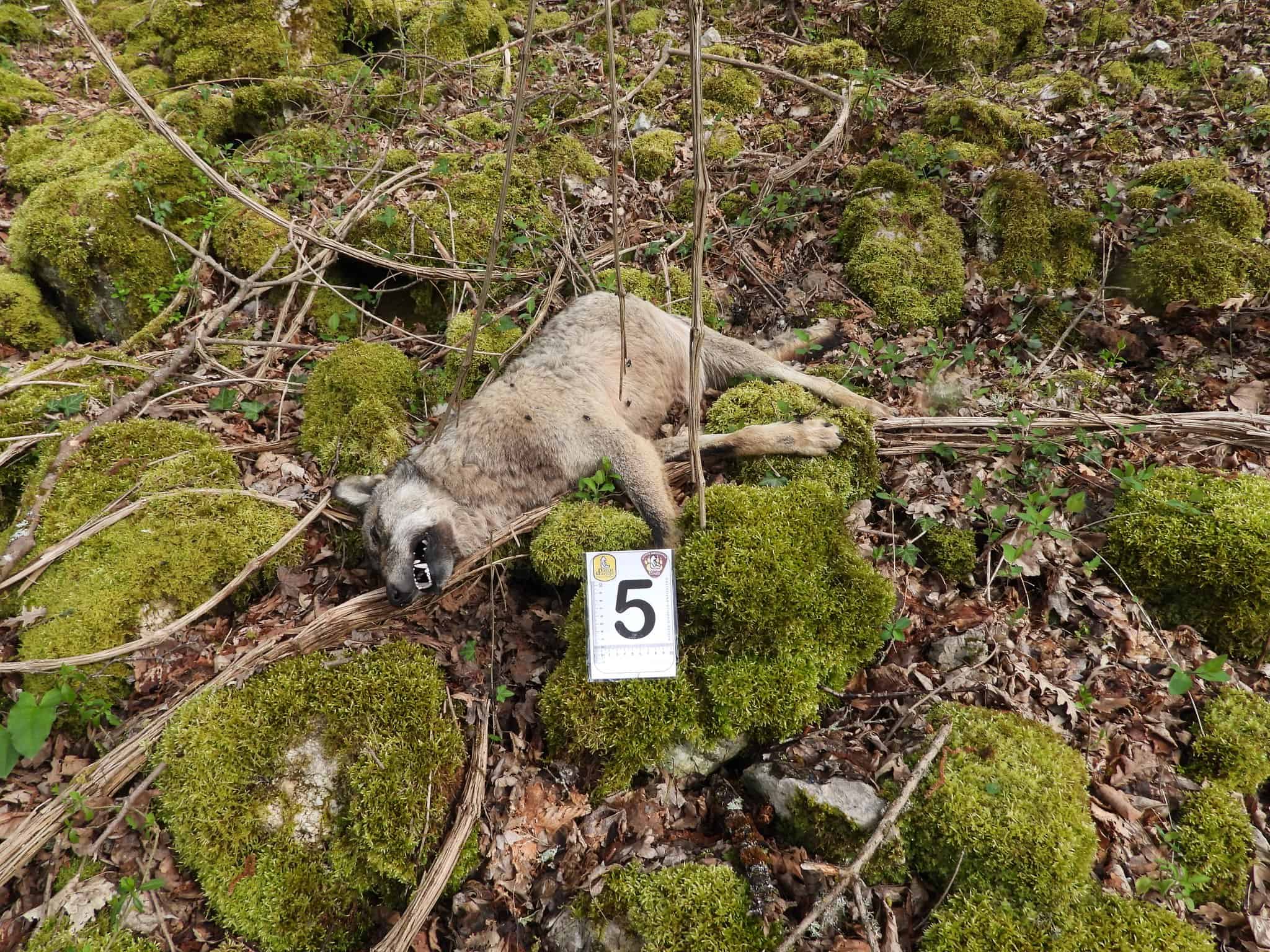
A poisoned carcass kills any animal that finds it, foxes, ravens, vultures, farm dogs, family pets, and even small children who might wander nearby. In this landscape, it also threatens the Marsican bear, whose survival is the main reason for this park. Poison meant for wolves in the PNALM is poison in the home of the Marsican bear.
There is no excuse for this. In Italy, farmers get compensation when wolves or bears kill their livestock. The Regione covers losses outside protected areas, while the parks pay for losses inside or near them. The Parco Nazionale d’Abruzzo, Lazio e Molise started this system in 1969, after reaching an agreement with WWF. It was the first protected area in Italy to reimburse shepherds for damage caused by predators. Every other region later followed this example. Payments are slow, and the bureaucracy can be frustrating. That is a real problem that deserves political attention. Still, the system has been in place for fifty-six years, and it started right here, in this park. Slow payments do not justify poisoning a national park. They certainly do not justify poisoning the park that created this compensation system.
This kind of act is fueled by a story that gets repeated until people believe it: that wolves have multiplied in Abruzzo and farmers are overwhelmed. Neither claim is true.
Let’s address the fear behind all this. No one has been killed by a wolf in Abruzzo in living memory. There hasn’t been a fatal wolf attack on a human in Italy, or anywhere in Europe, for over a century.¹³ Wolves do not see people as prey. They avoid us, which is why most people living in wolf country never see one. For comparison, wild boar killed five people in Italy between 2015 and 2022, yet no one suggests poisoning national parks to deal with them. The risk wolves pose to humans is almost too small to measure, but the danger posed by poisoned bait to children and farm dogs is real and present right now.
What the Numbers Actually Say
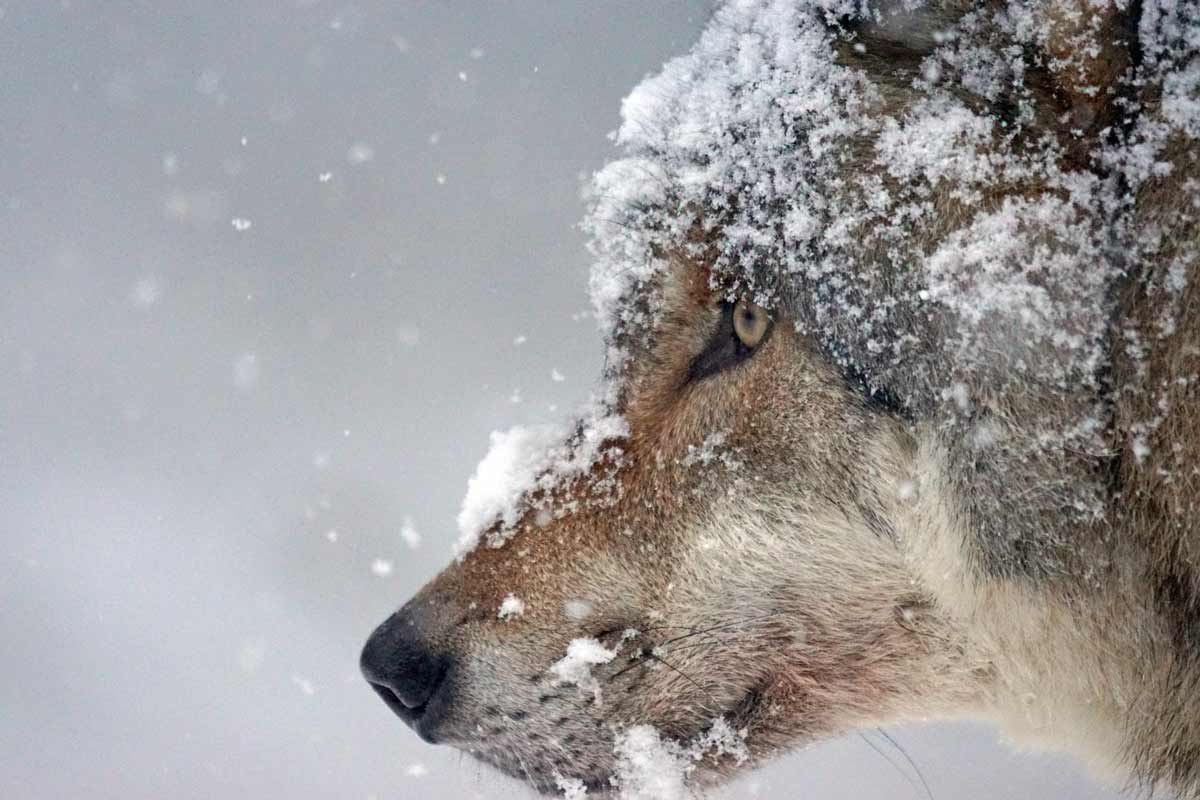
At the end of the 1960s, roughly 100 wolves remained alive across the central and southern Apennines.² That was the last peninsular Italian population, and Abruzzo’s parks were its final refuge. Over the next fifty years, without any reintroduction programme, the species recolonised its old range on its own.
Here is where we are now, drawn directly from the parks’ own monitoring reports:
- Parco Nazionale d’Abruzzo, Lazio e Molise: at least 8 packs³
- Parco Nazionale del Gran Sasso e Monti della Laga: 20 packs⁴
- Parco Nazionale della Maiella: around 10 packs, totalling 70 to 80 individuals⁵
- Parco Naturale Regionale Sirente-Velino: 4 to 5 packs⁶
Including wolves living outside the protected areas, the total for all of Abruzzo is approximately 400 to 500 animals.⁷
Park biologists don’t talk about an “explosion” or “runaway growth.” They use words like “stabilisation” and “probable reaching of carrying capacity.” The wolves have filled the available habitat, and their numbers have levelled off. Four to five hundred wolves across 10,830 square kilometres, with four parks in that area, is not an invasion. It’s still below the historical numbers from before the nineteenth and twentieth-century campaigns that nearly wiped out the species.
Sadly, this is not the first time, and the damage does not stop at wolves
The Alfedena and Pescasseroli poisonings do not appear out of nowhere. In May 2023, in the territory of Cocullo, in the external protection zone of the PNALM, a Guardiaparco and Carabinieri Forestali operation uncovered the carcasses of nine wolves, five griffon vultures and two ravens.⁸ An entire wolf pack that had settled in the Olmo di Bobbi area was exterminated in a week. The griffons and ravens died afterwards, by scavenging the poisoned wolf carcasses. This is the part of the story that people who talk about “controlling” wolves never mention. Poison doesn’t stop with its intended target. Ecologists call this a trophic cascade.
The species affected matter too. The griffon vulture is a conservation success in Abruzzo, brought back after being wiped out in the twentieth century. Breeding pairs have only one chick every year or two. Losing five adult vultures means a decade of conservation work lost in just one weekend.
There’s another important detail about the timing of these April poisonings. Whoever set out this bait knew exactly what they were doing. April is when female wolves are either heavily pregnant or have just given birth. Cubs arrive in April or early May, and the mothers stay close to the den. If a breeding female is killed by poisoned bait now, she is likely carrying unborn pups or leaving behind cubs too young to survive. Wolf packs are built around a single breeding pair; if the female is lost, the pack often falls apart.
The necropsies at the Istituto Zooprofilattico will soon show how many of the ten dead wolves were breeding adults, how many were pregnant, and how many were mothers whose cubs are now dying in dens that will never be found. This is the real cost of what happened. The timing, chosen to cause the most harm to the next generation, was no accident. It was deliberate.
There’s also the danger of what the poison almost reached: the Marsican bear. Only about sixty of these bears remain in the world, all living in these valleys. If even one bear died from eating poisoned meat, it would be a disaster for a species already barely surviving. Every bait left in the PNALM threatens the very species the park was created to protect.
Luciano Sammarone, the director of the PNALM during the Cocullo massacre and a Colonel of the Carabinieri Forestali, told the press that incidents like this happen almost every year in the area. The province of L’Aquila, home to all four Abruzzo parks, is the region most affected by this kind of illegal culling. In 2023, investigators did not rule out links to hunters, out-of-season truffle hunters, or livestock disputes. But they made it clear these acts are not random.
Justified In the Name of Protecting Sheep: the Numbers Nobody Wants to Cite
People often call Abruzzo one of Italy’s great sheep regions. Culturally, that’s true. But in numbers, it’s not.
According to the most recent BDN data published by ISMEA, Abruzzo now has approximately 210,000 sheep, placing the region around ninth on the national list. Sardinia alone has roughly fourteen times as many sheep as Abruzzo. Lazio, our neighbour, has two to three times more.⁹
The real story is in history. In the sixteenth and seventeenth centuries, more than four million sheep moved from Abruzzo to Puglia during the transumanza.¹⁰ Today, only about five per cent of that flock remains. The decline happened over four centuries and accelerated in the last fifty years, driven by rural depopulation, the collapse of the wool market, increased imports of lamb from Eastern Europe and New Zealand, and young people leaving pastoral work. Coldiretti Abruzzo found that after the 2009 earthquake, the region lost 137,000 sheep in just ten years—a 40 per cent drop.¹¹
Wolves didn’t cause that decline. Economics did.
Recolonisation, not Invasion
It’s true that people are seeing more wolves near villages. But it’s not because there are suddenly many more wolves. The real reason is that rural Abruzzo is emptier than it has been in a thousand years. Valleys that once had hamlets, shepherds, flocks, and dogs are now quiet. Wolves are returning to places people used to live. This is a story about us leaving, not about wolves multiplying.
The shepherds who still work in the high pastures understand all this. The late Gregorio Rotolo once told me that, in the old pastoral tradition, shepherds would leave elderly and sick sheep out for wolves and bears on purpose. This kept predators away from the younger animals and helped control deer and boar numbers. Coexistence wasn’t just an idea, it was a practical arrangement, passed down through generations, based on knowing the land and its other inhabitants.
What Needs to Happen
Poisoning wildlife in a national park is a crime under Italian and European law. The investigations, coordinated by the Procura di Sulmona, need to run to their conclusion, and the people responsible need to be prosecuted. The park’s appeal for public cooperation deserves a response.
The tools exist. The LIFE ANTIDOTO, LIFE PLUTO and LIFE MEDWOLF projects have built a national network of anti-poison dog units, including one based permanently at the PNALM.¹² The park itself has asked the Regione and the communes to adopt ordinances prohibiting activity in areas where poisoned bait has been found, replicating the rule that already exists for fire-damaged terrain. That proposal has been on the table since 2023 and has yet to be adopted.
The Regione and Parks also need to speed up compensation payments to farmers who truly lose livestock to predators. The current bureaucracy creates resentment, which those who use poison take advantage of. Fast, fair compensation removes their only argument, even if it’s a weak one.
And the rest of us need to stop a story that is not true in its tracks. Four hundred to five hundred wolves is not an explosion. 210,000 sheep is not a dominant national flock. The pastoral tradition of Abruzzo did not survive three thousand years of wolves only to collapse now because of them.
Poison in the parks is not self-defence. It is the final insult to a landscape that is slowly trying to come back to life.
References
- Parco Nazionale d’Abruzzo, Lazio e Molise, official statement on the Alfedena and Pescasseroli wolf deaths, 16 April 2026. Reported in News-Town L’Aquila: https://news-town.it/2026/04/16/cronaca/alfedena-5-lupi-morti-ipotesi-avvelenamento/
- Istituto Superiore per la Protezione e la Ricerca Ambientale (ISPRA), Monitoraggio nazionale del lupo 2020/2021: https://www.isprambiente.gov.it/it/attivita/biodiversita/monitoraggio-nazionale-del-lupo/risultati. English summary: https://www.isprambiente.gov.it/en/archive/news-and-other-events/ispra-news/2022/05/the-wolf-the-italian-population-is-increasing
- Parco Nazionale d’Abruzzo, Lazio e Molise, I Mammiferi del Parco: https://www.parcoabruzzo.it/pagina.php?id=83
- Parco Nazionale del Gran Sasso e Monti della Laga, Censimento annuale dei lupi nel Parco (LIFE M.I.R.CO-Lupo): https://www.gransassolagapark.it/novdettaglio.php?id=50043
- Parco Nazionale della Maiella, Il Lupo appenninico: https://www.parcomajella.it/Il-Lupo-appenninico.htm
- Parco Naturale Regionale Sirente-Velino, monitoring reports: https://www.parcosirentevelino.it/
- Regional total is an informed estimate combining the four park monitoring totals (a documented minimum of around 42 to 45 packs, giving approximately 250 to 300 wolves inside the protected areas) with the known extra-park presence in the Aterno valley, the Chieti coastal hills, and the Alto Sangro. No single authoritative source publishes a clean regional-administrative headcount because wolves do not respect regional borders, and ISPRA’s methodology reports by biological area rather than by administrative region.
- Cocullo mass poisoning, May 2023. ANSA: https://www.ansa.it/abruzzo/notizie/2023/05/18/parco-nazionale-abruzzo-avvelenati-9-lupi-e-3-grifoni-_9129e4fe-bf1f-4d3b-ad63-6f553b2ad38c.html. WWF Italia: https://www.wwf.it/pandanews/animali/strage-animali-protetti-in-abruzzo/. Open: https://www.open.online/2023/05/18/parco-nazionale-abruzzo-avvelenamenti-animali-lupi-grifoni-cosa-succede/. Il Dolomiti: https://www.ildolomiti.it/ambiente/2023/nove-lupi-e-cinque-grifoni-avvelenati-dai-bracconieri-in-abruzzo-zona-frequentata-anche-dallorso-un-crimine-contro-la-biodiversita
- ISMEA, Scheda di settore Ovicaprini (January 2024, using BDN data as of 30 June 2023): https://www.ismeamercati.it/flex/files/1/c/c/D.eadfecb72d1da009ca5c/Scheda_Ovicaprino_2023.pdf. Cross-referenced with ISTAT Noi Italia 2024, summarised at L’Unione Sarda: https://www.unionesarda.it/en/breeding-and-production-of-sheep-and-goat-milk-sardinia-confirms-itself-as-a-leader-in-italy-i4e3wkdr
- Parco Nazionale del Gran Sasso e Monti della Laga, La Transumanza: https://www.gransassolagapark.it/pagina.php?id=152
- Coldiretti Abruzzo, livestock census 2009 to 2019, reported in Il Centro, 29 June 2019: https://www.ilcentro.it/l-aquila/abruzzo-in-dieci-anni-persi-150mila-capi-di-bestiame-tra-ovini-e-bovini-1.2250598
- LIFE PLUTO project, Italian Emergency Strategy for Fighting Illegal Poisoning: http://www.lifepluto.it/. Overview of the Abruzzo anti-poison dog units network: https://www.gransassolagapark.it/pagina.php?id=134
- Linnell, J.D.C. et al., Wolf attacks on humans: an update for 2002–2020 (NINA/WWF report): https://www.wwf.de/fileadmin/fm-wwf/Publikationen-PDF/Deutschland/Report-Wolf-attacks-2002-2020.pdf. Italian-context commentary including the “no fatal attacks for over a century” finding and the wild boar comparison at Io Non Ho Paura Del Lupo: https://www.iononhopauradellupo.it/en/lupi-e-attacchi-alluomo-il-caso-di-roma-e-le-sfide-della-coesistenza/

Author: Sam Dunham
Sam is a freelance SEO content creator and IGCSE Geography and English teacher in Rome. She also runs the Life In Abruzzo Cultural Association, sharing stories and insights about this captivating region. Alongside raising a teenager, Sam hosts guests at her family’s traditional home, the Little House of the Firefly in Abruzzo, offering a warm welcome and insider tips on local culture, food, and hidden gems.