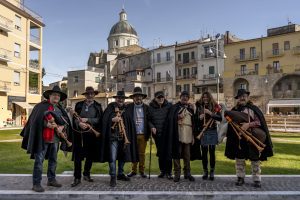
I never thought I’d spend an afternoon in Abruzzo just to see a group of Italian bagpipers called zampognari. To me, bagpipes always sounded a bit gloomy and definitely not rock and roll. Still, I’m always up for being proven wrong, so we headed to Taranta Peligna to start exploring the region’s most famous musicians through the ages.
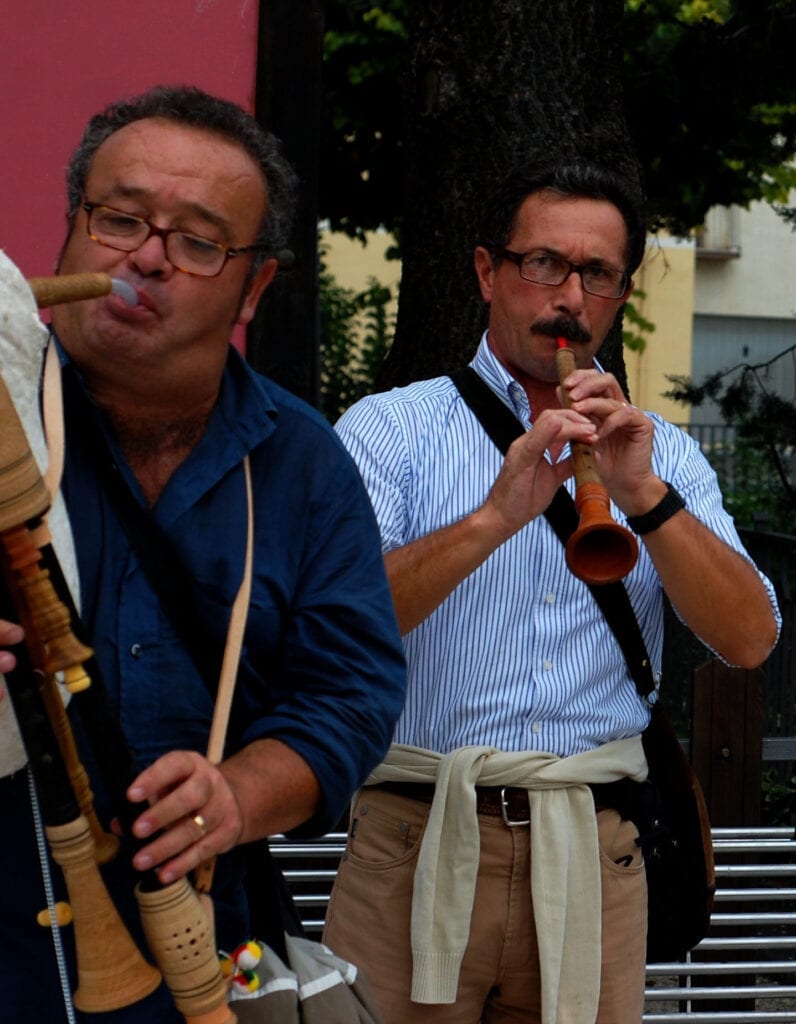
The name Zampognaro comes from the Greek word ‘simponia,’ which means a harmonious single-beating reed and is also the root of the word “symphony.” Zampognari have changed a lot over time. They were once poor shepherds who played the pipes to earn extra money, but today, players of this instrument follow a busy musical schedule throughout the year. From November 28 through to January 6th, they perform popular songs. From 29th November 29 to 8th December (Day of the Immaculate Conception), they play a nine-day prayer called a Novena dedicated to the Madonna. Most famously, from December 9 until Epiphany, they play pastoral and Christmas songs in pairs, especially in Rome, where the Vatican invites the best.
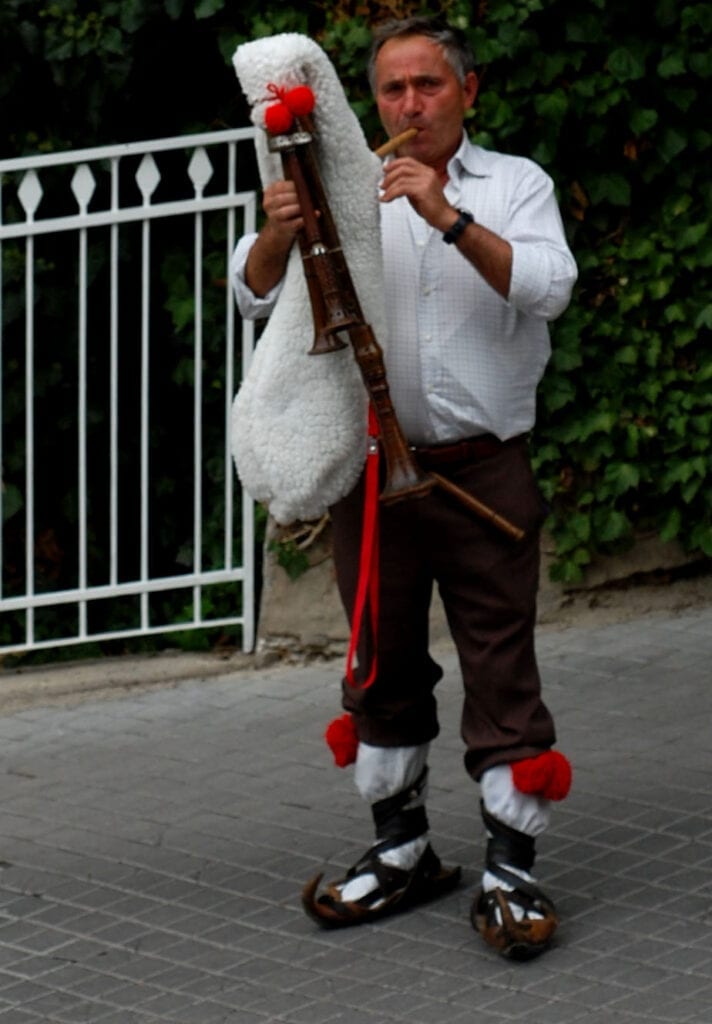
When I heard their music, the piffero, a single oboe, played the main melody while the zampogna added chord changes, a bass line, or a soprano harmony. A tambourine and accordion joined in, often improvising over a set piece. The result was a lively, cheerful folk dance rhythm that, to me, sounded a bit like North African music. It’s easy to see why this was the music people chose during harvest. The strong bass line helped motivate tired workers to keep going in the heat of the summer.
If you notice that these pipes look more animal-like than the Scottish ones, it’s because the Zamognaro cures the goat or sheep hide in one piece, then turns it inside out so the hair stays inside the bag (the otre), which is tied at the front of the rear legs. One front leg holds the blow pipe, while the other is tied off. The chanters or drones are attached to the neck of the skin.
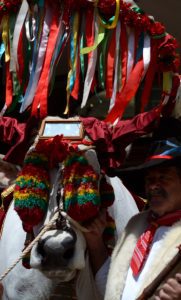
You might see them around Chieti and L’Aquila, playing tribute concerts in caves. Many church scholars believe these caves were the original ‘stable’ in the nativity scene. Caves are important in their pastoral tradition because livestock were often sheltered there during the transumanza, the twice-yearly migration of animals between high and low grazing areas at the end of spring and start of autumn.
So if you visit a presepe (nativity scene) and wonder why there’s a bagpipe player, now you know.
If you want to catch the Zampognari playing in Abruzzo, this website publishes their calendar.
NB The most famous bagpipe player of old was Nero, who didn’t just fiddle, but played the Roman bagpipes, then called the tibia utricularis.
“Crib” [Latin praesepe,praesepium] in The Catholic Encyclopedia, 1908

Author: Sam Dunham
Sam is a freelance SEO content creator and IGCSE Geography and English teacher at Istituto Cristo Re in Rome. She also runs the Life In Abruzzo Cultural Association, sharing stories and insights about this captivating region.
Alongside raising a teenager, Sam hosts guests at her family’s traditional home, the Little House of the Firefly in Abruzzo, offering a warm welcome and insider tips on local culture, food, and hidden gems.