This morning, during the cyclone Erminio emergency, the bridge over the River Trigno on the SS16 Adriatica collapsed around 9 am after three days of heavy rain. The bridge gave way suddenly while crews were checking if it could reopen. The bridge was the main alternative to the A14 toll motorway along the Adriatic corridor connecting Abruzzo and Molise. Its collapse has cut off the two regions from each other along the coast road. The reinforced concrete was split by the force of floodwater, mud, and debris carried by the Trigno at full flow.
“Fortunately, the road was closed, and there were no vehicles crossing. Otherwise, it would have been a tragedy,” confirmed the mayor of Montenero di Bisaccia, Simona Contucci.
Evacuations and the Human Cost
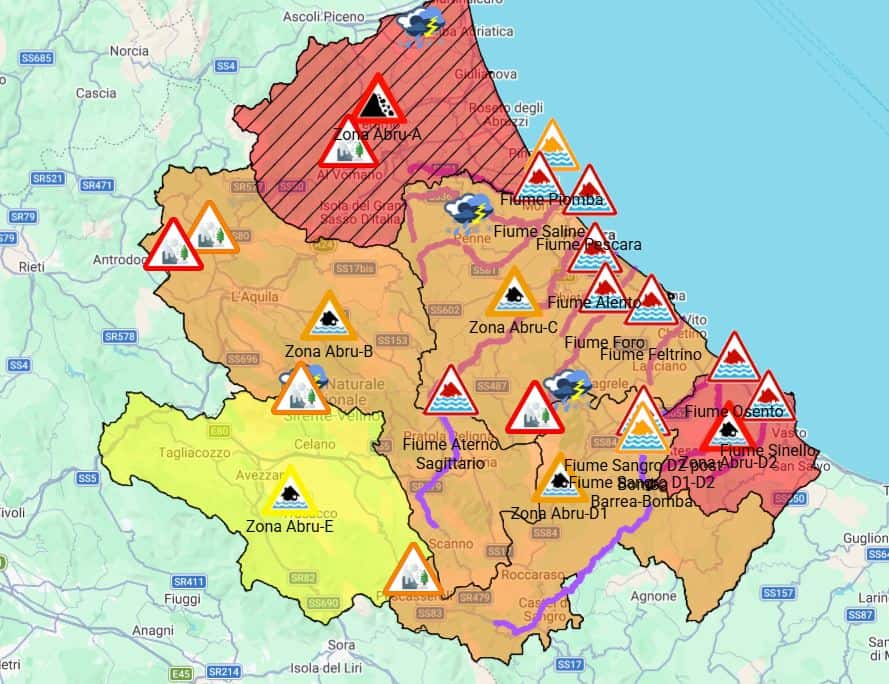
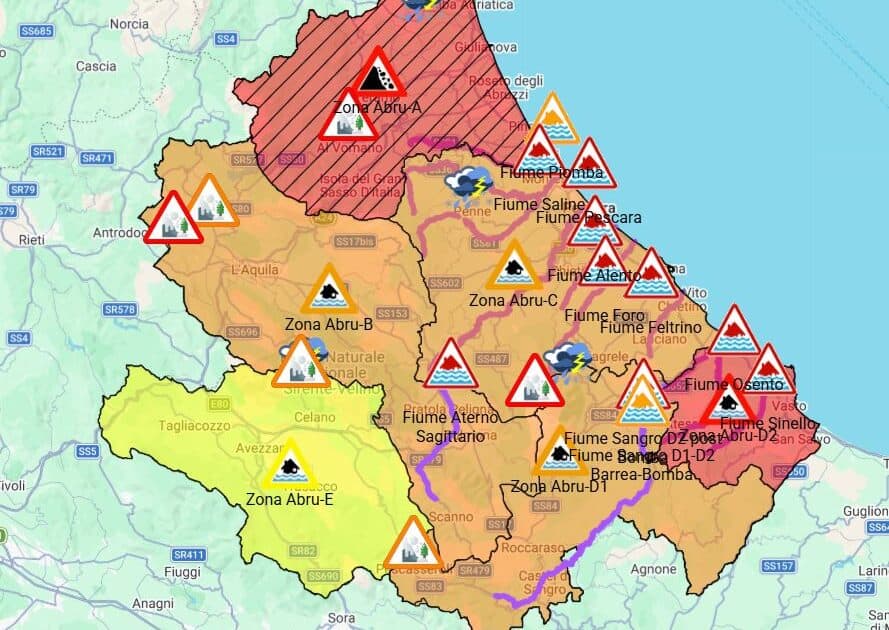
Flooding has forced many people to leave their homes, and evacuations are still happening. The official Civil Protection bulletin says: “La situazione resta in continua evoluzione e fortemente condizionata dalle condizioni meteo e dalla fragilità idrogeologica dei versanti.” The situation remains in constant flux, driven by weather and the fragile hillsides.
In Chieti province, families have been evacuated from the Sangro and Osento areas, and 25 people from a block of flats in Chieti city. Communities in Colledimezzo and Archi are isolated, with no gas or electricity. Around 80 families were evacuated in Spoltore. In Molise, around 150 people were evacuated in Termoli alone, many of whom spent the night in emergency reception centres
Water Supply Disruption
A break in the main water line near Farindola has cut off water to a large area, including Penne, Loreto Aprutino, Pianella, Montesilvano, and more. Penne Hospital is using emergency water tank reserves, which will last about 24 hours. Engineers are working to fix the network.
What you Need to Know Right Now
The Red Weather Alert is still in effect, even though conditions are starting to improve. There are still real risks.
Flooding: Evacuations are still happening near swollen rivers. The coastal train between Pescara and Vasto is still closed. Drive carefully through any standing water, as it can carry stones and debris.
Landslides: There are many on the roads. Slow down, especially on curves in mountain areas.
Avalanches: Three have been recorded. At Lama dei Peligni, one came down from the Maiella and nearly reached the lower village. Residents have been evacuated, and nearby roads have been closed. There is an avalanche warning for the eastern side of Gran Sasso. Prati di Tivo had an avalanche at 9.00 on the 2nd April, Fara San Martino, a small one on 1st April. As temperatures rise over the coming days, the risk does not go away; it may increase. Heavy snow fell at altitude this week. As it warms, that snow becomes unstable. Stay off mountain roads and trails until the all-clear is given.
Looking Ahead
Cyclone Erminio is expected to move away for good by Friday evening, with high pressure building quickly over the Easter weekend. METEO GIORNALE Temperatures could reach up to 25°C BlogSicilia, and Easter Sunday and Monday should be sunny and pleasant across the region. For the coast and foothills hit hardest by the storm, the real work will start once the skies clear: clearing roads, checking damage, and restoring services to the communities left isolated this week.
Why Events Like This Are Becoming More Frequent
A Mediterranean cyclone forms when a deep low-pressure system pulls warm, moist air from the sea and meets cold air coming from the north. The main change now is intensity. A warmer Mediterranean, with sea surface temperatures well above historical averages for several years, means there is more moisture to fuel these storms. The storms may not happen more often, but they bring more water and release it faster. In a region like Abruzzo, with steep terrain, clay-rich soils, and years of rural depopulation that have made hillsides less stable, this extra intensity has significant consequences. The bridge collapse, avalanches, and flooded valleys are not just rare events. We’ve written in depth about why Abruzzo’s landscape is especially vulnerable in our Landslide Risk in Abruzzo guide →.

Author: Sam Dunham
Sam is a freelance SEO content creator and IGCSE Geography and English teacher at Istituto Cristo Re in Rome. She also runs the Life In Abruzzo Cultural Association, sharing stories and insights about this captivating region. Alongside raising a teenager, Sam hosts guests at her family’s traditional home, the Little House of the Firefly in Abruzzo, offering a warm welcome and insider tips on local culture, food, and hidden gems.
Everything you just read is free. Here’s why that matters.
Life in Abruzzo has been independently covering Abruzzo’s culture, food, history and hidden corners since 2007, with no advertisers, no paywalls, and no outside funding. Just a small team who love this region and want the world to know it.
If this article meant something to you, consider supporting our work. Every contribution keeps us independent and free for everyone.